| KABUKIZA |
| City | Tôkyô | ||||||||||||||||||||||||||||||||||||||||||||||||||||||||||||||||||||||||||||||||||||||||||||||||||||||||||||||||||||||||||||||||||||||||||||||||||||||||||||||||||||||||||||||||||||||||||||||||||||||||||||||||||||||||||||||||||||||||||||||||||||||||||||||||||||||||||||||||||||||||||||||||||||||||||||||||||||||||||||||||||||||||||||||||||||||||||||||||||||||||||||||||||||||||||||||||||||||||||||||||||||||||||||||||||||||||||||||||||||||||||||||||||||||||||||||||||||||||||||||||||||||||||||||||||||||||||||||||||||||||||||||||||||||||||||||||||||||||||||||||||||||||||||||||||||||||||||||||||||||||||||||||||||||||||||||||||||||||||||||||||||||||||||||||||||||||||||||||||||||||||||||||||||||||||||||||||||||||||||||||||||||||||||||||||||||||||||||||||||||||||||||||||||||||||||||||||||||||||||||||||||||||||||||||||||||||||||||||||||||||||||||||||||||||||||||||||||||||||||||||||||||||||||||||||||||||||||||||||||||||||||||||||||||||||||||||||||||||||||||||||||||||||||||||||||||||||||||||||||||
| Management | Shôchiku Company | ||||||||||||||||||||||||||||||||||||||||||||||||||||||||||||||||||||||||||||||||||||||||||||||||||||||||||||||||||||||||||||||||||||||||||||||||||||||||||||||||||||||||||||||||||||||||||||||||||||||||||||||||||||||||||||||||||||||||||||||||||||||||||||||||||||||||||||||||||||||||||||||||||||||||||||||||||||||||||||||||||||||||||||||||||||||||||||||||||||||||||||||||||||||||||||||||||||||||||||||||||||||||||||||||||||||||||||||||||||||||||||||||||||||||||||||||||||||||||||||||||||||||||||||||||||||||||||||||||||||||||||||||||||||||||||||||||||||||||||||||||||||||||||||||||||||||||||||||||||||||||||||||||||||||||||||||||||||||||||||||||||||||||||||||||||||||||||||||||||||||||||||||||||||||||||||||||||||||||||||||||||||||||||||||||||||||||||||||||||||||||||||||||||||||||||||||||||||||||||||||||||||||||||||||||||||||||||||||||||||||||||||||||||||||||||||||||||||||||||||||||||||||||||||||||||||||||||||||||||||||||||||||||||||||||||||||||||||||||||||||||||||||||||||||||||||||||||||||||||||
| History |
21 November 1889: opening of the Kabukiza, built in Tôkyô in the district of Kobiki-chô (Ginza). October 1890: premiere at the Kabukiza of Kawatake Mokuami's Tokiwazu-based dance-drama "Modoribashi", which was performed with the following casting:
March 1891: premiere at the Kabukiza of Fukuchi Ôchi's drama "Buyû no Homare Shusse Kagekiyo", a revised revival of Chikamatsu Monzaemon's jidaimono "Shusse Kagekiyo" which was staged with the following casting:
September 1891: premiere at the Kabukiza of Fukuchi Ôchi's drama "Zôho Onna Narukami", which was staged with the following casting:
January 1892: premiere at the Kabukiza of Kawatake Shinshichi III's drama "Shiobara Tasuke Ichidaiki", which was staged with the following casting:
July 1892: premiere at the Kabukiza of the drama "Kaidan Botan Dôrô", adapted for Kabuki from a famous Rakugo story created by San'yûtei Enchô, staged with the following casting:
July 1892: premiere at the Kabukiza of the dance "Makura Jidô", which starred Onoe Kikugorô V in the role of Kikujidô. October 1892: premiere at the Kabukiza of the matsubamemono "Suô Otoshi", starring Ichikawa Danjûrô IX and Nakamura Fukusuke IV in the roles of Tarôkaja and the Princess. March 1893: premiere at the Kabukiza of Fukuchi Ôchi's Nagauta-based dance "Shunkyô Kagami Jishi". The musical accompaniment was written by Kineya Shôjirô III, the choreography was made by Fujima Kan'emon II and the leading role was played by Ichikawa Danjûrô IX. His two daughters played the roles of the butterflies. April 1897: premiere at the Kabukiza of Fukuchi Ôchi's drama "Otokodate Harusame Gasa", which was staged with the following casting:
January 1898: premiere at the Kabukiza of Kawatake Shinshichi III's dance-drama "Hagoromo", which was staged with the following casting:
May 1898: premiere at the Kabukiza of Kawatake Shinshichi III's drama "Edo Sodachi Omatsuri Sashichi", which was staged with the following casting:
January 1900: premiere at the Kabukiza of Kawatake Shinshichi III's dance-drama "Yami no Ume Hyaku Monogatari", which was staged with Tokiwazu, Nagauta, and Kiyomoto musical ensembles with the following casting:
May 1901: Nakamura Fukusuke IV took the name of Nakamura Shikan V at the Kabukiza. October 1902: premiere at the Kabukiza of the drama "Ninjô Banashi Bunshichi Mottoi", whose script was based on a famous story written by the rakugoka Sanyûtei Enchô. The casting included the following actors:
March 1903: great shûmei at the Kabukiza for the Otowaya guild; the actors Onoe Ushinosuke II, Onoe Eizaburô V and Onoe Eizô respectively took the names of Onoe Kikugorô VI, Onoe Baikô VI and Onoe Eizaburô VI. The three actors played the roles of Soga Gorô, Soga Jûrô and Hachiman Saburô in the drama "Kichirei Soga no Ishizue". They also performed together with Ichikawa Danjûrô IX in the drama "Kiyomasa Seichûroku". Casting for "Kichirei Soga no Ishizue": June 1904: premiere at the Kabukiza of the drama "Meiboku Kasane Monogatari", which was is staged with the following casting:
November 1908: revival at the Kabukiza of the Kabuki Jûhachiban drama "Kagekiyo", which was staged with a Tokiwazu musical accompaniment and the following casting:
April 1910: premiere at the Kabukiza of "Yuki no Yûbe Iriya no Azemichi", a few scenes taken from "Kumo ni Magou Ueno no Hatsuhana" focusing on Kataoka Naojirô and his lover Michitose and staged independently from the rest of the play, which was staged with the following casting:
November 1911: Nakamura Shikan V took the name of Nakamura Utaemon V at the Kabukiza. April 1912: premiere at the Kabukiza of the dance "Hashi Benkei", which was staged with the following casting:
November 1912: première at the Kabukiza of Enomoto Torahiko's drama "Meikô Kakiemon". The leading role of Kakiemon, the Bernard Palissy of Japan, was played by Kataoka Nizaemon XI. October 1913: revival at the Kabukiza of the drama "Zôhiki", a long-forgotten play belonging to the Kabuki Jûhachiban. The script was written by Hiraki Hakusei and it was staged with the following casting:
August 1915: the drama "Kaidan Chibusa no Enoki" revised by the Kamigata actor Jitsukawa Enjirô I was staged for the first time in Tôkyô with the following casting:
April 1916: Nakamura Kotarô II took the name of Nakamura Fukusuke V at the Kabukiza. August 1917: the drama "Natsu Matsuri Naniwa Kagami" was produced for the first time at the Kabukiza, with the following casting: October 1918: Ichikawa Yaozô VII and Ichikawa Matsuo I respectively took the names of Ichikawa Chûsha VII and Ichikawa Yaozô VIII at the Kabukiza. September 1919: premiere at the Kabukiza of the Kiyomoto-based dance "Sumidagawa", a Nô adapted for Kabuki by Yamazaki Shikô with a musical accompaniment made by Kiyomoto Umekichi II and inspired by Russian ballets seen by Ichikawa Ennosuke II during his European study tour. It was staged with the following casting:
October 1921: premiere at the Kabukiza of Okamoto Kidô's drama "Ôsakajô". The leading role of Lady Yodo (Yodogimi) was played by Nakamura Utaemon V. 30 October 1921: the Kabukiza was burnt to the ground in a fire caused by an electrical short circuit. 1 September 1923 (11:58 AM): Tôkyô was destroyed by a powerful earthquake called Kantô Daijishin, which killed more than 200,000 people; the Kabukiza was burnt to ashes. January 1925: reopening of the Kabukiza. April 1926: premiere at the Kabukiza of Matsui Shôô's drama "Yodogimi Odawara-jin". The leading role of Lady Yodo (Yodogimi) was played by Nakamura Utaemon V. July 1926: premiere at the Kabukiza of Okamoto Kidô's drama "Gonza to Sukejû", which was staged with the following casting:
July 1927: premiere at the Kabukiza of "Shunshoku Ume Goyomi", an adaptation to Kabuki by the playwright Kimura Kinka of Tamenaga Shunsui's 1833 novel, which was staged with the following casting:
January 1928: premiere at the Kabukiza of the dance-drama "Ume Kaoru Haru no Hanakago", a revised version of "Onna Modori Kago" with Tokiwazu and Nagauta musical ensembles. It was staged with the following casting:
June 1928: premiere at the Kabukiza of Okamura Shikô's dance-drama "Maboroshi Wankyû", starring Onoe Kikugorô VI in the role of Wan'ya Kyûbê. September 1928: premiere at the Kabukiza of Kimura Tomiko's Tokiwazu-based dance "Koma", with a choreography and a musical accompaniment made by Hanayagi Jusuke II and Tokiwazu Mojibê III; the leading role was played by Ichikawa Ennosuke II. June 1929: revival at the Kabukiza of the dance "Gannin Bôzu", which was premiered in the 3rd lunar month of 1811 by Bandô Mitsugorô III. It was staged under the title "Ukare Bôzu". The role of the bonze look-alike beggar was played by the star Onoe Kikugorô VI, who used a different musical accompaniment, written by Kiyomoto Enjudayû V. November 1929: revival at the Kabukiza of the drama "Kan U", belonging to the Kabuki Jûhachiban collection. It was staged with the following casting:
November 1928: premiere at the Kabukiza of Oka Onitarô's dance-drama "Kakuju Senzai", which was staged with the following casting:
September 1931: premiere at the Kabukiza of Ômori Chisetsu's drama "Taruya Osen", which was staged with the following casting:
April 1932: premiere at the Kabukiza of Mayama Seika's drama "Yoritomo no Shi", which was staged with the following casting:
April 1932: premiere at the Kabukiza of Mayama Seika's ninjômono drama "Edoe Ryôgoku Hakkei" (commonly called "Arakawa no Sakichi"), which was staged with the following casting:
June 1932: premiere at the Kabukiza of Hasegawa Shin's drama "Irezumi Chôhan", which was staged with the following casting:
November 1932: revival at the Kabukiza of the drama "Gedatsu", a rarely-staged play belonging to the Kabuki Jûhachiban. The script was written by Yamazaki Shikô and it was staged with the following casting:
February 1934: premiere at the Kabukiza of "Ôishi Saigo no Ichinichi", the tenth and last play of Mayama Seika's cycle "Genroku Chûshingura", which was staged from the 1st to the 25th of February with the following casting:
April 1934: revival at the Kabukiza of "Oshimodoshi", a spectacular and short drama belonging to the Kabuki Jûhachiban; Ichikawa Sanshô V played the role of the demon-queller. July 1934: premiere with a Kabuki troupe at the Kabukiza of Hasegawa Shin's 1928 drama "Kutsukake Tokijirô", which was staged with the following casting:
March 1935: premiere at the Kabukiza of the danmari "Otowa-ga-Dake Danmari", which was staged with the following casting: September 1935: premiere at the Kabukiza of Uno Nobuo's drama "Kôdan Yomiya no Ame", which was staged with the following casting:
April 1936: revival at the Kabukiza of the drama "Uwanari", a long-forgotten play belonging to the Kabuki Jûhachiban. The script was written by Yamazaki Shikô and it was staged with the following casting:
May 1936: revival at the Kabukiza of "Nanatsu Men", which used a new script written by Yamazaki Shikô and was staged with the following casting:
December 1936: premiere at the Kabukiza of Uno Nobuo's drama "Ninjô Banashi Koban Ichiryô", which was staged with the following casting:
April 1937: premiere at the Kabukiza of Yamazaki Shikô's Nagauta-based dance-drama "Kasuga Ryûjin", which was staged with the following casting:
April 1937: revival at the Kabukiza of the drama "Fudô", belonging to the Kabuki Jûhachiban; its was staged with the following casting:
September 1937: premiere at the Tôkyô Gekijô of Kimura Tomiko's Nagauta-based dance-drama "Ukiyo Buro".
November 1938: premiere at the Kabukiza of "Nanbuzaka no Yuki Wakare", the sixth play of Mayama Seika's cycle "Genroku Chûshingura", which was staged with the following casting:
April 1939: premiere at the Kabukiza of "Fushimi Shumokumachi", the fourth play of Mayama Seika's cycle "Genroku Chûshingura", which was staged from the 1st to the 26th of April 1939, with the following casting: May 1940: Ichikawa Komazô IX took the name of Ichikawa Ebizô IX at the Kabukiza, playing the role of role of a uirô peddler, in reality Soga Gorô Tokimune in disguise, in the drama "Uirô Uri", which was revived for this occasion. June 1942: revival at the Kabukiza of the drama "Kan U", belonging to the Kabuki Jûhachiban collection. It was staged with the following casting:
10 March 1945 (00:08 AM): 344 US Army B29 bombers dropped 2,000 tons of bombs on Tôkyô, killing more than 120,000 people and destroying almost everything; the Kabukiza was burnt to ashes. January 1951: the Kabukiza reopened. March 1951: premiere at the Kabukiza of Kawajiri Seitan's Kiyomoto-based dance-drama "Yûgao Dana", which was staged with the following casting:
April 1951: Nakamura Shikan VI took the name of Nakamura Utaemon VI at the Kabukiza. July 1951: Ichikawa Jukai III, Ichikawa Sumizô VII and Ichikawa Raizô VIII celebrated their shûmei in Tôkyô at the Kabukiza. July 1951: premiere at the Kabukiza of Uno Nobuo's drama "Jiisan Baasan", which was staged with the following casting:
("Jiisan Baasan" was also premiered in July 1951 in Ôsaka at the Ôsaka Kabukiza [casting]) July 1952: premiere at the Kabukiza of Hôjô Hideji's drama "Kitsune to Fuefuki", which was staged with the following actors:
October 1952: premiere at the Kabukiza of Osaragi Jirô's drama "Wakaki Hi no Nobunaga", which was staged with the following actors:
November 1952: premiere at the Kabukiza of Kema Nanboku's revision of Chikamatsu Monzaemon's drama "Daikyôji Mukashi Goyomi"; it was staged with the following casting:
March 1953: premiere at the Kabukiza of Osaragi Jirô's drama "Edo no Yûbae", which was staged with the following casting:
June 1953: Ichikawa Yaozô VIII and Matsumoto Komagorô I respectively took the names of Ichikawa Chûsha VIII and Ichikawa Yaozô IX at the Kabukiza. September 1953: Sawamura Tosshô IV and his son Sawamura Genpei VI respectively took the names of Sawamura Sôjûrô VIII and Sawamura Tosshô V at the Kabukiza. October 1953: premiere at the Kabukiza of Osaragi Jirô's drama "Tsukiyama-dono Shimatsu", which was staged within a special program celebrating the 50th anniversary of the passing away of the Meiji star Ichikawa Danjûrô IX with the following casting:
March 1954: premiere at the Kabukiza of the 1st part of Funahashi Seiichi's drama "Ejima Ikushima", which was staged with the following casting:
March 1954: first edition at the Kabukiza from the 27th to the 28th of March of the Tsubomikai, a study group led by Nakamura Utaemon VI: July 1954: revival at the Kabukiza of the dance-drama "Oshidori" as part of a regular Kabuki program; it was staged with the following casting:
October 1954: premiere at the Kabukiza of the 2nd part of Funahashi Seiichi's drama "Ejima Ikushima", which was staged with the following casting:
November 1954: premiere at the Kabukiza of Mishima Yukio's comical play "Iwashi Uri Koi no Hikiami", which was staged with the following casting:
February 1955: second edition at the Kabukiza from the 24th to the 27th of February of the Tsubomikai, a study group led by Nakamura Utaemon VI. It included the revival of Sakurada Jisuke I's dance-drama "Kumo no Hyôshimai" (entitled "Waga Sekogakoi no Aizuchi"), the premiere of Mishima Yukio's dance-drama "Yuya" and the drama "Tenshu Monogatari", which was staged for the first time with Kabuki actors: March 1955: premiere at the Kabukiza of the 3rd (and last) part of Funahashi Seiichi's drama "Ejima Ikushima", which was staged with the following casting:
July 1955: Kataoka Roen V took the name of Kataoka Gadô V at the Kabukiza. October 1955: Bandô Hikosaburô VII took the name of Ichimura Uzaemon XVII at the Kabukiza. July 1956: revival at the Kabukiza of the michiyuki "Chô no Michiyuki"; the roles of Komaki and Sukekuni were played by Nakamura Utaemon VI and Matsumoto Kôshirô VIII. Revival at the Kabukiza of Tsuruya Nanboku IV's drama "Sumidagawa Hana no Goshozome", which was commonly called "Onna Seigen", which was staged with the following casting:
September 1956: revival at the Kabukiza of the Kiyomoto version of the dance "Takao Zange" in which Nakamura Utaemon VI played the role of the ghost of the keisei Takao. March 1957: revival at the Kabukiza of Ôtsuki Joden's Nagauta-based dance-drama "Shima no Senzai"; the role of the shirabyôshi Senzai was played by Onoe Baikô VII. November 1959: revival at the Kabukiza of Tsuruya Nanboku IV's masterpiece "Sakura Hime Azuma Bunshô". The new script, which was based on Iwaya Shin'ichi's script for "Tôryû Azuma Bunshô" (more details), was revised by Mishima Yukio. It was is produced under its original title with the following casting:
January 1960: premiere (or revival?) at the Kabukiza of the dance "Kuruwa Sanbasô", which was staged with the following casting:
February 1960: premiere at the Kabukiza of Uno Nobuo's drama "Shiranui Kengyô", which was staged with the following casting:
April 1960: premiere at the Kabukiza of Hagiwara Yukio's dance-drama "Onizoroi Momijigari", which was part of a program celebrating the shûmei of Nakamura Tokizô IV and commemorating the 1st anniversary (2nd memorial service) of late Nakamura Tokizô III; the music was performed by a Tokiwazu ensemble by Tokiwazu Chitosedayû and Tokiwazu Kikusaburô and a Nagauta ensemble (performing Ôzatsuma) led by Yoshimura Gorôji II and Tanaka Denzaemon XI; there was also a Gidayû ensemble; it was staged with the following casting:
January 1961: premiere at the Kabukiza of Murakami Genzô's drama "Yoshiwara Gitsune", which was staged with the following casting:
April 1962: Ichikawa Ebizô IX took the name of Ichikawa Danjûrô XI at the Kabukiza. June 1962: revival at the Kabukiza under the supervision of Takechi Tetsuji of Namiki Gohei I's drama "Keisei Yamato Zôshi", which was staged with the following casting:
September 1962: great shûmei at the Kabukiza for 3 generations of actors belonging to the Yamatoya guild (Yamatoya Sandai Shûmei); Bandô Minosuke VI took the name of Bandô Mitsugorô VIII, Bandô Yasosuke IV became Bandô Minosuke VII and Bandô Yasosuke V made his first appearance on stage. November 1962: revival at the Kabukiza of the drama "Fudô", belonging to the Kabuki Jûhachiban; it was staged with the following casting:
May 1963: great shûmei at the Kabukiza for the Omodakaya guild; Ichikawa Ennosuke II, Ichikawa Danko III and Ichikawa Kamejirô I respectively took the names of Ichikawa En'ô I, Ichikawa Ennosuke III and Ichikawa Danko IV. June 1963: premiere at the Kabukiza of Hagiwara Yukio's Nagauta-based dance-drama "Ôeyama Shuten Dôji"; the music was written by Kineya Rokuzaemon XIV and the choreography was made by Fujima Kanjûrô VI; it was staged with the following casting: June 1963: revival at the Kabukiza of Namiki Shôzô I's drama "Yadonashi Danshichi Shigure no Karakasa", which was staged with the following casting:
April 1964: Sawamura Yoshijirô IV and his father Sawamura Tanosuke V respectively took the names of Sawamura Tanosuke VI and Sawamura Shozan III at the Kabukiza. May 1964: premiere at the Kabukiza of Hagiwara Yukio's Nagauta-based dance-drama "Bukaku Setsugekka"; the music was written by Kineya Rokuzaemon XIV and the choreography was made by Fujima Kanjûrô VI; this dance-drama was made up of 3 short dances, the first one being about the spirit of the cherry blossoms ("Sakura"), which symbolized Spring; the second dance was about insects under the full moon ("Matsumushi") which symbolized the autumn; the third dance was about a snowman ("Yuki Daruma Goyomi"), which symbolized Winter; it was staged with a Nagauta ensemble led by Kineya Rokuzaemon XIV and the following casting:
September 1964: great shûmei at the Kabukiza for the Kyôya and Akashiya guilds; Ôtani Tomoemon VII, Ôtani Hirotarô II and Ôtani Hiromatsu I respectively took the names of Nakamura Jakuemon IV, Ôtani Tomoemon VIII and Nakamura Shibajaku VII. May 1965: shûmei at the Kabukiza for 3 young actors of the Otowaya guild; Onoe Ushinosuke V, Bandô Kamesaburô IV and Onoe Sakon I respectively took the names of Onoe Kikunosuke IV, Bandô Shinsui VIII, and Onoe Tatsunosuke I. The program also commemorated the 16th anniversary (17th memorial service) of the passing away of Onoe Kikugorô VI. Revival at the Kabukiza of the danmari "Otowa-ga-Dake Danmari", which was staged with the following casting:, which was staged with the following casting:
January 1967: revival at the Kabukiza of Sakurada Jisuke II's Tokiwazu-based dance-drama "Yamato Moji Koi no Koto no Ha", commonly called "Usuyuki Kyôran" or "Usuyuki Michiyuki", which was staged with the following casting:
February 1967: premiere at the Kabukiza of Hagiwara Yukio's dance-drama "Dattan", which was staged with the following casting:
April 1967: great shûmei at the Kabukiza for the Narikomaya and Kagaya guilds; Nakamura Fukusuke VII, Kagaya Fukunosuke II, Kagaya Hashinosuke II and Nakamura Tamatarô III respectively took the names of Nakamura Shikan VII, Nakamura Fukusuke VIII, Nakamura Matsue V and Nakamura Tôzô VI; Shikan's son Nakamura Kotarô V made his first stage appearance. July 1968: revival at the Kabukiza of the drama "Kama-ga-Fuchi Futatsu Domoe", which was staged with the following casting:
March 1969: Hôjô Hideji's dance-drama "Adayume" was adapted to Kabuki for the first time and staged at the Kabukiza, with the following casting:
May 1969: Ichikawa Danko IV took the name of Ichikawa Danshirô IV at the Kabukiza. November 1969: Ichikawa Shinnosuke VI took the name of Ichikawa Ebizô X at the Kabukiza. December 1969: revival at the Kabukiza of the Tokiwazu-based dance-drama "Kumo no Ito Azusa no Yumihari", which was staged as part of a special program centered on Ôkawa Hashizô II (and his son Ôkawa Tatsugorô who made his debut on stage). Here was the casting:
May 1972: Bandô Shinsui VIII and Ichimura Takematsu V respectively took the name of Bandô Kamezô II and Ichimura Manjirô II at the Kabukiza. September 1972: Ichimura Takenojô VI took the prestigious name of Nakamura Tomijûrô V at the Kabukiza. October 1973: Onoe Kikunosuke IV took the name of Onoe Kikugorô VII at the Kabukiza. February 1975: premiere at the Kabukiza of Ikenami Shôtarô's drama "Debauchi Otama", which was staged with the following casting:
February 1976: revival at the Kabukiza of a 5-act revised version of Funahashi Seiichi's drama "Ejima Ikushima", which was staged with the following casting:
September 1976: Sawamura Tosshô V took the name of Sawamura Sôjûrô IX at the Kabukiza. February 1977: premiere at the Kabukiza of Ikenami Shôtarô's drama "Ichimatsu Kozô no Onna", which was staged with the following casting:
July 1977: revival at the Kabukiza of Katsu Genzô III's drama "Ogasawara Sôdô", which was staged with the following casting:
February 1978: premiere at the Kabukiza of Ikenami Shôtarô's drama "Aibiki no Onna", which was staged with the following casting:
February 1979: Ichikawa Omezô V took the name of Ichikawa Sadanji IV at the Kabukiza. February 1980: Bandô Kamezô II took the name of Bandô Hikosaburô VIII at the Kabukiza. July 1980: tôshi kyôgen production of "Yoshitsune Senbon Zakura" at the Kabukiza; Ichikawa Ennosuke III created and staged as a large-scale tachimawari the never-performed 5th act of this drama with the following casting:
June 1981: great shûmei at the Kabukiza for the Yorozuya guild; Nakamura Yonekichi IV, Nakamura Baishi III, Nakamura Mitsuteru and Ogawa Mikihiro respectively took the names of Nakamura Karoku V, Nakamura Tokizô V, Nakamura Kashô III and Nakamura Shidô II. July 1981: revival at the Kabukiza of Tsuruya Nanboku IV's drama "Hitori Tabi Gojûsan Tsugi", which was staged with the following casting:
October 1981: great shûmei at the Kabukiza for 3 generations of actors belonging to the Kôraiya guild (Kôraiya Sandai Shûmei); Matsumoto Kôshirô VIII, Ichikawa Somegorô VI, Matsumoto Kintarô III, Ichikawa Nakanosuke III and Ichikawa Momomaru respectively took the names of Matsumoto Hakuô, Matsumoto Kôshirô IX, Ichikawa Somegorô VII, Matsumoto Kôemon and Ichikawa Shinsha II. October 1982: premiere at the Kabukiza of the Kiyomoto-based dôjôjimono "Bungo Dôjôji", which starred Nakamura Jakuemon IV. April 1985: Ichikawa Ebizô X took the name of Ichikawa Danjûrô XII at the Kabukiza. August 1990: revival at the Kabukiza of the drama "Kaidan Chibusa no Enoki", which was staged with the following casting:
November 1990: Nakamura Senjaku II took the name of Nakamura Ganjirô III at the Kabukiza. April 1992: Nakamura Fukusuke VIII and Nakamura Kotarô V respectively took the names of Nakamura Baigyoku IV and Nakamura Fukusuke IX at the Kabukiza. May 1996: Onoe Ushinosuke VI took the name of Onoe Kikunosuke V at the Kabukiza. August 1996: revival at the Kabukiza of Hôjô Hideji's drama "Korikori Banashi", with a script revised by Nagawa Shôsuke. This was the Edo version of the drama and it was entitled "Edo Miyage" ('Souvenir from Edo'). It was staged with the following casting:
January 1998: Kataoka Takao took the name of Kataoka Nizaemon XV at the Kabukiza. June 2000: revival at the Kabukiza of the spectacular hengemono "Ôtsue Dôjôji", which was staged with the following casting:
December 2000: premiere at the Kabukiza of "Kaka Saiyûki", Ichikawa Ennosuke III's version of Kawatake Shinshichi III's 1878 drama "Tsûzoku Saiyûki" (Kaka was the haimyô of Ichikawa Ennosuke III), which was staged with the following casting:
January 2001: Bandô Yasosuke V took the name of Bandô Mitsugorô X at the Kabukiza. April 2002: Nakamura Matsue V took the name of Nakamura Kaishun II at the Kabukiza. May 2002: Onoe Tatsunosuke II took the name of Onoe Shôroku IV at the Kabukiza. May 2003: Bandô Shônosuke, Kataoka Jûzô VI and Ichikawa Otora VI respectively took the names of Kawarasaki Gonjûrô IV, Kataoka Ichizô VI and Ichikawa Omezô VI at the Kabukiza. May 2004: Ichikawa Shinnosuke VII took the name of Ichikawa Ebizô XI at the Kabukiza. March 2005: Nakamura Kankurô V took the name of Nakamura Kanzaburô XVIII at the Kabukiza. November 2006: revival at the Kabukiza of Chikamatsu Monkyô's Nagauta-based dance-drama "Kyôran Fubuki no Hinagata" (commonly called "Hinasuke Kyôran") with Onoe Kikugorô VII in the leading role of Akita Jônosuke. April 2007: Nakamura Shinjirô took the name of Nakamura Kinnosuke II at the Kabukiza. November 2008: official announcement about the future of the Kabukiza, the main Kabuki theater in Japan. Destruction from May 2010 and rebuilding on the current site, in the Eastern part of the Ginza district of Tôkyô. The rebuilding was expected to take at least three years. To celebrate the closing of this prestigious theater, a series of performances entitled Kabukiza Sayonara Kôen (Kabukiza Farewell Performances) were scheduled to be held from January 2009 to April 2010. Up to the reopening ceremony, monthly Kabuki performances were reported as being staged at the Shinbashi Enbujô. January 2009: 1st of the 16 Kabukiza Sayonara Kôen (Kabukiza Farewell Performances) [more details]. February 2009: 2nd of the 16 Kabukiza Sayonara Kôen (Kabukiza Farewell Performances) [more details]. March 2009: 3rd of the 16 Kabukiza Sayonara Kôen (Kabukiza Farewell Performances) [more details]. April 2009: 4th of the 16 Kabukiza Sayonara Kôen (Kabukiza Farewell Performances) [more details]. May 2009: 5th of the 16 Kabukiza Sayonara Kôen (Kabukiza Farewell Performances) [more details]. June 2009: 6th of the 16 Kabukiza Sayonara Kôen (Kabukiza Farewell Performances); isse ichidai performance of Kataoka Nizaemon in the role of Yohei in Chikamatsu Monzaemon's masterpiece "Abura no Jigoku" and the hatsubutai of Matsumoto Kôshirô's grandson Matsumoto Kintarô IV [more details]. July 2009: 7th of the 16 Kabukiza Sayonara Kôen (Kabukiza Farewell Performances) [more details]. August 2009: 8th of the 16 Kabukiza Sayonara Kôen (Kabukiza Farewell Performances) [more details]. September 2009: 9th of the 16 Kabukiza Sayonara Kôen (Kabukiza Farewell Performances) [more details]. October 2009: 10th of the 16 Kabukiza Sayonara Kôen (Kabukiza Farewell Performances) [more details]. November 2009: 11th of the 16 Kabukiza Sayonara Kôen (Kabukiza Farewell Performances) [more details]. December 2009: 12th of the 16 Kabukiza Sayonara Kôen (Kabukiza Farewell Performances) [more details]. January 2010: 13th of the 16 Kabukiza Sayonara Kôen (Kabukiza Farewell Performances) [more details]. February 2010: 14th of the 16 Kabukiza Sayonara Kôen (Kabukiza Farewell Performances); commemoration of the 22nd anniversary (23rd memorial service) of late Nakamura Kanzaburô XVII [more details]. Revival at the Kabukiza of the Nagauta-based dance "Tsumeô", which was staged with the following casting:
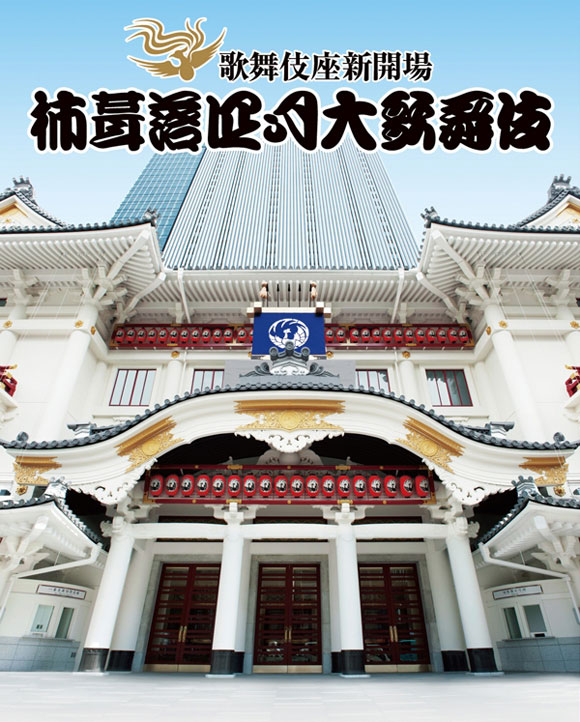
March 2010: 15th of the 16 Kabukiza Sayonara Kôen (Kabukiza Farewell Performances) [more details]. April 2010: final Kabukiza Sayonara Kôen (Kabukiza Farewell Performances) [more details]. 30th April 2010: Kabukiza closing Ceremony [more details]. May 2010 ~ Spring 2013: destruction of the 4th Kabukiza; building of the 5th Kabukiza. 28th March 2013: traditional ceremonial hand-clapping (koshiki kaomise tejimeshiki in Japanese; the traditional face-showing ritual of hand-clapping) with all actors and Kabuki-related people on the brand-new stage for the successful opening of the 5th Kabukiza. April 2013: 1st of the 12 Kokera Otoshi Ôkabuki (Opening Ceremony Grand Kabuki Performances) [more details]. May 2013: 2nd of the 12 Kokera Otoshi Ôkabuki (Opening Ceremony Grand Kabuki Performances) [more details]. June 2013: 3rd of the 12 Kokera Otoshi Ôkabuki (Opening Ceremony Grand Kabuki Performances) [more details]. July 2013: 4th of the 12 Kokera Otoshi Ôkabuki (Opening Ceremony Grand Kabuki Performances) [more details]. August 2013: 5th of the 12 Kokera Otoshi Ôkabuki (Opening Ceremony Grand Kabuki Performances) and 21st edition of the Hachigatsu Nôryô Kabuki (literally "the August cool-breeze Kabuki"), a summer program which features a group of popular young stars in three short programs of Kabuki to fight the heat of summer [more details]. September 2013: 6th of the 12 Kokera Otoshi Ôkabuki (Opening Ceremony Grand Kabuki Performances) [more details]. October 2013: 7th of the 12 Kokera Otoshi Ôkabuki (Opening Ceremony Grand Kabuki Performances) [more details]. November 2013: 8th of the 12 Kokera Otoshi Ôkabuki (Opening Ceremony Grand Kabuki Performances), which celebrated the promotion to the first league of Kabuki actors (kanbu shôshin) for two veterans, Arashi Kitsusaburô and Kataoka Matsunosuke [more details]. December 2013: 9th of the 12 Kokera Otoshi Ôkabuki (Opening Ceremony Grand Kabuki Performances) [more details]. February 2014: revival at the Kabukiza of Tsuruya Nanboku IV's drama "Kokoro no Nazo Toketa Iroito" [more details]. October 2014: the October Grand Kabuki at the Kabukiza commemorated the 26th anniversary (27th memorial service) and the 2nd anniversary (3rd memorial service) of late Nakamura Kanzaburô XVII and late Nakamura Kanzaburô XVIII [more details]. November 2014: the Annual Festive Face-Showing Grand Kabuki at the Kabukiza commemorated the 32nd anniversary (33rd memorial service) of the passing away of Matsumoto Hakuô I. His two sons, Matsumoto Kôshirô and Living National Treasure Nakamura Kichiemon, were the zagashira [more details]. April 2015: Nakamura Ganjirô IV celebrated his shûmei in Tôkyô at the Kabukiza [more details]. May 2015: revival at the Kabukiza of the drama "Jayanagi", which was staged with the following casting:
March 2016: Nakamura Shibajaku VII took the name of Nakamura Jakuemon V at the Kabukiza [more details]. October 2016: important shûmei for the Narikomaya guild; Nakamura Hashinosuke III and his three sons Nakamura Kunio, Nakamura Muneo and Nakamura Yoshio take at the Kabukiza the names of Nakamura Shikan VIII, Nakamura Hashinosuke IV, Nakamura Fukunosuke III and Nakamura Utanosuke IV [more details]. November 2016: Nakamura Shikan VIII, Nakamura Hashinosuke IV, Nakamura Fukunosuke III and Nakamura Utanosuke IV celebrated their second month of shûmei at the Kabukiza [more details]. February 2017: debut on stage (hatsubutai) at the Kabukiza for Nakamura Kantarô III and Nakamura Chôzaburô II [more details]. May 2017: 3-generation shûmei for the Bandô branch of the Otowaya guild at the Kabukiza; Bandô Hikosaburô VIII, his two sons Bandô Kamesaburô V and Bandô Kametoshi respectively take the names of Bandô Rakuzen, Bandô Hikosaburô IX and Bandô Kamezô III. There is also the hatsubutai of Rakuzen's grandson Bandô Kamesaburô VI. Terajima Maholo, the grandson of Living National Treasure Onoe Kikugorô and son of the actress Terajima Shinobu makes his first stage appearance (omemie). Moreover, the 22nd and 16th anniversaries (23rd and 17th memorial services) of the passing away of Onoe Baikô VII and Ichimura Uzaemon XVII are commemorated [more details]. January 2018: great name-taking ceremony at the Kabukiza for 3 generations of actors belonging to the Kôraiya guild (Kôraiya Sandai Shûmei); Matsumoto Kôshirô IX, his son Ichikawa Somegorô VII and his grandson Matsumoto Kintarô IV took the names of Matsumoto Hakuô II, Matsumoto Kôshirô X and Ichikawa Somegorô VIII at the Kabukiza [more details]. February 2018: second month of shûmei at the Kabukiza for Matsumoto Hakuô II, Matsumoto Kôshirô X and Ichikawa Somegorô VIII [more details]. May 2019: hatsubutai of Onoe Ushinosuke VII at the Kabukiza [more details]. November 2019: Nakamura Umemaru took the name of Nakamura Kangyoku at the Kabukiza [more details]. March 2020: No Kabuki performances at the Kabukiza due to the worldwide COVID-19 crisis! April 2020: No Kabuki performances at the Kabukiza due to the worldwide COVID-19 crisis! May 2020: No Kabuki performances at the Kabukiza due to the worldwide COVID-19 crisis! June 2020: No Kabuki performances at the Kabukiza due to the worldwide COVID-19 crisis! July 2020: No Kabuki performances at the Kabukiza due to the worldwide COVID-19 crisis! August 2020: first Kabuki performances at the Kabukiza since the beginning of the COVID-19 crisis [more details]. March 2022: Ichikawa Kôtarô took the name of Ichikawa Seiko II at the Kabukiza [more details]. September 2022: debut on stage (hatsubutai) for Nakamura Kashô IV's sons Nakamura Tanetarô V and Nakamura Hidenosuke at the Kabukiza [more details]. November 2022: Ichikawa Ebizô XI took the name of Ichikawa Danjûrô XIII at the Kabukiza; his son made his hatsubutai and received the name of Ichikawa Shinnosuke VIII [more details]. December 2022: second month of shûmei for Ichikawa Danjûrô XIII and second month of hatsubutai for Ichikawa Shinnosuke VIII at the Kabukiza [more details]. June 2024: great shûmei at the Kabukiza for the Yorozuya guild; Nakamura Tokizô V and Nakamura Baishi IV respectively took the names of Nakamura Manju and Nakamura Tokizô VI [more details]. It was also the hatsubutai of Nakamura Baishi V, Nakamura Haruki and Nakamura Natsuki. May 2025: great shûmei for the Otowaya guild; Onoe Kikunosuke V and his son Onoe Ushinosuke VII respectively took the names of Onoe Kikugorô VIII and Onoe Kikunosuke VI at the Kabukiza [more details]. June 2025: second month of shûmei at the Kabukiza for Onoe Kikugorô VIII and Onoe Kikunosuke VI [more details]. |
||||||||||||||||||||||||||||||||||||||||||||||||||||||||||||||||||||||||||||||||||||||||||||||||||||||||||||||||||||||||||||||||||||||||||||||||||||||||||||||||||||||||||||||||||||||||||||||||||||||||||||||||||||||||||||||||||||||||||||||||||||||||||||||||||||||||||||||||||||||||||||||||||||||||||||||||||||||||||||||||||||||||||||||||||||||||||||||||||||||||||||||||||||||||||||||||||||||||||||||||||||||||||||||||||||||||||||||||||||||||||||||||||||||||||||||||||||||||||||||||||||||||||||||||||||||||||||||||||||||||||||||||||||||||||||||||||||||||||||||||||||||||||||||||||||||||||||||||||||||||||||||||||||||||||||||||||||||||||||||||||||||||||||||||||||||||||||||||||||||||||||||||||||||||||||||||||||||||||||||||||||||||||||||||||||||||||||||||||||||||||||||||||||||||||||||||||||||||||||||||||||||||||||||||||||||||||||||||||||||||||||||||||||||||||||||||||||||||||||||||||||||||||||||||||||||||||||||||||||||||||||||||||||||||||||||||||||||||||||||||||||||||||||||||||||||||||||||||||||||
| Notes |
[1] The future Kiyomoto leader Kiyomoto Enjudayû VII. |
||||||||||||||||||||||||||||||||||||||||||||||||||||||||||||||||||||||||||||||||||||||||||||||||||||||||||||||||||||||||||||||||||||||||||||||||||||||||||||||||||||||||||||||||||||||||||||||||||||||||||||||||||||||||||||||||||||||||||||||||||||||||||||||||||||||||||||||||||||||||||||||||||||||||||||||||||||||||||||||||||||||||||||||||||||||||||||||||||||||||||||||||||||||||||||||||||||||||||||||||||||||||||||||||||||||||||||||||||||||||||||||||||||||||||||||||||||||||||||||||||||||||||||||||||||||||||||||||||||||||||||||||||||||||||||||||||||||||||||||||||||||||||||||||||||||||||||||||||||||||||||||||||||||||||||||||||||||||||||||||||||||||||||||||||||||||||||||||||||||||||||||||||||||||||||||||||||||||||||||||||||||||||||||||||||||||||||||||||||||||||||||||||||||||||||||||||||||||||||||||||||||||||||||||||||||||||||||||||||||||||||||||||||||||||||||||||||||||||||||||||||||||||||||||||||||||||||||||||||||||||||||||||||||||||||||||||||||||||||||||||||||||||||||||||||||||||||||||||||||
 |
|||||||||||||||||||||||||||||||||||||||||||||||||||||||||||||||||||||||||||||||||||||||||||||||||||||||||||||||||||||||||||||||||||||||||||||||||||||||||||||||||||||||||||||||||||||||||||||||||||||||||||||||||||||||||||||||||||||||||||||||||||||||||||||||||||||||||||||||||||||||||||||||||||||||||||||||||||||||||||||||||||||||||||||||||||||||||||||||||||||||||||||||||||||||||||||||||||||||||||||||||||||||||||||||||||||||||||||||||||||||||||||||||||||||||||||||||||||||||||||||||||||||||||||||||||||||||||||||||||||||||||||||||||||||||||||||||||||||||||||||||||||||||||||||||||||||||||||||||||||||||||||||||||||||||||||||||||||||||||||||||||||||||||||||||||||||||||||||||||||||||||||||||||||||||||||||||||||||||||||||||||||||||||||||||||||||||||||||||||||||||||||||||||||||||||||||||||||||||||||||||||||||||||||||||||||||||||||||||||||||||||||||||||||||||||||||||||||||||||||||||||||||||||||||||||||||||||||||||||||||||||||||||||||||||||||||||||||||||||||||||||||||||||||||||||||||||||||||||||||||
| The Kabukiza (April 2013) | |||||||||||||||||||||||||||||||||||||||||||||||||||||||||||||||||||||||||||||||||||||||||||||||||||||||||||||||||||||||||||||||||||||||||||||||||||||||||||||||||||||||||||||||||||||||||||||||||||||||||||||||||||||||||||||||||||||||||||||||||||||||||||||||||||||||||||||||||||||||||||||||||||||||||||||||||||||||||||||||||||||||||||||||||||||||||||||||||||||||||||||||||||||||||||||||||||||||||||||||||||||||||||||||||||||||||||||||||||||||||||||||||||||||||||||||||||||||||||||||||||||||||||||||||||||||||||||||||||||||||||||||||||||||||||||||||||||||||||||||||||||||||||||||||||||||||||||||||||||||||||||||||||||||||||||||||||||||||||||||||||||||||||||||||||||||||||||||||||||||||||||||||||||||||||||||||||||||||||||||||||||||||||||||||||||||||||||||||||||||||||||||||||||||||||||||||||||||||||||||||||||||||||||||||||||||||||||||||||||||||||||||||||||||||||||||||||||||||||||||||||||||||||||||||||||||||||||||||||||||||||||||||||||||||||||||||||||||||||||||||||||||||||||||||||||||||||||||||||||||
| Photographes of the Kabukiza | |||||||||||||||||||||||||||||||||||||||||||||||||||||||||||||||||||||||||||||||||||||||||||||||||||||||||||||||||||||||||||||||||||||||||||||||||||||||||||||||||||||||||||||||||||||||||||||||||||||||||||||||||||||||||||||||||||||||||||||||||||||||||||||||||||||||||||||||||||||||||||||||||||||||||||||||||||||||||||||||||||||||||||||||||||||||||||||||||||||||||||||||||||||||||||||||||||||||||||||||||||||||||||||||||||||||||||||||||||||||||||||||||||||||||||||||||||||||||||||||||||||||||||||||||||||||||||||||||||||||||||||||||||||||||||||||||||||||||||||||||||||||||||||||||||||||||||||||||||||||||||||||||||||||||||||||||||||||||||||||||||||||||||||||||||||||||||||||||||||||||||||||||||||||||||||||||||||||||||||||||||||||||||||||||||||||||||||||||||||||||||||||||||||||||||||||||||||||||||||||||||||||||||||||||||||||||||||||||||||||||||||||||||||||||||||||||||||||||||||||||||||||||||||||||||||||||||||||||||||||||||||||||||||||||||||||||||||||||||||||||||||||||||||||||||||||||||||||||||||||
| Matsuri in front of the Kabukiza the 1st of January 2010 | |||||||||||||||||||||||||||||||||||||||||||||||||||||||||||||||||||||||||||||||||||||||||||||||||||||||||||||||||||||||||||||||||||||||||||||||||||||||||||||||||||||||||||||||||||||||||||||||||||||||||||||||||||||||||||||||||||||||||||||||||||||||||||||||||||||||||||||||||||||||||||||||||||||||||||||||||||||||||||||||||||||||||||||||||||||||||||||||||||||||||||||||||||||||||||||||||||||||||||||||||||||||||||||||||||||||||||||||||||||||||||||||||||||||||||||||||||||||||||||||||||||||||||||||||||||||||||||||||||||||||||||||||||||||||||||||||||||||||||||||||||||||||||||||||||||||||||||||||||||||||||||||||||||||||||||||||||||||||||||||||||||||||||||||||||||||||||||||||||||||||||||||||||||||||||||||||||||||||||||||||||||||||||||||||||||||||||||||||||||||||||||||||||||||||||||||||||||||||||||||||||||||||||||||||||||||||||||||||||||||||||||||||||||||||||||||||||||||||||||||||||||||||||||||||||||||||||||||||||||||||||||||||||||||||||||||||||||||||||||||||||||||||||||||||||||||||||||||||||||||
| Kabukiza Construction Site (March 2012) | |||||||||||||||||||||||||||||||||||||||||||||||||||||||||||||||||||||||||||||||||||||||||||||||||||||||||||||||||||||||||||||||||||||||||||||||||||||||||||||||||||||||||||||||||||||||||||||||||||||||||||||||||||||||||||||||||||||||||||||||||||||||||||||||||||||||||||||||||||||||||||||||||||||||||||||||||||||||||||||||||||||||||||||||||||||||||||||||||||||||||||||||||||||||||||||||||||||||||||||||||||||||||||||||||||||||||||||||||||||||||||||||||||||||||||||||||||||||||||||||||||||||||||||||||||||||||||||||||||||||||||||||||||||||||||||||||||||||||||||||||||||||||||||||||||||||||||||||||||||||||||||||||||||||||||||||||||||||||||||||||||||||||||||||||||||||||||||||||||||||||||||||||||||||||||||||||||||||||||||||||||||||||||||||||||||||||||||||||||||||||||||||||||||||||||||||||||||||||||||||||||||||||||||||||||||||||||||||||||||||||||||||||||||||||||||||||||||||||||||||||||||||||||||||||||||||||||||||||||||||||||||||||||||||||||||||||||||||||||||||||||||||||||||||||||||||||||||||||||||||
|
|
| Contact | Main | Top | Updates | Actors | Plays | Playwrights | Programs | Links | FAQ | Glossary | Chronology | Illustrations | Prints | Characters | Derivatives | Theaters | Coming soon | News |