| BANDÔ MITSUGORÔ III |
|
Stage names:
Nickname: Eiki no Oyagata [1] Guild: Yamatoya Line number: SANDAIME (III) Poetry name: Shûka Existence: 1775 ~ 27th day of the 12th lunar month of 1831 [2] Connection: Great-grandfathers: Morita Kan'ya V, Nakamura Jûsuke I Grandfather: Morita Kan'ya VI Father: Bandô Mitsugorô I Brother: Bandô Mitahachi Adoptive father: Morita Kan'ya VIII Father-in-law: Ogino Izaburô II Adopted sons: Morita Kan'ya X, Morita Kan'ya XI, Bandô Shûka I Disciples: Bandô Mitsuemon I, Bandô Daikichi I, Bandô Daigorô, Bandô Matajûrô III, Bandô Mitsuzô Career: 1775: born in Edo. His father was the actor Bandô Mitsugorô I and his mother was Morita Kan'ya VI's daughter. 11th lunar month of 1778: he made his first appearance on stage at the Moritaza, where he received the name of Bandô Mitahachi I. 3rd lunar month of 1782: Bandô Mitahachi I and his brother Bandô Minosuke take respectively the names of Bandô Minosuke I and Bandô Sanpei at the Moritaza. 10th day of the 4th lunar month of 1782 [3]: His father Bandô Mitsugorô I died. 11th lunar month of 1782: he took the name of Bandô Mitahachi I at the Moritaza. 9th lunar month of 1783: he was adopted by Morita Kan'ya VIII and took the name of Morita Kanjirô II at the Moritaza. 11th lunar month of 1793: he took the name of Bandô Minosuke I at the Kiriza. 5th lunar month of 1794: premiere at the Kiriza of Sakurada Jisuke I's drama "Katakiuchi Noriai Banashi"; Minosuke played the role of Shinoda ??? [more details]. 11th lunar month of 1799: Bandô Minosuke I took the name of Bandô Mitsugorô III at the Nakamuraza, performing in the kaomise drama "Tametomo Yumiya no Oyafune". At the same time, Bandô Mitsugorô II took the name of Ogino Izaburô II at the Ichimuraza. 8th lunar month of 1803: premiere at the Nakamuraza of Sakurada Jisuke I's drama "Banzui Chôbê Shôjin Manaita"; Mitsugorô played the role of Shirai Gonpachi [casting]. 11th lunar month of 1806: Mitsugorô performed at the Nakamuraza in the kaomise drama "Kawaranu Hana Yuki no Michinoku". 7th lunar month of 1807: Mitsugorô played in the same theater the role of Rokusuke in the drama "Reigen Kanaegadake", whose plot and characters belonged to the "Hikosan Gongen Chikai no Sukedachi" world; his stage partner in the role of Osono was Iwai Hanshirô V. 11th lunar month of 1808: premiere at the Moritaza of "Yamato Gana Iro no Nana Moji". This program was made up of seven dances: "Kanjo" (the court lady), "Saru Mawashi" (le dresseur of singes), "Inaka Musume" (a country girl), "Sotoba Komachi", "Genta", "Momotarô" and "Sanbasô". All the roles were played by Mitsugorô. 1st lunar month of 1809: Mitsugorô played at the Moritaza the roles of Kudô Saemon Suketsune and Kobayashi no Asahina in the new year sogamono drama "Gohiiki Aratama Soga"; the roles of Soga Gorô Tokimune and Soga Jûrô Sukenari were played by Onoe Monzaburô II and Onoe Eizaburô I. 3rd lunar month of 1809: premiere at the Moritaza of Fukumori Kyûsuke I's drama "Sono Mukashi Koi no Edo-zome"; Mitsugorô played the roles of Dozaemon Denkichi and the white sake seller Kisuke [casting]. 11th lunar month of 1809: premiere at the Ichimuraza of Katsu Hyôzô I and Sakurada Jisuke II kaomise drama "Misao no Hana Toba no Koizuka", which celebrated the shûmei of Onoe Shôroku I and Onoe Matsusuke II; Mitsugorô played the roles of the sendô Tedori Yojirô, Watanabe Saemon Wataru (later the bonze Jûgen), Yaheibyôe Munekiyo (Taira no Munekiyo) and Komatsu Naifu Shigemori [more details]. 1st lunar month of 1810: premiere at the Ichimuraza of Tsuruya Nanboku IV and Sakurada Jisuke II drama "Kokoro no Nazo Toketa Iroito"; Mitsugorô played the role of Honjô Tsunagorô [casting]. 3rd lunar month of 1810: premiere at the Ichimuraza of Katsu Hyôzô I's drama "Kachi Zumô Ukina no Hanabure" (commonly called "Shirafuji Genta"); Mitsugorô played the role of the sumô wrestler Shirafuji Genta [casting]. The play ended with a Tomimoto-based dance-drama entitled "Kaze Sasou Kane mo Yotsudake", starring Mitsugorô, Iwai Hanshirô V and Matsumoto Kôshirô V. 5th lunar month of 1810: premiere at the Ichimuraza of Katsu Hyôzô I and Sakurada Jisuke II drama "Ehon Gappô-ga-Tsuji"; Mitsugorô played the roles of Takahashi Yajûrô, Magoshichi and Gappô [casting]. 8th lunar month of 1810: premiere at the Ichimuraza of "Chigusa no Hana Iro no Yozakari". Mitsugorô danced in duo with the onnagata Iwai Hanshirô V. This dance was commonly called "Yamato Dango". 9th lunar month of 1810: premiere at the Ichimuraza of the 3-role hengemono "Mata Atarashiku Mitsu no Sakazuki", which was performed by Mitsugorô. One of the roles, "Kairaishi", is still part of the current Kabuki repertoire. 3rd lunar month of 1811: premiere at the Ichimuraza of Sakurada Jisuke II's 7-role Tokiwazu-based hengemono "Shichimai Tsuzuki Hana no Sugatae", a program made up of seven dances: "Nyo San no Miya", "Kajiwara Genta", "Shiokumi" (the salt-making girl), "Sarumawashi" (a monkey showman), "Gannin Bôzu" (a bonze), "Rôjo" (an old woman) and "Kan U" (a Chinese warlord). All the roles were played by Mitsugorô. The dances "Gannin Bôzu" and "Shiokumi" are still part of the current repertoire; the former is nowadays staged as "Ukare Bôzu". 7th lunar month of 1811: premiere at the Ichimuraza of "Tamamo-no-Mae Obana no Nishiki", the Kabuki adaptation of the puppet theater drama "Tamamo-no-Mae Asahi no Tamoto"; Mitsugorô played the role of Kazusanosuke Tsunehiro [more details]. It was followed by the premiere at the Ichimuraza of the drama "Nazo no Obi Chotto Tokubê"; Mitsugorô played the role of Issun Tokubê [more details]. 5th lunar month of 1812: Mitsugorô played at the Ichimuraza the roles of Daihanji no Kiyosumi and Motome in the drama "Imoseyama Onna Teikin". 9th lunar month of 1812: Mitsugorô played in the same theater the roles of Kakuju and Takebe Genzô in the drama "Sugawara Denju Tenarai Kagami". 3rd lunar month of 1813: premiere at the Nakamuraza of the 12-role hengemono "Shiki no Nagame Yosete Mitsudaiji", made up of twelve dances, one for each month of the lunar calendar. All the roles were played by Mitsugorô, including the Bonito seller, which is still part of the current Kabuki repertoire under the title "Katsuo Uri". 11th lunar month of 1813: Mitsugorô was zagashira for the first time in his career; he played at the Nakamuraza the roles of Abe no Munetô, Arakawa Samon and the old woman Iwate in the kaomise drama "Okudôsha Bandô Junrei", which welcomed in Edo the Kamigata actor Nakamura Matsue III. 3rd lunar month of 1814: Mitsugorô played in the same theater all the roles of a 12-roles dance program called "Osete Mitsu Matamo Jûniji". Just like in the 3rd lunar month of 1813, this great program was made up of twelve dances, one for each month of the lunar calendar:
4th lunar month of 1814: Mitsugorô played in the same theater the roles of Ôboshi Yuranosuke and Tonase in the drama "Kanadehon Chûshingura". 5th lunar month of 1814: Mitsugorô played in the same theater the role of Danshichi Kurobê in the drama "Natsu Matsuri Naniwa Kagami"; his stage partners were Onoe Matsusuke II (Issun Tokubê) and Suketakaya Takasuke II (Tsuribune Sabu). 6th lunar month of 1814: Mitsugorô played in the same theater the role of the sumô wrestler Nuregami Chôgorô in the drama "Futatsu Chôchô Kuruwa Nikki"; his stage partner in the role of the rival sumô wrestler Hanaregoma Chôkichi was Nakamura Utaemon III. 7th lunar month of 1814: Mitsugorô played in the same theater the role of the cook Kisuke in "Ise Ondo Koi no Netaba"; the roles of Okon and Mitsugi were played by Fujikawa Tomokichi II and Onoe Matsusuke II. 8th lunar month of 1814: Mitsugorô played in the same theater the roles of Karaki Masaemon and Uematsu Unai in the drama "Igagoe Norikake Gappa". 9th lunar month of 1814: Mitsugorô played in the same theater the role of Shigetada in the drama Dan no Ura Kabuto Gunki; his stage partners in the roles of Akoya and Iwanaga Saemon were Nakamura Matsue III and Nakamura Utaemon III. 11th lunar month of 1814: Mitsugorô performed at the Nakamuraza in the kaomise drama "Ninin Muko Mikurai Sadame". 4th lunar month of 1815: Mitsugorô played in the same theater the role of Kajiwara Genta in the drama "Hirakana Seisuiki". 6th lunar month of 1815: Mitsugorô played in the same theater the role of Gengobê in the drama "Godairiki Iro no Minato", whose plot and characters belonged to the "Godairiki Koi no Fûjime" world; his stage partners in the roles of Koman and Sangobê were Nakamura Matsue III and Ichikawa Ichizô I. 7th lunar month of 1815: Mitsugorô played in the same theater the role of Danshichi Kurobê in the drama "Otokodate Iro-mo Yoshiwara" (very similar to "Natsu Matsuri Naniwa Kagami"); his stage partners were Onoe Baikô III (Issun Tokubê) and Ichikawa Ichizô I (Tsuribune Sabu). 9th lunar month of 1815: Mitsugorô played in the same theater the role of Saitô Bettô Sanemori in the drama "Genpei Nunobiki no Taki". 11th lunar month of 1815: Mitsugorô performed at the Nakamuraza in Fukumori Kyûsuke I's kaomise drama "Shitennô Oedo no Kaburaya", which celebrated the shûmei of Onoe Kikugorô III and Kataoka Gachô and welcomed in Edo the actor Sawamura Tanosuke II. 1st lunar month of 1816: premiere at the Nakamuraza of the new year sogamono drama "Hiyoku no Chô Haru no Soga Giku". This new year drama mixed two sekai: it was a sogamono and a gonpachi-komurasakimono. The sogamono fell into oblivion and the gonpachi-komurasakimono was staged independently under the title "Sono Kouta Yume mo Yoshiwara" ("Gonge" and "Gonjô"); Mitsugorô played the roles of Yawata no Saburô, Oniô Shinzaemon, Kaji no Chôbê and Funakoshi Jûemon [more details]. 7th lunar month of 1816: Mitsugorô played in the same theater the roles of Teraoka Heiemon, Kakogawa Honzô and Kazuemon in the drama "Kanadehon Chûshingura". 9th lunar month of 1816: Mitsugorô played in the same theater the role of Saitô Bettô Sanemori in the drama "Genpei Nunobiki no Taki". 11th lunar month of 1816: Mitsugorô performed at the Nakamuraza in the kaomise drama "Fuwa Nagoya Yuki no Dategasa", playing among others the role of Nagoya Sanza; his stage partner in the role of Fuwa Banzaemon was Matsumoto Kôshirô V. 4th lunar month of 1817: Mitsugorô played in the same theater the role of Abe no Munetô in the drama "Ôshû Adachi-ga-Hara". 8th lunar month of 1817: Mitsugorô played in the same theater the role of Haniu Yoemon in the drama "Tsuizen Kasane Ôgi". 9th lunar month of 1817: Mitsugorô played in the same theater the role of Naruto Ginjûrô in the drama "Manma to Shûbi Naruto no Shiranami". 11th lunar month of 1817: Mitsugorô performed at the Nakamuraza in the kaomise drama "Hana to Yuki Wagô Taiheiki", which celebrated the shûmei of Bandô Mitsuemon I, Matsumoto Goroichi and Bandô Hidesuke. 4th lunar month of 1818: premiere at the Nakamuraza of Sakurada Jisuke II's Tokiwazu-based dance-drama "Sono Sugata Hana no Utsushie", commonly called "Mitsu Ningyô" (literally "The Three Puppets") and ending a program entitled "Higashiyama Dono Kabuki no Danmaku" (nibanme); Mitsugorô played the role of the young tanzen samurai [casting]. 5th lunar month of 1818: Mitsugorô played in the same theater the roles of Motome and Daihanji no Kiyosumi in the drama "Imoseyama Onna Teikin". 8th lunar month of 1818: Mitsugorô played in the same theater the roles of Kinugawa Tanizô and Yoemon in the drama "Date Kurabe Okuni Kabuki"; the role of Kasane was played by Iwai Hanshirô V. 11th lunar month of 1818: Mitsugorô performed at the Nakamuraza in the kaomise drama "Higashiyama Dono Kabuki no Danmaku"; he also played the roles of Miuranosuke, Kumasaka Tarô and Tamaya Shinbê in the play "Ise Heiji Hiiki no Kaomise". 3rd lunar month of 1819: Mitsugorô played in the same theater the role of the vile Iwafuji in the drama "Yayoi no Hana Onna Hinagata", whose plot and characters belonged to the "Kagamiyama" world; his stage partners were Nakamura Shikan I (Ohatsu) and Nakamura Daikichi I (Onoe). 4th lunar month of 1819: Mitsugorô played in the same theater the roles of Matsuômaru and Kakuju in the drama "Sugawara Denju Tenarai Kagami". 5th lunar month of 1819: Mitsugorô played in the same theater the role of Issun Tokubê in "Natsu Matsuri Yomiya no Tateire", whose plot and characters belonged to the "Natsu Matsuri Naniwa Kagami" world; his stage partners were Nakamura Shikan I (Danshichi Kurobê) and Seki Sanjûrô II (Tsuribune Sabu). 7th lunar month of 1819: Mitsugorô played in the same theater the role of Sonobe Hyôe in the drama "Shin Usuyuki Monogatari". Premiere at the Nakamuraza of Sakurada Jisuke II's Tokiwazu-based dance-drama "Yamato Moji Koi no Koto no Ha", commonly called "Usuyuki Kyôran" or "Usuyuki Michiyuki"; Mitsugorô played the role of the torisashi Kichisuke [casting]. 9th lunar month of 1819: first adaptation to Kabuki (in ôshibai!) of the drama "Seishû Akogi-ga-Ura"; Mitsugorô played the role of Akogi no Heiji [casting]. 9th lunar month of 1820: premiere at the Nakamuraza of the 7-role hengemono "Setsugekka Nagori no Bundai". All the seven dances were played by Mitsugorô. Three dances ("Asazuma Bune", "Makasho" and "Tama Usagi") are still part of the current Kabuki repertoire. He also played the role of the warrior Kumagai Jirô Naozane in the drama "Ichi-no-Tani Futaba Gunki". All these items were in fact his onagori kyôgen for he was about to depart from Edo to perform in Ôsaka. 11th lunar month of 1820: premiere at the Tamagawaza of the dance "Fumi Uri", which was performed in the dance program "Hana Momiji Shinô Kôshô". The main role was played by Mitsugorô. 12th lunar month of 1820: Mitsugorô settled in Ôsaka. 1st lunar month of 1821: Mitsugorô played the roles of Oda Harunaga, Sanemori and Iwafuji in the dramas "Ehon Taikôki", "Genpei Nunobiki no Taki" and "Keisei Kagamiyama", which were produced by Nakamura Matsuyo at the Kado no Shibai. His main stage partner was his Kamigata rival Nakamura Utaemon III. 3rd lunar month of 1821: Mitsugorô played in the same theater the roles of Daihanji no Kiyosumi, Iruka and Fujiwara no Tankai in the drama "Imoseyama Onna Teikin"; his stage partners were Arashi Koroku IV (Omiwa, Koganosuke), Nakamura Utaemon III (Fukashichi, Sadaka) and Nakamura Matsue III (Hinadori). 5th lunar month of 1821: Mitsugorô played in the same theater the roles of Yuranosuke, En'ya Hangan and Jûtarô in the drama "Taiheiki Chûshin Kôshaku". He also played the role of Shunkan in the drama "Hime Komatsu Ne-no-Hi no Asobi", which was staged at the end of the program. 6th lunar month of 1821: Katsu Hyôzô I's drama "Kachi Zumô Ukina no Hanabure", commonly called "Shirafuji Genta", was revived for the first time, 11 years and 3 months after its premiere in Edo, in Kyôto at the Kitagawa no Shibai; Mitsugorô played the role of the sumô wrestler Shirafuji Genta [casting]. He also played the role of Saitô Bettô Sanemori in the drama "Genpei Nunobiki no Taki". 7th lunar month of 1821: Mitsugorô played in Nagoya at the Tachibana no Shibai. He played among others the role of the warrior Kumagai Jirô Naozane in the "Kumagai Jin'ya" act of the drama "Ichi-no-Tani Futaba Gunki". 8th lunar month of 1821: Mitsugorô performed in the same theater several roles in the classic "Kanadehon Chûshingura". 9th lunar month of 1821: Mitsugorô performed in the same theater in the dramas "Hime Komatsu Ne-no-Hi no Asobi", "Awa no Naruto no Shiranami" and "Kuruwa Bunshô". 10th lunar month of 1821: Mitsugorô performed in the same theater in the dramas "Yoshitsune Senbon Zakura" and "Sumidagawa Gonichi no Omokage". 11th lunar month of 1821: Mitsugorô moved to Kyôto and played the role of Yuranosuke in the drama "Taiheiki Chûshin Kôshaku", which was staged at the Kitagawa no Shibai. 12th lunar month of 1821: Mitsugorô played in the same theater the role of Iwafuji in the drama "Kagamiyama"; his stage partners were Nakamura Karoku I (Onoe) and Bandô Jûtarô (Ohatsu). 1st lunar month of 1822: Mitsugorô's rank in the Kamigata hyôbanki was goku-jô-jô-kichi (extreme - superior - superior - excellent). He played at the Kado no Shibai the roles of Matsuômaru, Terukuni, Kakuju and Kan Shôjô in the classic "Sugawara Denju Tenarai Kagami", which was produced by Nakamura Kanesuke. 2nd lunar month of 1822: the rivalry between Mitsugorô and Nakamura Utaemon III reached its climax when both actors played simultaneously the prestigious larger-than-life role of Ishikawa Goemon in the drama "Kinmon Gosan no Kiri". Nakamura Utaemon III performed it at the Naka no Shibai and Mitsugorô at the Kado no Shibai. Mitsugorô's stage partners were Ichikawa Danzô V (Hisayoshi) and Arashi Koroku IV (Sonoo no Kata). Mitsugorô also played the role of Kago no Jinbê in the drama "Tsuyu no Chô Kuruwa no Meigetsu". This great performance ended his successful 13-months stay in Kamigata. 3rd lunar month of 1822: Mitsugorô was back in Edo. He played 3 roles in the drama "Yorimasa Yumiya no Ie Zakura", which was staged at the Nakamuraza. 5th lunar month of 1823: Mitsugorô played in the same theater the roles of Umeômaru, Kan Shôjô, Kakuju and Takebe Genzô in the drama "Sugawara Denju Tenarai Kagami". 8th lunar month of 1823: premiere at the Moritaza of the dance "Yamagaeri", in which Mitsugorô played the main role. 8th lunar month of 1824: Mitsugorô played at the Ichimuraza the roles of Daihanji no Kiyosumi, Fukashichi and Motome in the drama "Imoseyama Onna Teikin". 9th lunar month of 1824: Mitsugorô played in the same theater the role of the sumô wrestler Nuregami Chôgorô in the drama "Futatsu Chôchô Kuruwa Nikki"; his stage partner in the role of the rival sumô wrestler Hanaregoma Chôkichi was Ichikawa Danjûrô VII. 11th lunar month of 1824: Mitsugorô performed at the Ichimuraza in the kaomise drama "Yamatogana Heike Monogatari". 1st lunar month of 1825: Mitsugorô played in the same theater the roles of Kudô Saemon Suketsune, Soga Jûrô, Gorohachi and Kurofune Chûemon in the new year sogamono drama "Satsuki no Fuji Soga Hatsuyume"; his stage partners in the roles of Kudô Suketsune's wife Nagi no Ha and Soga Gorô were Iwai Hanshirô V and Seki Sanjûrô II. 3rd lunar month of 1825: Mitsugorô played in the same theater the eponymous role of the drama "Monogusa Tarô". He also plays the role of Hanbê in the love story "Shikake no Sode Ukina no Kaemon", in duo with Iwai Hanshirô V in the role of Hanbê's lover Kohina. 5th lunar month of 1825: Mitsugorô played in the same theater the roles of Yasuke, Tadanobu, the fox Genkurô, Suke-no-Tsubone and Yokawa no Zenji Kakuhan in the drama "Yoshitsune Senbon Zakura". 7th lunar month of 1825: Mitsugorô played in the same theater the role of the warrior Kumagai Jirô Naozane in the drama "Ichi-no-Tani Futaba Gunki". 11th lunar month of 1825: Mitsugorô performed at the Ichimuraza in the kaomise drama "Azuma Dairi Kabuki no Shôgatsu". 6th lunar month of 1826: Mitsugorô performed in the same theater in a 3-role Kiyomoto-based hengemono entitled "Mata Koko-ni Kabuki no Hanadashi". The 3 roles were Take-no-Uchi no Sukeneya (a legendary character famous for his extraordinary long life), a fisherman fighting a giant octopus and a tekomai festival dancer. The fisherman and the dancer are nowadays independent dances, which were are under the respective titles of "Amiuchi" and "Omatsuri". 11th lunar month of 1826: Mitsugorô performed at the Ichimuraza in the kaomise drama "Ise Heiji Shô no Kaomise". 3rd day of the 1st lunar month of 1827 [4]: a fire broke out from the third floor of the Ichimuraza and destroyed the Ichimuraza, the Nakamuraza and 2 puppet theaters. 6th lunar month of 1827: premiere at the Kawarasakiza of Tsuruya Nanboku IV's drama "Hitori Tabi Gojûsan Tsugi"; Mitsugorô played the roles of Teranishi Kanshin (in reality Date no Yosaku, later Nippon Daemon), Honjô Sukeichi, the fisherman Mihoshichi and Hokke Chôbê [casting]. 5th lunar month of 1828: Mitsugorô played at the Ichimuraza the roles of Shiratayû, Kakuju and Takebe Genzô in the drama "Sugawara Denju Tenarai Kagami". 11th lunar month of 1828: Mitsugorô performed at the Ichimuraza in the kaomise drama "Mitsugi no Yuki Genji Hiiki"; his yearly salary was 700 ryô. 8th lunar month of 1831: Mitsugorô triumphed at the Ichimuraza by performing in "Tôkaidô Yotsuya Kaidan" and "Yoshitsune Senbon Zakura". 11th lunar month of 1831: Mitsugorô appeared on stage for the last time, at the Kawarasakiza, performing in "Matsu o Chikara Tomoe no Fujinami", which celebrated the shûmei of Sawamura Tosshô I. He fell seriously ill and died in the 12th lunar month. Comments: Bandô Mitsugorô III was one of the best tachiyaku of the Bunka (1804~1818) and Bunsei (1818~1830) eras and a great dancer who was excellent in the quick-changes multi-roles dances. He was also famous for his acting rivalry with the Kamigata actor Nakamura Utaemon III (street-fights between groups of fans were not unusual according to the chronicles). Bandô Mitsugorô III's best roles: Kumagai Jirô Naozane ("Ichi-no-Tani Futaba Gunki"), Saitô Bettô Sanemori ("Genpei Nunobiki no Taki"), Nuregami Chôgorô ("Futatsu Chôchô Kuruwa Nikki"), Matsuômaru ("Sugawara Denju Tenarai Kagami"), Fujiya Izaemon ("Yoshidaya"), Hayano Kanpei ("Kanadehon Chûshingura"), Miyagi Asojirô ("Asagao Nikki"), Kinugawa Tanizô/Arajishi Otokonosuke ("Meiboku Sendai Hagi"), Kameya Chûbê ("Koi Bikyaku Yamato Ôrai"), Tomomori/Tadanobu ("Yoshitsune Senbon Zakura"). [1] Literally the Boss of the Eiki district. [2] The 27th day of the 12th lunar month of the 2nd year of the Tenpô era was the 29th of January 1832 in the western calendar. [3] The 10th day of the 4th lunar month of the 2nd year of the Tenmei era was the 21st of May 1782 in the western calendar. [4] The 3rd day of the 1st lunar month of the 10th year of the Bunsei era was the 29th of January 1827 in the western calendar. |

 |
|
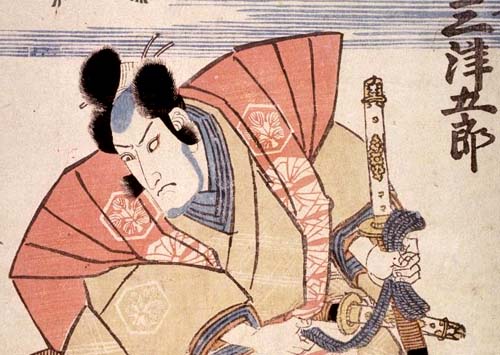
Bandô Mitsugorô III playing the role of the warrior Hayakawa Yukikage in a print made by Utagawa Kunisada between (1825~1835) Print made by Utagawa Toyokuni in 1811 Print made by Utagawa Kunisada (1815 ~ 1820) Print made by Utagawa Toyokuni in 1815 Print made by Utagawa Kunisada in 1817 Print made by Utagawa Kunisada in 1819 Print made by Utagawa Toyokuni in 1820 Print made by Utagawa Toyokuni in 1820 Print made by Utagawa Toyokuni in 1822 Print made by Utagawa Kunisada in 1824 Print made by Utagawa Kunisada in 1825 Print made by Utagawa Kuniyoshi in 1832 The Bandô Mitahachi line of actors The Bandô Minosuke line of actors The Morita Kanjirô line of actors The Bandô Minosuke line of actors The Bandô Mitsugorô line of actors |
|
|
| Contact | Main | Top | Updates | Actors | Plays | Playwrights | Programs | Links | FAQ | Glossary | Chronology | Illustrations | Prints | Characters | Derivatives | Theaters | Coming soon | News |