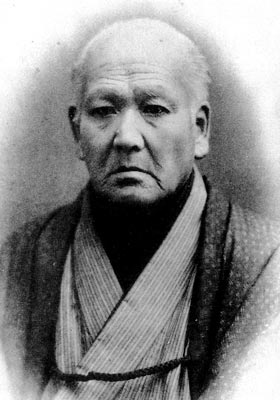
| KAWATAKE MOKUAMI |
|
Playwright names:
Others names:
Real Name: Yoshimura Yoshisaburô Poetry name: Kisui Existence: 3rd day of the 2nd lunar month of 1816 [1] ~ 22 January 1893 Connection: Master: Tsuruya Nanboku V Adopted son: Kawatake Shigetoshi Disciples: Kawatake Shinshichi III, Kawatake Shigetoshi, Kawatake Nôshin II, Takeshiba Kisui, Takeshiba Ginzô, Takeshiba Shûyô, Takeshiba Shigezô, Takeshiba Hyôzô I, Kubota Hikosaku Career: 1st day of the 3rd lunar month of 1816: born in Edo in the district of Nihonbashi; he was the son of a merchant family. 1834: he became disciple of Tsuruya Magotarô IV and received the name of Katsu Genzô I. 1841: he took the name of Shiba Shinsuke ( 1842: he took the name of Shiba Shinsuke ( 11th lunar month of 1843: he became tatesakusha at the Kawarasakiza and took the name of Kawatake Shinshichi II. 7th lunar month of 1852: premiere at the Kawarasakiza of Shinshichi's drama "Jiraiya Gôketsu Monogatari" [casting]. 2nd lunar month of 1853: premiere at the Kawarasakiza of Shinshichi's drama "Shiranui Monogatari", which was based on Ryûkatei Tanekazu's long novel of the same title [more details]. 3rd lunar month of 1854: premiere at the Kawarasakiza of Shinshichi's drama "Miyakodori Nagare no Shiranami" [casting]. 9th lunar month of 1856: premiere at the Ichimuraza of Shinshichi's 9-act drama "Tsuta Momiji Utsunoya Tôge"; the 2 leading stars were Ichikawa Kodanji IV (the blind masseur Bun'ya and the thief Niza) and Bandô Kamezô I (Itamiya Jûbê). 11th lunar month of 1856: premiere at the Ichimuraza of Shinshichi's drama "Shôchikubai Yuki no Akebono" [casting]. 7th lunar month of 1857: premiere at the Ichimuraza of Shinshichi's drama "Ami Moyô Tôro no Kikukiri" (commonly called "Kozaru Shichinosuke") [casting]. 3rd lunar month of 1858: premiere at the Ichimuraza of Shinshichi's drama "Edo Zakura Kiyomizu Seigen"; the nibanme of this drama is now entitled "Kurotegumi Kuruwa no Tatehiki" in the Kabuki repertoire (commonly called "Kurotegumi Sukeroku") [more details]. 2nd lunar month of 1859: premiere at the Ichimuraza of Shinshichi's drama "Kosode Soga Azami no Ironui" (commonly called "Izayoi Seishin") [casting]. 9th lunar month of 1859: premiere at the Ichimuraza of Shinshichi's Kiyomoto-based dance "Jitsugetsusei Chûya no Oriwake", commonly called "Ryûsei" [more details]. 1st lunar month of 1860: premiere at the Ichimuraza of Shinshichi's drama "Sannin Kichisa Kuruwa no Hatsugai" (commonly called "Sannin Kichisa") [casting]. 3rd lunar month of 1860: premiere at the Ichimuraza of Shinshichi's drama "Kagamiyama Gonichi no Iwafuji" [casting]. 7th lunar month of 1860: premiere at the Ichimuraza of Shinshichi's drama "Hachiman Matsuri Yomiya no Nigiwai" (commonly called "Chijimiya Shinsuke") [casting]. 8th lunar month of 1861: premiere at the Moritaza of Shinshichi's drama "Sakura Sôshi Gonichi no Bundan", a revised version of Segawa Jokô III's drama "Higashiyama Sakura Sôshi", [casting]. 3rd lunar month of 1862: premiere at the Ichimuraza of Shinshichi's drama "Aoto Zôshi Hana no Nishikie" (commonly called "Shiranami Gonin Otoko") [casting]. 8th lunar month of 1862: premiere at the Moritaza of Shinshichi's drama "Kanzen Chôaku Nozoki Garakuri" [casting]. Revival in the same theater of the drama "Miyajima no Danmari", with a new script written by Shinshichi and starring Ichikawa Kodanji IV in the leading roles of the courtesan Ukifune and the thief Kesatarô. 2nd lunar month of 1863: premiere at the Ichimuraza of Shinshichi's drama "Sandai Banashi Kôza no Shinsaku" [more details]. 2nd lunar month of 1864: premiere at the Ichimuraza of Shinshichi's drama "Soga Moyô Tateshi no Goshozome" [casting]. 4th lunar month of 1864: premiere at the Moritaza of Shinshichi's drama "Wakaba no Ume Ukina no Yokogushi" (commonly called "Kirare Otomi", in English 'Scarface Otomi') [casting]. 11th lunar month of 1864: premiere at the Ichimuraza of Shinshichi's drama "Koharunagi Okitsu Shiranami" (commonly called "Kogitsune Reiza") [casting]. 5th lunar month of 1865: premiere at the Nakamuraza of Shinshichi's drama "Chûshingura Gonichi no Tatemae" [more details]. 7th lunar month of 1869: premiere at the Nakamuraza of Shinshichi's drama "Kichisama Mairu Yukari no Otozure" [casting]. 9th lunar month of 1869: premiere at the Ichimuraza of Shinshichi's drama "Momoyama Monogatari", commonly called "Jishin Katô" ("Earthquake Katô"); Kawarasaki Gonnosuke VII played the leading role of Katô Kiyomasa. This drama was a first experiment, which foreshadowed the katsureki plays. 3rd lunar month of 1870: premiere at the Moritaza of Shinshichi's drama "Keian Taiheiki"; the leading role of Marubashi Chûya was played by Ichikawa Sadanji I. Premiere at the Nakamuraza of "Ume Goyomi Tatsumi no Sono", an adaptation to Kabuki by Shinshichi and Segawa Jokô III of Tamenaga Shunsui's 1833 novel "Shunshoku Ume Goyomi" [casting]. 7th lunar month of 1872: premiere at the Murayamaza of Shinshichi's dance "Renjishi", which starred Bandô Hikosaburô V and Sawamura Tosshô II in the roles of the spirits of Lions (parent and cub). March 1873: premiere at the Murayamaza of Shinshichi's drama "Taiko no Oto Chiyû Sanryaku" (commonly called "Sakai no Taiko") [casting]. June 1873: premiere at the Nakamuraza of Shinshichi's drama "Tsuyu Kosode Mukashi Hachijô" (commonly called "Kamiyui Shinza") [casting]. October 1874: premiere at the Kawarasakiza of Shinshichi's drama "Kumo no Ueno San'e no Sakumae" [casting]. June 1876: premiere at the Shintomiza of Shinshichi's drama "Hototogisu Date no Kikigaki" [casting]. April 1877: premiere at the Shintomiza of Shinshichi's drama "Fujibitai Tsukuba no Shigeyama", a zangirimono written for Onoe Kikugorô V and Ichikawa Sadanji I [more details]. December 1877: premiere at the Shintomiza of Shinshichi's drama "Kômonki Osana Kôshaku" [more details]. February 1879: premiere at the Shintomiza of Shinshichi's drama "Ningen Banji Kane no Yo no Naka" [casting]. September 1879: the zamoto Morita Kan'ya XII produced at the Shintomiza an original play "Hyôryû Kidan Seiyô Kabuki" ("A strange story about drifters and Western Kabuki"!), written by Shinshichi and staged with some Western actors. The plot was about the adventures of a group of Japanese in Europe and in the USA. The play included several Italian-style operettas, which disconcerted the audience. This original performance was a complete commercial failure. March 1881: premiere at the Shintomiza of Shinshichi's drama "Kumo ni Magou Ueno no Hatsuhana" [casting]. May 1881: premiere at the Saruwakaza of Shinshichi's drama "Ôsakazuki Shusen no Tsuwamono" [casting]. June 1881: premiere at the Shintomiza of Shinshichi's jidaimono "Youchi Soga Kariba no Akebono" [casting]. Premiere at the Shintomiza of Shinshichi's dance-drama "Tsuchi-gumo", which was staged to commemorate the 32nd anniversary (33rd memorial service) of late Onoe Kikugorô III [casting]. October 1881: premiere at the Harukiza of Shinshichi's drama "Kiwametsuki Banzui Chôbê" [casting]. November 1881: Kawatake Shinshichi II took the name of Kawatake Mokuami [2] (to retire) for the premiere at the Shintomiza of his zangirimono drama "Shima Chidori Tsuki no Shiranami"; this was supposed to be his isse ichidai drama [casting]. June 1882: premiere at the Saruwakaza of Mokuami's Nagauta-based matsubamemono "Imayô Mochizuki" (commonly called "Mochizuki") [casting]. January 1883: premiere at the Shintomiza of Mokuami's drama "Medeshi Yanagi Midori no Matsumae" [casting]. April 1883: premiere at the Shintomiza of Mokuami's Nagauta-based matsubamemono "Ibaraki" [casting]. May 1883: premiere at the Ichimuraza of Mokuami's drama "Shin Sarayashiki Tsuki no Amagasa" [casting]. November 1884: premiere at the Saruwakaza of Mokuami's katsureki drama "Hôjô Kudai Meika no Isaoshi" [casting]. February 1885: premiere at the Chitoseza of Mokuami's drama "Suitengû Megumi no Fukagawa" [casting]. November 1885: premiere at the Chitoseza of Mokuami's drama "Shisen Ryô Koban no Ume-no-Ha" [3] [more details]. Premiere at the Shintomiza of Mokuami's Nagauta-based matsubamemono "Funa Benkei" [4] [casting]. March 1886: premiere at the Chitoseza of Mokuami's drama "Mekura Nagaya Ume-ga-Kagatobi" [casting]. October 1887: premiere at the Shintomiza of Mokuami's matsubamemono "Momijigari" [casting]. October 1890: premiere at the Kabukiza of Mokuami's Tokiwazu-based dance-drama "Modoribashi" [casting]. 22 January 1893: Mokuami died in Tôkyô. Comments: Kawatake Mokuami was a versatile and prolific Japanese playwright, the last great Kabuki playwright of the Edo period. "Kawatake was one of the most prolific of all dramatists. Of his more than 360 plays, about 130 are domestic plays, 90 are historical plays, and 140 are dance dramas. His plays are still performed frequently and constitute almost half of those currently in the Kabuki repertoire. They are especially notable for powerful lyrical passages recited to a musical accompaniment, which serves to intensify the mood of the dramatic situation. The plays also draw appeal from their exact and realistic portrayals of characters from the lower social classes and from their explicit love scenes." (Encyclopædia Britannica) "Kawataki Mokuami was not only the representative playwright of Meiji, he was the last of the Kabuki sakusha. After him theatre conditions changed rapidly, the good relations between sakusha and yakusha that had so long endured were destroyed, and peace and harmony between them have not yet been restored. To such an extent does the modern stage owe allegiance to Mokuami that there is hardly a month that does not see a production of one of his plays in Tôkyô, and as he wrote some three hundred plays, there seems no danger that the supply will run out for some time to come. He was essentially a edokko, for he came of five generations of a Edo family which lived in Nihonbashi, the centre of the metropolis, and the headquarters of the national domestic trade. His plays show wide familiarity with the lower and middle classes of Edo, and are a mirror of his times. He was a precocious youth, and early started to indulge in dissipation. As he seemed disinclined to stop his irregular life, his father disinherited him--a younger brother succeeding as head of the family. Mokuami had little education, and began to associate early with the people of shibai, becoming an apprentice to drama at the age of 20, and dying in the middle of the Meiji period at 78. When the seventh Danjûrô returned to Edo after his long exile,
Mokuami wrote the piece played by this member of the Ichikawa family as a sign of
his thankfulness that he had been able to return to the Edo stage.
For Danjûrô, the ninth, Mokuami also wrote some of his best plays.
He saw Edo change to Tôkyô; composed realistic Edo plays for Kodanji,
who was active in the early years of Meiji; and in his old age collaborated with
Fukuchi in the writing of "Botan Dôrô", or The Peony Lantern, one of Kabuki's best
ghost plays. So repeatedly did Mokuami choose highwaymen and thieves for the characters
of his plays that he was sometimes called the dorobo, or robber, playwright.
He was also fond of priests, and the scenes of his plays pass from robbers' dens,
reminiscent of Oliver Twist, to temples and lonely graveyards. Through the whole
series runs the contrast between the richly clad priest and the sinister robber.
The night side of Tôkyô life was often his theme, but frequently he portrayed
the lower classes in their struggle against injustice and oppression.
His zangirimono, or cropped-hair plays, are a study of the disordered times
when the impact of the West upon Japan caused the two swords as well as the queue
to be discarded, and show the comic as well as tragic side of life in this
transitional period. Among his numerous works may be mentioned "Kôchiyama",
a play dealing with an historical personage, the daimyô of Matsue,
who was noted in his day for his profligacy. It is interesting to know that the
loyal retainer of this feudal lord, who committed harakiri because his master
would not listen to his advice and mend his ways, was the grandfather of the widow of
Lafcadio Hearn. Some seventy years ago, this dramatic happening was written
for the stage, but the daimyô of Matsue stopped its production by paying a
large sum of money. Danjûrô, Kikugorô, and Sadanji
acted together in this play, and it has been revived many times." [1] The 3rd day of the 2nd lunar month of the 13th year of the Bunka era was the 1st of March 1816 in the western calendar. [2] "Sensing the winds of change, Mokuami announced his retirement, and in 1881, at the age of sixty-five, completed what he believed would be his last play. In it, characteristically, all of the main characters were criminals. He gave the name of Kawatake Shinshichi to his leading disciple and took the name Mokuami. This name has a special significance. It comes from the expression moto no Mokuami (“back to the old Mokuami”) and refers to a humble person who, like the original Mokuami, a blindman forced by circumstances to impersonate a feudal lord, returns voluntarily to his former state. But it was not possible for a writer of Mokuami’s stature and ability to retire completely. Theater owners and actors persuaded him to continue writing." (from "The Love of Izayoi & Seishin: A Kabuki Play by Kawatake Mokuami") [3] The first day of staging was the 22nd of November 1885. [4] The first day of staging was the 24th of November 1885.
Kawatake Mokuami The Katsu Genzô line of playwrights The Kawatake Shinshichi line of playwrights |

|
|
| Contact | Main | Top | Updates | Actors | Plays | Playwrights | Programs | Links | FAQ | Glossary | Chronology | Illustrations | Prints | Characters | Derivatives | Theaters | Coming soon | News |