| ICHIKAWA EBIZÔ II |
|
Stage names:
Other name:
Guild: Naritaya Line number: NIDAIME (II) Poetry names: Sanshô (1), Saigyû, Hakuen Existence: 11th day of the 10th lunar month of 1688 [1] ~ 24th day of the 9th lunar month of 1758 [2] Connections: Father: Ichikawa Danjûrô I Adopted son: Ichikawa Danjûrô III Illegitimate son: Ichikawa Ebizô III (Danjûrô IV) Grandson: Ichikawa Hakuen I (Danjûrô V) Great-grandson: Ichikawa Momotarô Great-great-grandson: Ichikawa Ebizô V (Danjûrô VII) Great-great-great-grandson: Ichikawa Danjûrô VIII, Ichikawa Danjûrô IX, Ichikawa Ebizô VII, Ichikawa Ebizô VIII, Ichikawa Komazô VI, Ichikawa Saruzô I, Ichikawa Kôzô Disciples: Ichikawa Monnosuke I, Ichikawa Yaozô I, Ichikawa Raizô I, Mimasuya Sukejûrô I, Ichikawa Kuzô 1.2, Ichikawa Ryûzô, Ichikawa Sadanji I, Ichikawa Danshirô II, Ichikawa Gennosuke, Ichikawa Shinzô I, Ichikawa Shinjûrô, Ichikawa Kaoru II, Ichikawa Dangorô I, , Ichikawa Dangorô II (?), Ichikawa Dangorô III, Ichikawa Wajûrô, Ichikawa Kinzaburô, Ichikawa Dantarô, Ichikawa Montarô, Ichikawa Kanjûrô, Ichikawa Gentarô Career: 11th day of the 10th lunar month of 1688 [1]: born in Edo. It was said that his father Ichikawa Danjûrô I prayed at the Narita Fudôson temple in order to have a son and the deity Fudô Myôô granted his wish. 5th lunar month of 1697: he made his first appearance on stage and received the name of Ichikawa Kuzô I, at the Nakamuraza, performing with his father in the new year sogamono drama "Tsuwamono Kongen Soga" [more details]. The play was written by his father and the young Kuzô played the roles of a yamabushi priest and, for the first time in Kabuki history, the deity Fudô [3]. 11th lunar month of 1700: Ichikawa Danjûrô I and Kuzô moved to the Nakamuraza, where they played the roles of Kinpira and Kaidômaru in the kaomise drama "Kinpira Rokujô Gayoi". Young Kuzô delivered his first lines during this performance. 11th lunar month of 1701: Kuzô played in the same theater the role of Tanba Suketarô in the kaomise drama "Keisei Ikazuchi Mondô". 7th lunar month of 1702: Kuzô and his father Ichikawa Danjûrô I achieved a great success by playing in the same theater the roles of the 2 Benkei ("Ninin Benkei") in the drama "Shinpan Takadachi Benkeijô". 10th lunar month of 1702: Kuzô played in the same theater the role of Shintoku in the drama "Yûgao no Kannon Hôben". 11th lunar month of 1702: Ichikawa Danjûrô I and Kuzô moved to the Moritaza and performed together in the kaomise drama "Tenchijin Tsutsumamori". Kuzô played for the first time the superhero role (Izumi Kojirô in this performance) in a "Shibaraku" scene. 4th lunar month of 1703: Kuzô played in the same theater the roles of Kûkai and the deity Fudô in the drama "Naritasan Bunshin Fudô". 7th lunar month of 1703: Kuzô played in the same theater the role of Ike no Shôji in the drama "Oguri Jûnidan". 11th lunar month of 1703: Kuzô and his father moved to the Ichimuraza; he played the role of Araômaru in the kaomise drama "Genji Rokujûjô". 19th day of the 2nd lunar month of 1704 [4]: his father Ichikawa Danjûrô I was killed in the backstage of the Ichimuraza by his rival (in love ?) Ikushima Hanroku. 7th lunar month of 1704: Ichikawa Kuzô I, who was only in his sixteenth year, took the name of Ichikawa Danjûrô II at the Yamamuraza, playing the aragoto role of Ôe Yatômaru in the drama "Heianjô Miyako Sadame". The costum was identical to the one used by his late father when he performed the bombastic role of Konpira and there was a spectacular tachimawari scene to please the audience. 1704 ~ 1709: Danjûrô's career stagnated because of the influence on theater management of some enemies of his late father. Getting mainly minor roles, he used his free time to study with enthusiasm, following some strong principles: always put literature at the top of the list, respect others people, live discreetly, no selfishness, no laziness. He also made regular pilgrimages to the Narita Fudôson temple, praying the deity Fudô Myôô to go beyond his father's artistic accomplishments. 11th lunar month of 1706: Danjûrô played the role of Kinpira at the Yamamuraza in the kaomise drama "Kaeribana Buyû Kagami", which celebrated the arrival in Edo of the Kamigata actor Takeshima Kôzaemon I. Premiere at the Yamamuraza of the kaomise drama "Taihei Shusse Kagekiyo Shiraume no Hata", which was considered as an earlier version of the Kabuki Jûhachiban drama "Kagekiyo"; Danjûrô played the role of Sasaki Takatsuna [casting]. 3rd lunar month of 1707: Danjûrô's rank in the Edo hyôbanki, tachiyaku section, was jô (superior) [visual]. 11th lunar month of 1708: Danjûrô played at the Yamamuraza the role of Hayato in the kaomise drama "Yorimasa Shiki Samba". 3rd lunar month of 1709: Danjûrô's rank in the Edo hyôbanki, tachiyaku section, was jô-jô (superior - superior) [visual]. 7th lunar month of 1709: Danjûrô achieved a triumphant success at the Yamamuraza, playing the role of the uirô peddler Kumehachirô, in the "Mogusa Uri" [15] scene of the drama "Keisei Hibari Yama", whose main character was the famous Princess Chûjô. This role, with fast-spoken lines; his stage partners were Yamanaka Heikurô I, Ikushima Shingorô, Ogawa Zengorô I and Nakamura Gentarô, who played the role of Princess Chûjô. There was also a "Zôhiki" scene integrated within this summer drama. 11th lunar month of 1709: Danjûrô played in the same theater the aragoto role of Arajishi Otokonosuke in the kaomise drama "Taihei Okuni Kabuki", which celebrated the arrival in Edo of the Kamigata actors Asao Jûjirô I, Arashi Sanjûrô I and Fujikawa Buzaemon I. 1st lunar month of 1710: Danjûrô played in the same theater the role of Sanada Yoichi in the new year drama "Keisei Izu Nikki". 9th lunar month of 1710: Danjûrô played in the same theater the role of Tôgorô in the drama "Ômi Genji"; his stage partner in the role of Sasaki Moritsuna was Murayama Heiemon III. 11th lunar month of 1710: Danjûrô played at the Yamamuraza the role of Ôe Saemon, challenging on stage the villain Ôtani Hiroemon I in the role of Danjô Saemon, in the kaomise drama "Jinriki Teika Azuma Asobi", which celebrated the arrival in Edo of the Kamigata actor Arashi Kiyosaburô I. 1st lunar month of 1711: Danjûrô played in the same theater the role of Soga Gorô Tokimune in the new year sogamono drama "Yunzei Yomeiri Soga"; his stage partners in the roles of Soga Jûrô Sukenari, Kudô Saemon Suketsune, the courtesan Kewaizaka no Shôshô (Gorô's lover), the courtesan Ôiso no Tora (Jûrô's lover) and Kobayashi no Asahina were Ikushima Shingorô, Ôtani Hiroemon I, Sakata Oginojô, Nakamura Gentarô and Ôtani Hiroji I. 11th lunar month of 1711: Danjûrô played at the Yamamuraza the role of Ukishima Danjô in the kaomise drama "Shida Konjiki no Uroko". 1st lunar month of 1712: Danjûrô's rank in the Edo hyôbanki, tachiyaku section, was jô-jô-kichi (superior - superior - excellent) [visual]. He played in the same theater the role of Hayata in the new year drama "Fukuwara Yunzei Yorimasa". 1st lunar month of 1713: Danjûrô played at the Yamamuraza the role of Ishiyama Genta in the kaomise drama "Ishiyama Genta Kimon Yaburi" [5]. 3rd lunar month of 1713: premiere at the Yamamuraza of the play "Hana Yakata Aigo Zakura", which was the first "Sukeroku" drama [14] in Kabuki history. Danjûrô played the leading role of Sukeroku [casting]. 7th lunar month of 1713: Danjûrô played in the same theater the role of Zenkô in the drama "Zenkô Naniwa Ike"; his stage partner in the role of the villain Tôhei was Yamanaka Heikurô I. 11th lunar month of 1713: Danjûrô played at the Yamamuraza the role of Kazusanosuke in the kaomise drama "Sazare Ishi Nasu no Futahashira". 2nd lunar month of 1714: Ejima, a court lady who served the Shôgun, was in love with the star Ikushima Shingorô. Their affair was discovered in the backstage of the Yamamuraza. This incident, which broke the boundaries between samurai and commoner, was a serious crime for the shogunal authorities which decided to deal ruthlessly with the culprits: Ejima and Ikushima Shingorô were exiled to different places, those in the Shôgun's household who were held responsible were executed, the Yamamuraza was definitively closed and its management was heavily fined [more details]. 5th lunar month of 1714: Danjûrô moved to the Moritaza and played the role of Daitôji Tabatanosuke in the drama "Aigo no Waka". 7th lunar month of 1714: Danjûrô played in the same theater the role of Kanemichi in the drama "Kinkazan Ôtomo no Matori". 11th lunar month of 1714: Danjûrô moved to the Nakamuraza and played the role of Kamakura Gongorô Kagemasa (the superhero in the "Shibaraku" scene) in the kaomise drama "Banmin Daifukuchô"; the villain of the play was the Kurozuka ogress, performed by Yamanaka Heikurô I. 1st lunar month of 1715: Danjûrô played in the same theater the role of Soga Gorô Tokimune in the new year drama "Bandô Ichi Kotobuki Soga"; the roles of Soga Jûrô Sukenari, Kudô Saemon Suketsune, the courtesan Kewaizaka no Shôshô (Gorô's lover) and Kobayashi no Asahina were played by Katsuyama Matagorô, Ogawa Zengorô I, Nakamura Takesaburô I and Tomizawa Hanzaburô I. 5th lunar month of 1715: Danjûrô played in the same theater the role of the wicked priest Narukami in the drama "Narukami Shônin"; the role of Princess Taema was played by Nakamura Takesaburô I. 7th lunar month of 1715: Danjûrô played in the same theater the role of Fuwa Banzaemon in the drama "Mimasu Nagoya". The performance was a successful long run (from the 15th day of the 6th month to the 8th day of the 9th month). 9th lunar month of 1715: Danjûrô played in the same theater the roles of Yume no Yoshisada and Shinozuka Gorô in the drama "Wagô Taiheiki". 11th lunar month of 1715: Danjûrô played at the Nakamuraza the role of Endô Musha in the kaomise drama "Kogane no Kaburi Konrei Yorimasa". 11th day of the 1st lunar month of 1716 [6]: a fire broke out in the district of Shitaya Ike-no-Hata and spread to others sections of Edo, destroying both the Ichimuraza and the Nakamuraza. Danjûrô had to take some unintended vacation during the rebuilding of the theater. 2nd lunar month of 1716: Danjûrô played in the same theater the role of Soga Gorô Tokimune in the new year drama "Shikirei Yawaragi Soga"; the roles Kudô Saemon Suketsune, the courtesan Kewaizaka no Shôshô (Gorô's lover) and Kobayashi no Asahina were played by Hayakawa Dengorô, Nakamura Takesaburô I and Ôtani Hiroji I. The play included a "Sukeroku" section in which the roles of Sukeroku, Agemaki and Ikyû were played by Danjûrô, Nakamura Takesaburô I and Ôtani Hiroemon I. 7th lunar month of 1716: Danjûrô played in the same theater the role of Soga Gorô Tokimune in the drama "Zenji Soga". 11th lunar month of 1716: Danjûrô played at the Nakamuraza the role of Imai Shirô Kanehira in the kaomise drama "Mitsudomoe Katoku Biraki", which celebrated the shûmei of Arashi Kiyosaburô II. 22nd day of the 1st lunar month of 1717 [7]: a fire broke out in the district of Koishikawa and spread to others sections of Edo, destroying both the Ichimuraza and the Nakamuraza. Danjûrô had to take some unintended vacation during the rebuilding of the theater. 2nd lunar month of 1717: Danjûrô played in the same theater the role of Soga Gorô Tokimune, in reality the otokodate Karigane Bunshichi, in the new year drama "Kaidô Ichi Muneage Soga"; the roles Kudô Saemon Suketsune, Soga Jûrô Sukenari, the courtesan Kewaizaka no Shôshô (Gorô's lover) and Kobayashi no Asahina were played by Ichikawa Sukejûrô, Tomizawa Hanzaburô I, Nakamura Gentarô and Ôtani Hiroemon I. 5th lunar month of 1717: Danjûrô played in the same theater the role of Watônai in Chikamatsu Monzaemon's drama "Kokusen'ya Takarabune" [casting]. 7th lunar month of 1717: Danjûrô played in the same theater the roles of Daikyôji no Mohê and Zenjibô in the drama "Hoshiai Narukami Soga". 9th lunar month of 1717: Danjûrô played in the same theater the role of Oguri Kanzô in the drama "Chôyô Oguri no Sekku". 11th lunar month of 1717: Danjûrô moved to the Moritaza and played the role of Shinozuka Gorô in the kaomise drama "Hônô Taiheiki"; his stage partners were Hayakawa Dengorô, Ôtani Hiroemon I, Ogawa Zengorô I, Asao Jûjirô I and Ichikawa Monnosuke I. 1st lunar month of 1718: Danjûrô played in the same theater the role of Soga Jûrô Sukenari in the new year drama "Wakamidori Ikioi Soga"; the role of Soga Gorô Tokimune was played by Sodeoka Shôtarô. Danjûrô also played the leading role of the "Uirô Uri" scene [16], which was staged in the second part (nibanme) of this program. The performance was a successful long run (from the 1st lunar month to the 7th lunar month of 1718). 9th lunar month of 1718: Danjûrô played in the same theater the role of Seijûrô in the drama "Shikirei Imagawajô"; the role of Onatsu was played by Ichikawa Monnosuke I. 11th lunar month of 1718: Danjûrô moved to the Nakamuraza and played the role of Kawazu Saburô Sukeyasu in the kaomise drama "Hirakana Yomeiri Izu Nikki", which celebrated the arrival in Edo of the Kamigata onnagata actor Sanogawa Mangiku. 1st lunar month of 1719: Chikamatsu Monzaemon's play "Sonezaki Shinjû" was staged for the first time at the Nakamuraza, starring Danjûrô and Sanogawa Mangiku in the roles of Hiranoya Tokubê and the courtesan Tenmaya Ohatsu (Tokubê's lover). Danjûrô also played the role of Soga Gorô Tokimune in the sogamono "Kaibyaku Sakayaki Soga", commonly called "Ninin Kudô" ("The two Kudô"), sharing the stage with the 2 jitsuaku actors Hayakawa Dengorô and Yamanaka Heikurô I in the two Kudô Saemon Suketsune. 9th lunar month of 1719: Danjûrô played in the same theater the role of Chûshichi in the drama "Osome Hisamatsu Shinjû" ("The double suicide of Osome and Hisamatsu"); the roles of Osome and Hisamatsu were played by Nakamura Kiyosaburô I and Sanogawa Mangiku. The performance was a great success. 11th lunar month of 1719: Danjûrô moved to the Moritaza and played the role of Murakami Hikoshirô in the kaomise drama "Banmin Taiheiki". 1st lunar month of 1720: Danjûrô played in the same theater the role of Soga Gorô Tokimune in the bombastic "Ya-no-Ne" scene, included in the new year sogamono drama "Yuzuriha Kongen Soga", which commemorated the 16th anniversary (17th memorial service) of the passing away of Ichikawa Danjûrô I. Danjûrô's incredible performance was a huge success; his stage partner in the role of Soga Jûrô Sukenari was Sawamura Sôjûrô I. He also performed in duo with Sanjô Kantarô II in the shinjûmono "Shinjû Kasane Izutsu", which commemorated the 16th anniversary (17th memorial service) of the suicide of the couple Tokubê (played by Danjûrô) and Ofusa (played by Sanjô Kantarô II) [more details]. 2nd lunar month of 1720: Danjûrô's rank in the Edo hyôbanki, tachiyaku section, was goku-jô-jô-kichi (extreme - superior - superior - excellent) [Visual]. 11th lunar month of 1720: Danjûrô played at the Moritaza the roles of Watanabe no Taketsuna (created by Nakamura Shichisaburô I) and Sakata Kintoki (created by Ichikawa Danjûrô I) in the kaomise drama "Kaigô Sakiwake Shitennô". Danjûrô's performance was well received by the audience and the critics praised him for mastering to perfection two different acting styles. 1st lunar month of 1721: Danjûrô played in the same theater the role of Soga Gorô Tokimune in the new year sogamono "Nigiwai Suehiro Soga"; his stage partners in the role of Soga Jûrô Sukenari, Kudô Saemon Suketsune, the courtesan Kewaizaka no Shôshô (Gorô's lover) and Kobayashi no Asahina were Mimasuya Sukejûrô I, Ogawa Zengorô I, Sodesaki Miwano I and Narumi Goroshirô I. The performance was a tremendous success. 5th lunar month of 1721: Danjûrô played in the same theater the role of Kamiya Jihê in Chikamatsu Monzaemon's drama "Shinjû Ten no Amijima"; the role of Kinokuniya Koharu was played by Sodesaki Miwano I. 11th lunar month of 1721: Danjûrô moved to the Nakamuraza and played the role of Kantô Koroku (the superhero in the "Shibaraku" scene) in the kaomise drama "Torisaka no Jô Tsuru no Sugomori". 1st lunar month of 1722: Danjûrô played in the same theater the roles of Soga Gorô Tokimune and Yodoya Tatsugorô in the new year sogamono "Ôkamado Akinai Soga". He achieved a great success in duo with Sakata Hangorô I, who played the role of Kobayashi no Asahina wearing a maegami wig, in a kusazuribiki scene. 8th lunar month of 1722: Danjûrô played in the same theater the role of Kijûrô in the drama "Hana Môsen Futatsu Haraobi"; his stage partners in the roles of Ochiyo and her lover Hanbê were Arashi Wakano I and Nakamura Shichisaburô II. Danjûrô's performance, which reminded the connoisseurs of his father's ones, was well received. 11th lunar month of 1722: Danjûrô played at the Nakamuraza the role of Nitta Yoshisada in the kaomise drama "Hônen Taiheiki". 1st lunar month of 1723: Danjûrô played in the same theater the role of Soga Gorô Tokimune in the new year sogamono "Soga Koyomi Biraki"; the roles Soga Jûrô Sukenari and Kudô Saemon Suketsune were played by Mimasuya Sukejûrô I and Ogawa Zengorô I. Danjûrô and Ôtani Hiroji I performed together in a spectacular aragoto roof-demolishing scene (yane kuzusu) at the end of the program. 5th lunar month of 1723: Danjûrô played in the same theater the role of Minamoto Yoshitsune in the drama "Yoshitsune Kunkôki". 11th lunar month of 1723: Danjûrô played at the Nakamuraza the role of Sano Genzaemon Tsuneyo [print] in the kaomise drama "Sono Enpô Onna Migyôsho", which celebrated the arrival at the Nakamuraza of the Kamigata actors Yamashita Kinsaku I and Sanogawa Senzô. 1st lunar month of 1724: Danjûrô played in the same theater the role of Yamagami Gennai, in reality Sano Genzaemon Tsuneyo, in the new year drama "Matsu Kazari Kamakura Biraki". 2nd lunar month of 1724: Danjûrô played in the same theater the role of Hanaoka Gontarô in the drama "Keisei Asama-ga-Dake", which commemorated the 16th anniversary (17th memorial service) of the passing away of Nakamura Shichisaburô I. 3rd lunar month of 1724: Danjûrô played in the same theater the role of Hidari Jingorô in the drama "Irifune Sumidagawa". 7th lunar month of 1724: Danjûrô played in the same theater the role of Soga Gorô Tokimune in the drama "Minori Kuru Hoshiai Soga"; the roles of Soga Jûrô Sukenari, Kudô Saemon Suketsune and Kobayashi no Asahina were played by Mimasuya Sukejûrô I, Ogawa Zengorô I and Narumi Goroshirô I. 11th lunar month of 1724: Danjûrô played at the Nakamuraza the role of Arajishi Otokonosuke in the kaomise drama "Taiheiki Okuni Kabuki"; his stage partners were Sawamura Sôjûrô I, Yamashita Kinsaku I, Matsumoto Kôshirô I and Ichikawa Monnosuke I. 1st lunar month of 1725: Danjûrô played in the same theater the roles of Sanada Yoichi and Doi Yatarô in the new year drama "Funadama Izu Nikki". His hayagawari performance was very well received by the audience. 5th lunar month of 1725: Danjûrô played in the same theater the role of Tadanobu in the play "Goban Tadanobu". 11th lunar month of 1725: Danjûrô played at the Nakamuraza the role of Ike no Shôji in the kaomise drama "Oguri Chôseiden", whose plot and characters belonged to the "Oguri Hangan" world. 1st lunar month of 1726: Danjûrô played in the same theater the roles of the wicked priest Narukami and Shuten Dôji in the new year drama "Kadomatsu Shitennô", which commemorated the 22nd anniversary (23rd memorial service) of the passing away of his father Ichikawa Danjûrô I; his stage partner in the role of Princess Taema was Yamamoto Hanazato. Danjûrô performed also the "Uirô Uri" scene. This new year drama was a triumphant success. Summer 1726: Danjûrô performed in the same theater in the drama "Suehiro Nagoya". He played the role of Fuwa Banzaemon, confronting Sawamura Sôjûrô I in the role of Nagoya Sanza in a great "Sayaate" scene.
11th lunar month of 1726: Danjûrô played at the Nakamuraza the bombastic role of Kamakura Gongorô Kagemasa in the kaomise program "Kaomise Jûnidan", which included the great "Shibaraku" scene. 1st lunar month of 1727: Danjûrô played in the same theater the role of Soga Gorô in the new year sogamono "Yuzuriha Gongen Soga" [print]; his stage partner in the role of Soga Jûrô was Sawamura Sôjûrô I. 3rd lunar month of 1727: Danjûrô achieved a great success in the same theater by playing the role of Takenuki Gorô in a bombastic oshimodoshi scene [17] of the play "Kokusen'ya Takenuki Gorô" [24]. Danjûrô and Sawamura Sôjûrô I also played the roles of Utsumi Shintarô and Seigen in the drama "Konrei Otowa no Taki", which included a koroshiba well received by the audience. 4th lunar month of 1727: Danjûrô and Sawamura Sôjûrô I played in the same theater the roles of the rival warlords Takeda Shingen and Uesugi Kenshin in the drama "Kôyô Gun'u no Hanagasane". 11th lunar month of 1727: Danjûrô played at the Nakamuraza the role of Ôtô-no-Miya in the kaomise drama "Yatsumune Taiheiki" [more details]. For the first time in Kabuki history, a trap door was used on a Kabuki stage for actors stage entrances (seri dashi). This program celebrated the return of Ôtani Hiroji I (along with the Kamigata actor Kirinami Onoe) in Edo after 5 years spent in Kyôto. This was also the first stage appearance for Ichikawa Masugorô, the adopted son of Danjûrô. 1st lunar month of 1728: Danjûrô and Sawamura Sôjûrô I played in the same theater the roles of Soga Gorô and Soga Jûrô in the new year sogamono drama "Soga Hôraisan"; their stage partners in the roles of Kudô Saemon Suketsune, Kobayashi no Asahina, Ôiso no Tora (Jûrô's lover) and Kewaizaka no Shôshô (Gorô's lover) were Ogawa Zengorô I, Ôtani Hiroji I, Kirinami Onoe and Sanjô Kantarô II. 11th lunar month of 1728: Danjûrô played at the Nakamuraza the role of the warrior Tadanobu in the kaomise drama "Hoshi Kabuto Goban Tadanobu"; his stage partners in the roles of Minamoto Yoshitsune, Kajiwara Genta, Tadanobu's wife Kowata, Shizuka Gozen and Kyô-no-Kimi were Sawamura Sôjûrô I, Ôtani Hiroji I, Tsugawa Kamon, Sanjô Kantarô II and Sodesaki Iseno I. 1st lunar month of 1729: premiere at the Nakamuraza of the short and bombastic "Ya-no-Ne" scene [18], which was staged within the new year drama "Suehiro Ehô Soga"; Danjûrô and Sawamura Sôjûrô I played the leading roles of the brothers Soga Gorô and Soga Jûrô. The performance was a huge success and was extended up to the 5th lunar month. 25th day of the 1st lunar month of 1729 [23]: his disciple Ichikawa Monnosuke I died. 11th lunar month of 1729: great kaomise at the Nakamuraza. The 4 tachiyaku Bandô Hikosaburô I, Sawamura Sôjûrô I, Ôtani Hiroji I and Danjûrô performed together in the play "Ume Goyomi Konrei Nagoya". Danjûrô played the role of Nagoya Sanza, confronting Ôtani Hiroji I in the role of Fuwa Banzaemon in a sayaate scene. 1st lunar month of 1730: Danjûrô played in the same theater the role of Komusô no Gorô (Soga Gorô disguised as Komusô) in the new year sogamono drama "Kura-biraki Takarara Soga". The performance was a commercial failure. 4th lunar month of 1730: Danjûrô played in the same theater the role of Watônai in the drama "Karanishiki Kokusen'ya Gassen". Fall 1730: The actors Sawamura Sôjûrô I, Ôtani Hiroji I, Ogino Izaburô I, Bandô Hikosaburô I and Danjûrô performed in the same theater in the drama "Meigetsu Gonin Otoko" [8] [casting]. 11th lunar month of 1730: Danjûrô played at the Nakamuraza the role of Kawazu Saburô Sukeyasu in the kaomise drama "Irifune Hiru-ga-Kojima". 1st lunar month of 1731: Danjûrô played in the same theater the role of Fuwa Banzaemon in the drama "Keisei Fukubiki Nagoya" [9] [casting]. Spring 1731: Danjûrô played in the same theater the role of Gotô Saemon in the drama "Muko Denju Nishiki no Tazuna", whose plot and characters belonged to the "Oguri Hangan" world; his stage partners were Nakamura Shichisaburô II (Oguri Hangan), Ogino Izaburô I (Princess Terute), Segawa Kikunojô I (Tsumagi) and Sawamura Sôjûrô I (Onitsugu). 11th lunar month of 1731: Danjûrô played at the Nakamuraza the role of Kusunoki Masatsura in the kaomise drama "Wagô Ichiji Taiheiki", which celebrated the arrival in Edo of the Kamigata star Sadoshima Chôgorô I. 1st lunar month of 1732: Danjûrô played in the same theater the role of Oniô Shinzaemon in the new year sogamono drama "Hatsugoyomi Ainai Soga". 6th lunar month of 1732: bills started to announce in town the move of Danjûrô from the Nakamuraza to the Ichimuraza. 9th lunar month of 1732: final performance at the Nakamuraza for Danjûrô, who played the role of the warrior Kagekiyo in the drama "Ôichô Sakae Kagekiyo" [19] [casting]. 11th lunar month of 1732: Danjûrô moved to the Ichimuraza, playing the role of Sanada Yoichi in the kaomise drama "Tsuwamono Kongen Hiru-ga-Kojima"; his stage partners were Ôtani Hiroji I, Segawa Kikujirô I and Bandô Hikosaburô I. 1st lunar month of 1733: Danjûrô played in the same theater the roles of Soga Gorô and Soga Jûrô in the new year sogamono drama "Hanabusa Funjin Soga"; his stage partner in the role of Kudô Saemon Suketsune, the ennemy of the Soga brothers, was Bandô Hikosaburô I. Danjûrô also played the role of the shirozake seller Shinbê in "Sukeroku", which was staged as nibanme in this program; his stage partners in the roles of Sukeroku and Agemaki were Ichimura Takenojô IV and Segawa Kikujirô I. 3rd lunar month of 1733: Danjûrô played in the same theater the role of the wicked priest Narukami in the drama "Ôsakayama Narukami Fudô". 11th lunar month of 1733: Danjûrô played Ichimuraza the role of Kusunoki Masashige in the kaomise drama "Shôhon Taiheiki". 1st lunar month of 1734: Danjûrô played in the same theater the role of Soga Gorô in the new year sogamono drama "Nanakusa Nigiwai Soga"; his partner in the role of Soga Jûrô was the Kamigata star Arashi San'emon III. 3rd lunar month of 1734: Danjûrô, Ôtani Hiroji I, Bandô Hikosaburô I, Ichimura Takenojô IV and Sakata Hangorô I performed in the same theater in the otokodate drama "Gonin Otoko" but the performance was not a success. 5th lunar month of 1734: Danjûrô played in the same theater the role of Inoshishi no Hayata in the drama "Yatsumune Ayame Genji"; his stage partners in the roles of Minamoto no Yorimasa and Taira no Kiyomori were Ichimura Takenojô IV and Ôtani Hiroji I. Fall 1734: Danjûrô played in the same theater the role of Fuwa Banzaemon in the drama "Kongen Imagawajô". 11th lunar month of 1734: Danjûrô played at the Ichimuraza the role of Heidayû Kunitae in the kaomise drama "Michinoku Yunzei Genji". 1st lunar month of 1735: Danjûrô played in the same theater the role of Oniô Shinzaemon in the new year sogamono drama "Furiwakegami Hatsugai Soga". 4th lunar month of 1735: Danjûrô fell ill. 11th lunar month of 1735: great shûmei at the Ichimuraza for the Naritaya guild; Danjûrô gave his name to his adopted son and took the name of Ichikawa Ebizô II, playing the role of Hata no Daizen in the kaomise drama "Kongen Nana Komachi"; The actors Ichikawa Masugorô and Matsumoto Shichizô I respectively took the names of Ichikawa Danjûrô III and Matsumoto Kôshirô II. 4th lunar month of 1736: special program at the Ichimuraza commemorating the 32nd and 6th anniversaries (33rd and 7th memorial services) of the passing away of Ichikawa Danjûrô I and Matsumoto Kôshirô I; Danjûrô played the role of Shinozuka Gorô in the drama "Hobashira Taiheiki". Summer 1736: Ebizô played in the same theater the role of Gotô Saemon in the drama "Tôkaidô Yukumi Guruma", whose plot and characters belonged to the "Oguri Hangan" world; his stage partners were Ôtani Hiroji I (the thief Mokuzu no Sanpei), Segawa Kikunojô I (Sanpei's wife), Segawa Kikujirô I (the courtesan Onikage), Ichimura Takenojô IV (Oguri Hangan) and Ichikawa Danjûrô III (Ike no Shôji). 9th lunar month of 1736: Ebizô played in the same theater the role of Meguro no Fudô ('black-eyed Fudô') in the drama "Yonin Fudô" ('The Four Deities Fudô'); his stage partners in the roles of Mejiro no Fudô ('white-eyed Fudô'), Meaka no Fudô ('red-eyed Fudô') and Meao no Fudô ('blue-eyed Fudô') were Ichikawa Danjûrô III, Ôtani Hiroji I and Ichimura Takenojô IV. 11th lunar month of 1736: Ebizô moved to the Kawarasakiza, playing the role of Shinozuka Iga-no-Kami in the kaomise drama "Junpû Taiheiki", which included a "Shibaraku" scene; his stage partners were Ichikawa Danzô I, Matsumoto Kôshirô II and Nakamura Shichisaburô II. 1st lunar month of 1737: Ebizô played in the same theater the role of Soga Gorô Tokimune in the new year sogamono "Gozen Sumô Osana Soga"; his stage partners in the roles of Soga Jûrô Sukenari and Kudô Saemon Suketsune were Nakamura Shichisaburô II and Ichikawa Danzô I. 7th lunar month of 1737: Ebizô played in the same theater the role of Ôsaka no Gotô Saemon in the drama "Keisei Terute Takara Kuruma", whose plot and characters belonged to the "Oguri Hangan" world; his stage partners were Ichikawa Danzô I (Fukagusa no Gotô Saemon), Sodesaki Kikutarô (Princess Terute), Nakamura Shichisaburô II (Oguri Hangan) and Ichikawa Danjûrô III (Ike no Shôji). 11th lunar month of 1737: the play "Dan no Ura Kabuto Gunki" was staged for the first time in Edo, at the Kawarasakiza, as a kaomise drama entitled "Urûzuki Ninin Kagekiyo"; Ebizô played the role of Shigetada [casting]. The final act of this play was a confrontation scene between Ebizô and Ichikawa Danzô I in the roles of the statue of Kan U and the statue of Chô Hi (Kan U and Chô Hi were two legendary Chinese generals), which was commonly called "Kan U" [20]. 1st lunar month of 1738: Ebizô played in the same theater the role of Shigetada in the new year drama "Hatsu Midori Hônen no Shirabe"; his stage partners in the roles of Akoya and Kagekiyo were Sodesaki Kikutarô and Ichikawa Danzô I. 11th lunar month of 1738: Ebizô and Ichikawa Danjûrô III moved to the Ichimuraza and performe in the kaomise drama "Mitsugibune Taiheiki". 1st lunar month of 1739: Ebizô played in the same theater the role of Taira no Kagekiyo in the new year drama "Hatsu Motoyui Kayoi Soga". 3rd lunar month of 1739: Ebizô played in the same theater the role of Sukeroku in the drama "Sukeroku Jômon no Hanabusa"; the roles Agemaki (Sukeroku's lover) and Ikyû (Sukeroku's enemy) were played by Tomizawa Montarô I and Ichikawa Sôzaburô I. 7th lunar month of 1739: Ebizô played in the same theater the role of Taira no Kagekiyo in the drama "Kasane Gedatsu no Hachisuba". 11th lunar month of 1739: Ebizô played at the Ichimuraza the role of the Buddhist priest Kenkô in the kaomise drama "Tokiwagi Taiheiki". 1st lunar month of 1740: Ebizô played in the same theater the role of the professional storyteller Bairyûken in the new year drama "Hônen Eitai Gura" but the performance was a failure. 2nd lunar month of 1740: premiere at the Ichimuraza of the play "Sugatami Sumidagawa", in which Ebizô played the role of Awazu Rokurô Saemon. The second part of this play contained a scene which was called "Nanatsu Men" ("Seven Masks") [21]. Ebizô used 5 masks in this first version. This performance was a triumphant success. 11th lunar month of 1740: Ebizô moved to the Nakamuraza and played the roles of Hata Rokurôzaemon and Soga Gorô Tokimune in the kaomise drama "Miya Bashira Taiheiki". He performed successfully the bombastic "Ya-no-Ne" scene; his stage partner in the role of Murakami Hikoshirô was Ichikawa Danzô III, who celebrated his shûmei. 1st lunar month of 1741: Ebizô played in the same theater the roles of Kagekiyo and Soga Gorô Tokimune in the new year sogamono drama "Na no Hana Akebono no Soga"; his stage partners in the roles of Soga Jûrô Sukenari, Kudô Saemon Suketsune, the courtesan Kewaizaka no Shôshô (Gorô's lover) and the courtesan Ôiso no Tora (Jûrô's lover) were Nakamura Shichisaburô II, Ichikawa Sôzaburô I, Arashi Tominosuke I and Tamazawa Saijirô I. 8th lunar month of 1741: last performance in Edo before going to Ôsaka. Ebizô played the roles of the deity Fudô Myôô and Minamoto Yorimitsu in the drama "Uruoi Seiwa Genji" but it was not well received by the audience. 10th lunar month of 1741: Ebizô and Ichikawa Danjûrô III left Edo the 13th day and settled in Ôsaka the 24th day. It was reported that Ebizô had accepted to perform in Ôsaka for the enormous amount of 2,000 ryô. 11th lunar month of 1741: Ebizô performed in the kaomise drama "Bankoku Taiheiki", which included the "Uirô Uri" scene and was produced by Sadoshima Chôgorô I at the Ônishi no Shibai. 12th lunar month of 1741: Ebizô played in the same theater the roles of Soga Gorô Tokimune and Soga Jûrô Sukenari in the drama "Yamato Ikioi Soga"; his stage partners in the roles of Kudô Saemon Suketsune, the courtesan Kewaizaka no Shôshô (Gorô's lover) and the courtesan Ôiso no Tora (Jûrô's lover) were Yamamoto Kyôshirô I, Onoe Kikugorô I and Shibazaki Taminosuke. Ichikawa Danjûrô III suddenly fell ill the 14th day, was replaced by Ichikawa Kinzaburô and left Ôsaka the 21st day to go back to Edo. The performance, which started the 11th day, was not a success and stopped the 22nd day. 1st lunar month of 1742: Ebizô's rank in the Ôsaka hyôbanki, tachiyaku section, was goku-jô-jô-kichi (extreme - superior - superior - excellent) [Visual]. He played in the same theater the roles of the wicked priest Narukami, the senior retainer Kumedera Danjô [22] and the deity Fudô Myôô in the drama "Narukami Fudô Kitayama Zakura" [casting]. The performance was a triumphant success and was extended up to the beginning of 7th lunar month of 1742. 27th of the 2nd lunar month of 1742 [10]: Ichikawa Danjûrô III died in Edo. 7th lunar month of 1742: Ebizô performed in the same theater in the play "Nanatsu Men", which was staged under the title "Hoshiai Sakae Kagekiyo". Ebizô used 7 masks in this second version. 8th lunar month of 1742: Ebizô performed in the same theater in the play "Tosa Jirô Imose Kagami". 9th ~ 10th lunar months of 1742: Ebizô performed in the same theater in the play "Kan U", which was staged under the title "Higashiyamadono Asahi no Ôgi". Fall 1742: Ebizô and Onoe Kikugorô I went together to Edo. 11th lunar month of 1742: Ebizô played at the Kawarasakiza the role of Hata Rokurôzaemon in the kaomise drama "Gaijin Taiheiki". 1st lunar month of 1743: Ebizô played in the same theater the role of Karajishi Iwaonosuke in the new year drama "Kongen Cha no Yu Yakata". 4th lunar month of 1743: Ebizô played in the same theater the role of Taira no Kagekiyo in "Kagekiyo Utai Mondô". Fall 1743: Ebizô performed in the same theater in the drama "Sanshô-dayû" but he fell ill and had to rest for a while. 11th lunar month of 1743: Ebizô played at the Nakamuraza the role of Shinozuka Iga-no-Kami in the kaomise drama "Funayosooi Mitsugi Taiheiki". 1st lunar month of 1744: Ebizô played in the same theater the role of Endô Musha Moritô in the new year drama "Sazare Ishi Suehiro Soga". 2nd lunar month of 1744: premiere at the Nakamuraza of the Nagauta-based dôjôjimono "Momo Chidori Musume Dôjôji"; the leading female role was played by Segawa Kikunojô I and his two stage partners were Ebizô and Ôtani Hiroji I. 11th lunar month of 1744: Ebizô performed at the Nakamuraza in the kaomise drama "Kachô Taiheiki". 1st lunar month of 1745: Ebizô played in the same theater the role of Taira no Kagekiyo, disguised as Kudô Saemon Suketsune, in the new year drama "Hagoromo Kotobuki Soga"; his stage partners in the roles of Soga Gorô Tokimune and Soga Jûrô Sukenari were Ogino Izaburô I and Nakamura Shichisaburô II. 7th lunar month of 1745: Ebizô played in the same theater the role of Ôtomo no Kuronushi in the drama "Kuronushi Iroha Mondô" but his performance was not well received. 9th lunar month of 1745: Ebizô played in the same theater the role of Watanabe Minbu in the drama "Higashiyama Dono Takara no Ishizue". 11th lunar month of 1745: Ebizô played at the Nakamuraza the roles of Kumano Bettô and Soga Tarô in the kaomise drama "Suehiro Izu Nikki", which celebrated the arrival in Edo of the Kamigata actor Fujikawa Heikurô and the shûmei of Ôtani Hiroemon II and Nakamura Denkurô II. 1st lunar month of 1746: Ebizô played in the same theater the roles of Kagekiyo and the statue of Daruma in the new year drama "Fuji no Yuki Mitsugi Soga". 11th lunar month of 1746: Ebizô played at the Nakamuraza the roles of Hata Rokurôzaemon, Shinozuka Gorô, Watari Shinzaemon and the picture mounter Tarobê in the kaomise drama "Tenchi Taiheiki", which celebrated the arrival in Edo of the Kamigata actor Arashi Koroku I and also the shûmei of Hanai Saizaburô III, Sanjô Kantarô III and Matsushima Yaozô. 1st lunar month of 1747: Ebizô played in the same theater the role of Taira no Kagekiyo in the new year drama "Kakizome Yawaragi Soga"; his stage partner in the role of Akoya was Yoshizawa Ayame II. 5th lunar month of 1747: Ebizô played the roles of Takebe Genzô and Kan Shôjô, transformed into the God of Thunder, in the drama "Sugawara Denju Tenarai Kagami", which was staged for the first time at the Nakamuraza [casting]. 11th lunar month of 1747: Ebizô played t the Nakamuraza the roles of Matano Gorô and Taira no Kiyomori in the kaomise drama "Izu Gunzei Sumô no Nishiki", sharing the top of the bill with the 2 stars Sawamura Chôjûrô III and Segawa Kikunojô I. 1st lunar month of 1748: Ebizô's rank in the Edo hyôbanki, tachiyaku section, was ô-goku-jô-jô-kichi (grand - extreme - superior - superior - excellent) [Visual]. He played in the same theater the role of Akushichibyôe Kagekiyo in the new year drama "Kazari Ebi Yoroi Soga". 5th lunar month of 1748: premiere in Edo at the Nakamuraza of the play "Yoshitsune Senbon Zakura"; Ebizô played the roles of Yazaemon and Noritsune [casting]. 6th lunar month of 1748: Ebizô played in the same theater the role of Takebe Genzô in the drama "Sugawara Denju Tenarai Kagami"; his stage partners in the roles of Kan Shôjô and Matsuômaru were Nakamura Shichisaburô II and Ôtani Oniji I. 7th lunar month of 1748: Ebizô played in the same theater the role of the Buddhist priest Onikage in the drama "Senshû no Kashima Date Oguri Jikki" but the performance was not successful. He also played the role of Kagekiyo in the eponymous "Kagekiyo". 11th lunar month of 1748: Ebizô played at the Nakamuraza the roles of Hasebe Chôbê Nobutsura and Watanabe Takiguchi in the kaomise drama "Onna Moji Heike Monogatari", which celebrated the arrival in Edo of the Kamigata actor Nakamura Kumetarô I. 1st lunar month of 1749: Ebizô's rank in the Edo hyôbanki, tachiyaku section, was goku-ô-murui (extreme - grand - unequaled). He played in the same theater the roles of Kyô no Jirô, Matano Gorô, Kumagai Jirô Naozane, the priest Shunkan, Tomoe and the warrior Kagekiyo in the new year drama "Otoko Moji Soga Monogatari". 3rd lunar month of 1749: Ebizô played the role of Sukeroku in the drama Sukeroku Kuruwa no Ie Zakura; his stage partners in the roles of Agemaki (Sukeroku's lover) and Ikyû (Sukeroku's enemy) were Segawa Kikujirô I and Ichikawa Sôzaburô I. The Yoshiwara pleasure quarter of Edo started in early Spring 1749 to display cherry trees in pots in the heart of the precinct (Nakanochô) in order to draw the crowds for cherry-blossom-viewing and more. Ebizô reproduced it on stage with fake cherry trees all along the stage. 6th lunar month of 1749: the play "Kanadehon Chûshingura" was produced at the Nakamuraza for the first time; Ebizô played the roles of Amakawaya Gihei and Ôdachi Kumanosuke [casting]. Summer 1749: Ebizô fell ill and had to rest up to the beginning of 1750. 1st lunar month of 1750: Ebizô was back on stage, at the Nakamuraza, playing the role of Taira no Kagekiyo, disguised as the hunter Shichibê, in the new year sogamono drama "Ôkazari Saiwai Soga"; the role of Chichibu no Shôji Shigetada was played by Sawamura Chôjûrô III. 4th lunar month of 1750: Ebizô played in the same theater the role of Kyô no Jirô in the drama "Shigetada Kariba Nikki"; his stage partner in the role of Jirô's wife Karaito was Segawa Kikujirô I. 11th lunar month of 1750: Ebizô moved to the Ichimuraza and played the roles of Shinozuka Iga-no-Kami, Watari Shinzaemon and Kuryû Danjô Saemon in the kaomise drama "Gaijin Taiheiki", which celebrated the shûmei of Bandô Sanpachi I. The aragoto role of Kuryû Danjô Saemon, brandishing an ax and pursuing the villains who attacked Lady Kikusui (played by Onoe Kikugorô I), was similar to the role of Soga Gorô in the "Ya-no-Ne" scene. 1st lunar month of 1751: Ebizô played in the same theater the roles of the medecine peddler and Awazu Rokurô Saemon in the new year drama "Hatsuhana Sumidagawa", which included the "Uirô Uri" scene. 3rd lunar month of 1751: Ebizô's rank in the Edo hyôbanki, tachiyaku section, was ô-shigoku-meijin-jô-jô-kichi (grand - exceedingly - master - superior - superior - excellent). He played the role of the wicked priest Narukami in the drama "Narukami Shônin Kitayama Zakura"; his stage partner in the role of Princess Taema was Onoe Kikugorô I. 7th lunar month of 1751: Ebizô play in the same theater the role of Sasaki Moritsuna in the drama "Sasaki Moritsuna Fujito Nikki", "murdering" on stage his partner Onoe Kikugorô I. He performed also at the end of the play the role of the statue of the deity Fudô Myôô. 11th lunar month of 1751: Ebizô played at the Ichimuraza the role of Hasebe Chôbê in the kaomise drama "Kamimukae Nigiwai Genji", which celebrated the shûmei of Bandô Hikosaburô II and welcomed in Edo the Kamigata actor Arashi Shichigorô I. 1st lunar month of 1752: Ebizô's rank in the Edo hyôbanki, tachiyaku section, was ô-shigoku-jô-jô-kichi (grand - exceedingly - superior - superior - excellent). He played in the same theater the roles of Kagekiyo and Kudô Saemon Suketsune in the new year sogamono drama "Suzuriha Sugatami Soga". 7th lunar month of 1752: Ebizô played in the same theater the role of Fuwa Banzaemon in the drama "Hitokanade Taihei Nagoya" but he fell ill during the performance and had to be replaced. He was convalescent for 14 months. 1753: the Kabuki world commemorated the 49th anniversary (50th memorial service) of the passing away of Ichikawa Danjûrô I. Ebizô and his son Matsumoto Kôshirô II financed the erection of a memorial stone in the front approach of a Kôyasan temple. No memorial performance in Edo theaters because of the bad health condition of Ebizô. 11th lunar month of 1753: Ebizô was back on stage, at the Nakamuraza, playing the roles of Shinozuka Iga-no-Kami, Hata Rokurôzaemon, Bara Mitsujo (?) and the Chinese Shuikki in the kaomise drama "Hyakumanki Tsuwamono Taiheiki", which included a "Shibaraku" scene. 1st lunar month of 1754: Ebizô played in the same theater the roles of Kudô Saemon Suketsune (third time), Soga Gorô, the Buddhist priest Renshô and the deity Aizen Myôô in the new year drama "Momo Chidori Kuruwa Soga", which included the "Ya-no-Ne" scene (presented to the audience as a once-in-a-lifetime performance of Ebizô) and commemorated the 12th anniversary (13th memorial service) of the passing away of Ichikawa Danjûrô III. This performance was a triumphant success and was extended up to the 6th lunar month. 7th lunar month of 1754: Ebizô played in the same theater the role of Yamamoto Kansuke in the drama "Kongen Okuni Kabuki"; his stage partners in the roles of Ômi no Okane, Umetada Tokubê and Matsunaga Danjô were Nakamura Tomijûrô I, Ôtani Hiroji II and Nakamura Sukegorô I. 9th lunar month of 1754: Ebizô played in the same theater the role of Yamanaka Shikanosuke in the drama "Kama-ga-Fuchi On'ai no Kata Tazuna". 11th lunar month of 1754: Ebizô played at the Nakamuraza the roles of Miura no Ôsuke and Wada Yoshimori in the kaomise drama "Miura no Ôsuke Bumon no Kotobuki", which celebrated the shûmei of Ichikawa Danjûrô IV, Matsumoto Kôshirô III and Tsuuchi Monzaburô II. 1st lunar month of 1755: Ebizô's rank in the Edo hyôbanki, murui section (the "unequaled" section, created especially for Ebizô and Suketakaya Takasuke I), was ô-shigoku-jô-jô-kichi (grand - exceedingly - superior - superior - excellent). Ebizô played in the same theater the roles of Kudô Saemon Suketsune and Kagekiyo in the new year sogamono drama "Waka Midori Nishiki Soga"; his stage partners in the roles of Soga Gorô Tokimune and Soga Jûrô Sukenari were Ichikawa Yaozô I and Nakamura Shichisaburô II. 8th lunar month of 1755: Ebizô played in the same theater the roles of Ukishima Danjô and Utsunbo in the drama "Shida Chôja Bashira". 11th lunar month of 1755: Ebizô played in the same theater the roles of Hasebe Chôbê and the deity Namikiri Fudô Myôô in the kaomise drama "Arigatashi Yunzei Genji". 14th day of the 1st lunar month of 1756 [11]: the Nakamuraza and the Ichimuraza were destroyed in a fire. 2nd lunar month of 1756: the Nakamuraza was rebuilt and Ebizô played the role of Oniô Shinzaemon in the drama "Kotobuki Mimasu Soga" [12]; his stage partners in the roles of Nagoya Sanza, Fuwa Banzaemon, Katsuragi (Sanza's lover) and Banzaemon's wife were Yamashita Matatarô I, Ichikawa Danjûrô IV, Nakamura Kiyosaburô I and Nakamura Tomijûrô I. 4th lunar month of 1756: Ebizô played in the same theater the roles of Ôe no Saemon and the spirit of a Monkey in the drama "Chôseiden Fudan Zakura". 7th lunar month of 1756: Ebizô played in the same theater the roles of Kanki and Ogata Saburô (disguised as the playwright Chikamatsu Monzaemon) in the drama "Zôho Kokusen'ya Gassen" (enlarged and revised version of Chikamatsu Monzaemon's "Kokusen'ya Gassen"). The performance was a commercial failure. 8th lunar month of 1756: Ebizô played in the same theater the role of Kan Shôjô, transformed into the God of Thunder, in the drama "Sugawara Denju Tenarai Kagami". 11th lunar month of 1756: Ebizô moved to the Ichimuraza, leaving Ichikawa Danjûrô IV and Matsumoto Kôshirô III at the Nakamuraza, and played the role of Shibuya Konnômaru (the leading role of the "Shibaraku" scene) in the kaomise drama "Kaeribana Kon'ô Zakura". He also played the role of the Chinese warrior Kan U in the dance drama "Momo Chidori Musume Dôjôji", which celebrated the shûmei of Segawa Kikunojô II. 2nd lunar month of 1757: Ebizô played in the same theater the role of Taira no Kagekiyo in the new year drama "Some Tazuna Hatsuuma Soga", which included the "Uirô Uri" scene (performed for the seventh time by Ebizô). He fell ill at the end of the performance and was convalescent up to the 3rd lunar month of 1758. 3rd lunar month of 1758: Ebizô appeared on stage for the last time, in Edo at the Ichimuraza, where he played the role of Soga Gorô in the bombastic scene "Ya-no-Ne", which was part of the drama "Koizome Sumidagawa". He fell ill and had to retire in his cottage in the village of Meguro, not so far from the Meguro Fudôson temple. 24th day of the 9th lunar month of 1758 [2]: Ebizô dies in his cottage [13]. Comments: Outstanding tachiyaku and praiseworthy successor of his father, Ichikawa Ebizô II was one of the leading Edo actors from the Kyôhô era to the middle of the Hôreki era. He reached the jô-jô-kichi rank in the 1st lunar month of 1712 and the goku-jô-jô-kichi rank in the 2nd lunar month of 1720. He contributed a lot to the development of Kabuki, creating new roles, costum patterns or kumadori make-up patterns. His most famous creation was the role of Sukeroku, who combined both aragoto and wagoto styles and appeared on stage for the first time in the 3rd lunar month of 1713 and was refined through different version up to the masterpiece drama "Sukeroku Kuruwa no Ie Zakura" in the 3rd lunar month of 1749. Here was the list of all Ichikawa Ebizô II's performance in the role of Sukeroku:
"He proved a worthy successor to his father, and his place in the annals of Kabuki is that of an original, creative actor, who not only re-established his father's traditions, but carried them on most successfully." (Zoë Kincaid in "Kabuki, the Popular Stage of Japan") Ichikawa Ebizô II was also the creator of several bombastic plays belonging to the Kabuki Jûhachiban collection: "Uirô Uri" (1st lunar month of 1718), "Oshimodoshi" (3rd lunar month of 1727), "Ya-no-Ne" (1st lunar month of 1729), "Kagekiyo" (9th lunar month of 1732), "Kan U" (11th lunar month of 1737), "Nanatsu Men" (2nd lunar month of 1740) and "Kenuki" (1st lunar month of 1742). He also decided to include the "Shibaraku" scene, created by his father as part of a longer play, in almost all the Edo kaomise which he took part in. Ichikawa Ebizô II was one of the 4 stars called Shitennô ("the big four", this expression comes from the four Deva kings in Buddhism) by the Edo audience (the three others were Sawamura Sôjûrô I, Bandô Hikosaburô I and Ôtani Hiroji I). Ichikawa Ebizô II's best roles: Soga Gorô Tokimune, Sukeroku, Narukami, Taira no Kagekiyo. Here was the list of all his performance in the role of the wicked priest Narukami:
[1] The 11th day of the 10th lunar month of the 1st year of the Genroku era was the 3rd of November 1688 in the western calendar. [2] The 24th day of the 9th lunar month of the 8th year of the Hôreki era was the 25th of October 1758 in the western calendar. [3] "Fudô", a drama belonging to the Kabuki Jûhachiban. Members of the audience responded to the presence of the God Fudô Myôô on stage with prayers and offerings! [4] The 19th day of the 2nd lunar month of the 17th year of the Genroku era was the 24th of March 1704 in the western calendar. [5] Literally "Ishiyama Genta Tearing Down the Demons' Gate". [6] The 11th day of the 1st lunar month of the 6th year of the Shôtoku era was the 4th of February 1716 in the western calendar. [7] The 22nd day of the 1st lunar month of the 2nd year of the Kyôhô era was the 4th of March 1717 in the western calendar. [8] Literally "Five men under the August moon". [9] Literally 'The Courtesan, the Tombola Drawing and Nagoya (Sanza)'. [10] The 27th day of the 2nd lunar month of the 2nd year of the Kanpô era was the 2nd of April 1742 in the western calendar. [11] The 14th day of the 1st lunar month of the 6th year of the Hôreki era was the 13th of February 1756 in the western calendar. [12] Mimasu was the blazon (3 squares fitting into each other and representing 3 measures of rice) of the Naritaya guild. [13] Ebizô's tombstone was located in the Jôshôin temple in the district of Shiba. [14] It was considered as the first performance of "Sukeroku", one of the most famous dramas belonging to the Kabuki Jûhachiban. [15] It was considered as a first version of a short drama which will become in 1718 "Uirô Uri", a drama belonging to the Kabuki Jûhachiban. [16] It was considered as the first performance of "Uirô Uri", one drama belonging to the Kabuki Jûhachiban. [17] It was considered as the first performance of "Oshimodoshi", one drama belonging to the Kabuki Jûhachiban. [18] It was considered as the first performance of "Ya-no-Ne", one drama belonging to the Kabuki Jûhachiban. [19] It was considered as the first performance of "Kagekiyo", one drama belonging to the Kabuki Jûhachiban. [20] It was considered as the first performance of "Kan U", one drama belonging to the Kabuki Jûhachiban. [21] It was considered as the first performance of "Nanatsu Men", one drama belonging to the Kabuki Jûhachiban. [22] It was considered as the first performance of "Kenuki", one drama belonging to the Kabuki Jûhachiban. [23] The 25th day of the 1st lunar month of the 14th year of the Kyôhô era was the 22nd of February 1729 in the western calendar. [24] Kokusen'ya in the title was related to Chikamatsu Monzaemon's masterpiece "Kokusen'ya Gassen" in which the role of Watônai was performed in the aragoto style with a costum and a makeup similar to the ones in "Kokusen'ya Takenuki Gorô". |

 |
|
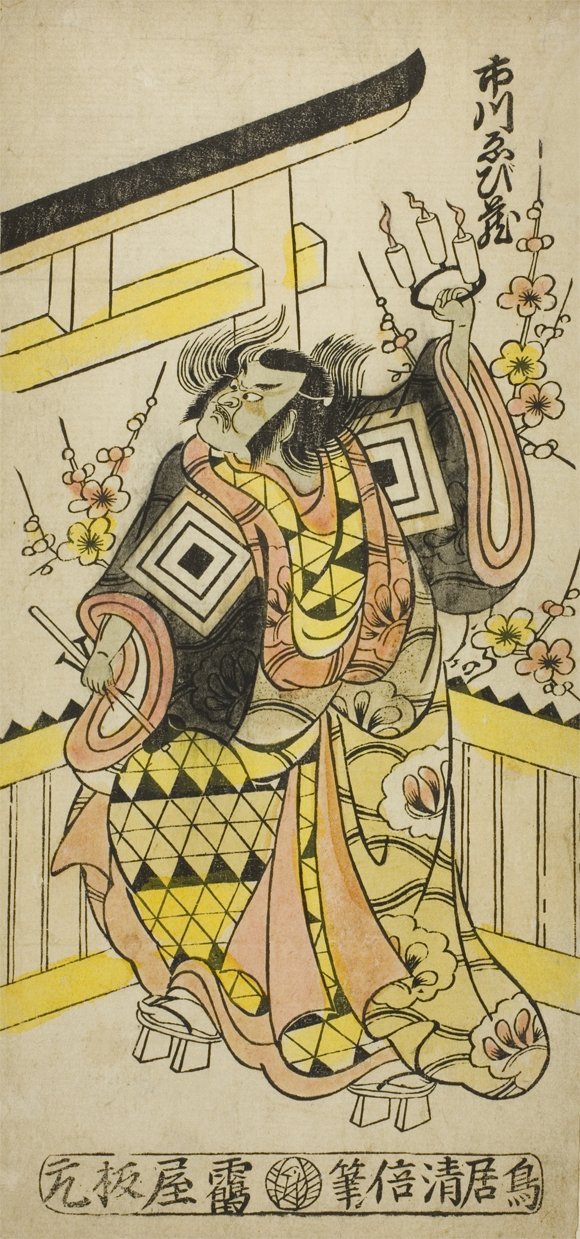
The Actor Ichikawa Ebizô II casting a curse at the hour of the ox Print made by Torii Kiyomasu in 1714 Print made by Torii Kiyomasu in 1723 Print made by Okumura Masanobu in 1727 Print made by Okumura Masanobu (1729 ~ 1740) Print made by Torii Kiyomasu (1735 ~ 1741) The Ichikawa Sanshô line of actors The Ichikawa Kuzô line of actors The Ichikawa Danjûrô line of actors The Ichikawa Ebizô line of actors |
|
|
| Contact | Main | Top | Updates | Actors | Plays | Playwrights | Programs | Links | FAQ | Glossary | Chronology | Illustrations | Prints | Characters | Derivatives | Theaters | Coming soon | News |