| NAKAMURA TOMIJÛRÔ I |
|
Stage names:
Guild: Tennôjiya Line number: SHODAI (I) Poetry name: Keishi Blazon: Yattsu Yaguruma Existence: 1719 ~ 3rd day of the 8th lunar month of 1786 [1] Connections: Father: Yoshizawa Ayame I Adoptive father: Nakamura Shingorô I Brothers: Yoshizawa Ayame II, Yamashita Matatarô I, Yoshizawa Ayame III Father-in-law: Yamashita Kinsaku I Adopted sons: Nakamura Shingorô II, Nakamura Noshio II Son-in-law: Nakamura Noshio I Disciples: Nakamura Handayû (Yamashita Kinsaku II), Nakamura Ômachi, Nakamura Matsuyo, Nakamura Kyôjûrô II, Nakamura Tominosuke, Nakamura Tokusaburô, Nakamura Yoshimatsu, Nakamura Kichinosuke, Nakamura Tomiyo, Nakamura Man'yo Family map: the Yoshizawa Clan Career: 1719 ~ 1728: born in Ôsaka. Third son of the great star Yoshizawa Ayame I, who gave him the name of Yoshizawa Sakiya and trained him as an actor. He was adopted by Nakamura Shingorô I. 1st lunar month of 1729: he received the name of Nakamura Tomijûrô I and made his first appearance on stage in Kyôto, where he performed as a wakaonnagata in the drama "Keisei Isamiyama", which was produced by the zamoto Sanogawa Mangiku. 1st lunar month of 1731: Tomijûrô, his adoptive father and Sanogawa Mangiku settled in Edo. The 3 actors performed together at the Ichimuraza in the new year drama "Naresome Azuma Genji". 9th lunar month of 1731: Tomijûrô performed in the same theater in "Hana Shôbu Imagawa". Nakamura Shingorô I, Sanogawa Mangiku and Tomijûrô went back to Kamigata after this performance. 11th lunar month of 1731: Tomijûrô triumphed in Kyôto by playing the role of the courtesan Tamayama in the kaomise drama "Hiragana Imagawajô", which was staged in Miyako Mandayû's theater. 9th lunar month of 1732: first Kabuki adaptation of Matsuda Bunkôdô and Hasegawa Senshi puppet theater drama "Dan no Ura Kabuto Gunki", which was produced in Kyôto by Sakakiyama Shirotarô I at Miyako Mandayû's theater; Tomijûrô played the role of Okachi [casting]. 11th lunar month of 1734: Tomijûrô became zamoto and produced in Kyôto at Miyako Mandayû's theater the kaomise drama "Tomi Yakata Kogane no Yaguruma", written by the playwrights Tomimura Takichi, Iwai Izaemon and Sawamura Bunji. He worked as a zamoto in Kyôto up to the 7th lunar month of 1737. 11th lunar month of 1735: Tomijûrô produced at Miyako Mandayû's theater the kaomise drama "Bankoku Ôshimadai". Summer or Fall 1736: Tomijûrô produced at Miyako Mandayû's theater the first (partial) Kabuki adaptation of the drama "Wada Gassen Onna Maizuru", which was entitled "Hangaku Mon Yaburi" ('The Destruction of the Gate by Hangaku' in English); it starred Sanogawa Mangiku (Hangaku) and Sanogawa Ichimatsu I (Ichiwakamaru). Fall 1737: Tomijûrô settled in Ôsaka. 11th lunar month of 1737: Tomijûrô played at the Kado no Shibai the role of the Shimabara courtesan Konohana in the kaomise drama "Iwatogura Kogane Masugata", which was produced by Iwai Hanshirô III. 11th lunar month of 1738: Tomijûrô was back in Kyôto and became zamoto, working with the nadai Kameya Kumenojô and producing Tomimura Takichi's kaomise drama "Ichi no Tomi Hôrai Yakata" in which he played the role of Sonohana. He worked as a zamoto in Kyôto up to the 10th lunar month of 1739. 1st lunar month of 1739: Tomijûrô produced the play "Keisei Arashiyama" in which he played the roles of Mojiemon's daughter Osan, Princess Sakuragi and the courtesan Michinoku. Fall 1739: Tomijûrô settled in Ôsaka. 9th lunar month of 1740: premiere in Ôsaka at the Kado no Shibai of the play "Hirakana Seisuiki", in which Tomijûrô played the role of Chidori. 11th lunar month of 1740: Tomijûrô produced in Ôsaka at the Ônishi no Shibai the kaomise drama "Yaguruma Yakata no Fuji". Fall 1741: he went to Edo in the company of Nakamura Shingorô I, Nakayama Shinkurô I, Sanogawa Mangiku and Ôtani Hiroji I. 11th lunar month of 1741: Tomijûrô performed at the Nakamuraza in Hayakawa Denshirô's drama "En'ya Hangan Kokyô no Nishiki"; he also played the leading role of the shishimono "Shakkyô" ('The Stone Bridge'). 1st lunar month of 1742: Tomijûrô played at the Nakamuraza the role of the courtesan Ôiso no Tora in the new year sogamono drama "Musume Soga Gaijin Yashima". 7th lunar month of 1742: premiere in Edo at the Nakamuraza of the play "Keisei Hangonkô" in which Tomijûrô played the role of the courtesan Katsuragi [casting]. 11th lunar month of 1742: Tomijûrô played at the Nakamuraza the role of Princess Tatsu in the kaomise drama "Keisei Akazawayama". 1st lunar month of 1743: Tomijûrô played in the same theater the role of the courtesan Hidaka in the new year sogamono drama "Kadomidori Tokiwa Soga"; his stage partners were Ôtani Hiroji I (Kurofune Chûemon), Sanogawa Mangiku (Yamabuki) and Sawamura Sôjûrô I (Ume no Yoshibê). Tomijûrô also played the role of Osome, in duo with Sanogawa Ichimatsu I in the role of Hisamatsu, in the dance "Osome Hisamatsu no Michiyuki". 4th lunar month of 1743: Tomijûrô visited the Kishibô Shrine in the district of Zôshigaya and offered a votive picture tablet. 5th lunar month of 1743: special performance at the Nakamuraza related to the exhibition of a sacred image of Prince Shôtoku in the Shitennôji Temple in the district of Yûshima. Tomijûrô played the roles of Ukamuse Hachibei's wife Kiku and the fox spirit of the temple Tennôji in the drama "Yamato Morokoshi Aishô Kagami". He also played the role of Osan in duo with Utagawa Shirogorô in the role of Mohê in the drama "Daikyôji". Fall 1743: Tomijûrô and Sawamura Sôjûrô I played in the same theater the roles of the courtesans Yatsuhashi and Yufuran in the drama "Futari Yatsuhashi". They decided to go back together to Ôsaka. 11th lunar month of 1743: Tomijûrô played the role of the courtesan Konohana in Namiki Sôsuke's kaomise drama "Futatsu Biki Nishiki no Manmaku", which was produced at the Ônishi no Shibai by the zamoto Nakamura Jûzô I. 12th lunar month of 1743: Tomijûrô and Sawamura Sôjûrô I played in the same theater the roles of the courtesan Tôyama and Saitô Shôkurô in the drama "Ômonguchi Yoroi Gasane". 3rd lunar month of 1744: Tomijûrô played in the same theater the roles of Ono no Komachi and Shinobu in the drama "Ôshû Shinobu Ishi". 1st lunar month of 1745: première of the play "Keisei Hangonkô" in Kyôto at the Minamigawa no Shibai, in which Tomijûrô and Nakamura Shingorô I played the role of the courtesan Tôyama and the painter Matahei. 11th lunar month of 1745: Tomijûrô played in Kyôto the role of Oshio in Namiki Eisuke's kaomise drama "Toragoyomi Hoteibukuro", which was produced by Nakamura Kumetarô I. 10th lunar month of 1746: Tomijûrô played the roles of Yae and Chiyo in the drama "Sugawara Denju Tenarai Kagami", which was produced by Asao Motogorô I in Kyôto at Ebisuya Kichirôbê's theater. 1st lunar month of 1748: Tomijûrô played the roles of Oritsu and Sakurado in the new year ni-no-kawari drama "Keisei Yoake no Kane", which was produced by Nakamura Kumetarô I in Kyôto at the Minamigawa no Shibai. 2nd lunar month of 1748: Tomijûrô played in the same theater the role of Tomokirimaru in the drama "Tsuizen Soga Zoroe". 7th lunar month of 1748: Tomijûrô played in the same theater the role of the female hairdresser Otsuge in the drama "Keisei Kôyôgun". Fall 1748: Tomijûrô achieved a great success in the same theater by playing the main role of the lion spirit dance "Shakkyô". 11th lunar month of 1748: Tomijûrô played in Kyôto the roles of Tokiwa Gozen and the fox Tokiwa in the kaomise drama "Sugomori Hiru-ga-Kojima", which was produced by Arashi San'emon IV; his stage partners were Fujikawa Heikurô, Yamashita Matatarô I, Sakurayama Shirosaburô II, Hanakawa Ichinojô, Sanogawa Hanazuma II and Imamura Shichisaburô II. 1st lunar month of 1749: Tomijûrô played in the same theater the role of Osaga in the new year ni-no-kawari drama "Keisei Chikai no Fumizuka". 5th lunar month of 1749: tour in Ise; Tomijûrô played the role of Kuzu-no-Ha in the drama "Ashiya Dôman Ôuchi Kagami", which was staged at the Naka-no-Jizô no Shibai. 11th lunar month of 1749: Tomijûrô played in Kyôto 2 roles in the kaomise drama "Tokitsukazeyasu Keizu", which was produced by Sakakiyama Shirotarô II; his stage partners were Yamashita Matatarô I, Kasaya Matakurô I, Sakakiyama Koshirô I and Sakurayama Shirosaburô II. 1st lunar month of 1750: Tomijûrô's rank in the Kyôto hyôbanki, wakaonnagata section, was goku-jô-jô-kichi (extreme - superior - superior - excellent) [Visual]. He played in the same theater the role of Sendai no Otsuru in the new year ni-no-kawari drama "Keisei Kodamazuka". Fall 1750: Tomijûrô moved to Ôsaka. 11th lunar month of 1750: Tomijûrô played at the Naka no Shibai the roles of the fortune-teller Ohyaku and a female fox in the kaomise drama "Yasa Heike Sakiwake Musha", which was produced by Nakamura Jûzô I. 12th lunar month of 1750: the play "Keisei Hangonkô" was performed for the first time at the Naka no Shibai. It was produced by the zamoto Nakamura Jûzô I for the nadai Shioya Kuroemon and staged under the title "Keisei Tôyama Zakura". Tomijûrô played the role of the courtesan Tôyama [casting]. 1st lunar month of 1751: Tomijûrô's rank in the Ôsaka hyôbanki, wakaonnagata section, was goku-jô-jô-kichi (extreme - superior - superior - excellent) [Visual]. 4th lunar month of 1752: Tomijûrô played the roles of Tonase and Osono in the drama "Kanadehon Chûshingura", which was produced by the zamoto Arashi San'emon IV in Kyôto; the role of Tonase's daughter Konami was played by the actor Yamamoto Iwanojô. Fall 1752: Tomijûrô went to Edo for the third time. 11th lunar month of 1752: Tomijûrô and Yamashita Kinsaku II performed together at the Nakamuraza in the kaomise drama "Akazawayama Sumô Nikki". 3rd ~ 6th lunar months of 1753: Tomijûrô achieved a huge success for several months by playing the main role of the dance "Kyôganoko Musume Dôjôji", which was staged at the Nakamuraza. His fame in Edo was equal to the late star Segawa Kikunojô I's. 11th lunar month of 1753: Tomijûrô performed at the Nakamuraza in the kaomise drama "Hyakumanki Tsuwamono Taiheiki", which celebrated the shûmei of Ichikawa Masuzô I. 3rd lunar month of 1754: premiere at the Nakamuraza of the dance "Hanabusa Shûjaku no Shishi"; the leading role of this dance was played by Tomijûrô. 11th lunar month of 1754: Tomijûrô played at the Nakamuraza the role of Tsukisayo in the kaomise drama "Miura no Ôsuke Bumon no Kotobuki", which celebrated the shûmei of Ichikawa Danjûrô IV, Matsumoto Kôshirô III and Tsuuchi Monzaburô II. 1st lunar month of 1755: Tomijûrô played in the same theater the roles of Ôiso no Tora (in reality Princess Sendan) and Arima no Fuji in the new year sogamono drama "Waka Midori Nishiki Soga". 11th lunar month of 1755: Tomijûrô performed at the Nakamuraza in the kaomise drama "Arigatashi Yunzei Genji". 8th lunar month of 1756: Tomijûrô played in the same theater the role of Chiyo in the drama "Sugawara Denju Tenarai Kagami". 11th lunar month of 1756: Tomijûrô performed at the Nakamuraza in the kaomise drama "Masakado Shôzoku no Enoki". 11th lunar month of 1757: Tomijûrô played at the Ichimuraza the role of Matsukaze in the kaomise drama "Matsuhata Suma no Wakezato", which starred Nakamura Utaemon I, Ichimura Uzaemon VIII, Segawa Kikunojô II, Sawamura Sôjûrô II, Nakamura Shichisaburô II, Sanogawa Ichimatsu I, Nakamura Sukegorô I and Bandô Hikosaburô II. 1st lunar month of 1758: Tomijûrô performed in the same theater in the new year sogamono drama "Kujûsanki Ôyose Soga". 11th lunar month of 1758: Tomijûrô performed at the Ichimuraza in the kaomise drama "Kaomise Sajikigadake". 6th lunar month of 1759: Tomijûrô went back to Kamigata after 7 seasons in Edo. 11th lunar month of 1759: Tomijûrô played at the Kado no Shibai the role of Otomi in Namiki Shôzô I's kaomise drama "Saiwai Genji Chôkyû no Maki", which was produced by Nakayama Bunshichi I and celebrated the shûmei of Arashi Koisa II. 11th lunar month of 1760: Tomijûrô performed at the Kado no Shibai in Namiki Shôzô I's kaomise drama "Ikinyorai Kogane no Kaomise", which was produced by Nakayama Bunshichi I. 1st lunar month of 1761: premiere at the Kado no Shibai of Namiki Shôzô I's ni-no-kawari drama "Kiritarô Tengu no Sakamori"; Tomijûrô played the role of the keisei Sakuragi (in reality Minamoto Yoshitsune's daughter Princess Kiku) [more details]. 4th lunar month of 1761: Tomijûrô played in the same theater the role of Kuzu-no-Ha in the drama "Ashiya Dôman Ôuchi Kagami". 11th lunar month of 1761: Tomijûrô performed at the Kado no Shibai in the kaomise drama "Sôtsui Hoshi Kamakura Kagami", which was produced by Nakayama Bunshichi I. 5th lunar month of 1762: premiere in Ôsaka at the Kado no Shibai of Namiki Shôzô I's drama "Koi Hakke Hashira Goyomi", which was a revision of Chikamatsu Monzaemon's drama "Daikyôji Mukashi Goyomi"; Tomijûrô played the role of Osan [more details]. 11th lunar month of 1762: Tomijûrô performed at the Naka no Shibai in the kaomise drama "Uchide no Kozuchi Tezuma Urakata", which was produced by Mimasu Daigorô I. 2nd lunar month of 1763: Tomijûrô played in the same theater the role of the courtesan Tôyama in the drama "Keisei Hangonkô"; his stage partners were Mimasu Daigorô I (Matahei), Arashi Sangorô II (Shirojirô) and Iwata Somematsu I (Otoku). 7th lunar month of 1763: Tomijûrô played in the same theater the roles of Yae and Kan Shôjô in the drama "Sugawara Denju Tenarai Kagami". Fall 1763: Tomijûrô went to Kyôto after 4 seasons in Ôsaka. 11th lunar month of 1763: Tomijûrô played at the Kitagawa no Shibai the role of a fox spirit in the kaomise drama "Shôchikubai Ôshimadai", which was produced by Sawamura Kunitarô I. 1st lunar month of 1764: Tomijûrô performed in the same theater on the new year ni-no-kawari drama "Keisei Koinariyama". 11th lunar month of 1764: Tomijûrô performed in Kyôto at the Kitagawa no Shibai in Namiki Shôzô I's kaomise drama "Genpei Tsûrikimaru", which celebrated the shûmei of Iwai Hanshirô. 11th lunar month of 1765: Tomijûrô performed in Kyôto at the Kitagawa no Shibai in the kaomise drama "Takara-Kita-Yama Kogane no Ishizue", which was produced by Ogawa Kichitarô I. 1st lunar month of 1766: Tomijûrô performed in the same theater in the new year ni-no-kawari drama "Keisei Miyako no Fuji". 9th lunar month of 1766: Tomijûrô played in the same theater the role of Kuzu-no-Ha in the drama "Ashiya Dôman Ôuchi Kagami". Fall 1766: Tomijûrô went to Ôsaka after 3 seasons in Kyôto. 11th lunar month of 1766: Tomijûrô played at the Naka no Shibai the roles of Tamamo-no-Mae and a white fox spirit in Namiki Jûsuke's kaomise drama "Yamato Uta Hikime no Yaguruma", which was produced by Nakamura Utaemon I. 1st lunar month of 1767: Tomijûrô performed in the same theater in the new year ni-no-kawari drama "Keisei Mutsu no Tamagawa". 11th lunar month of 1767: Tomijûrô performed at the Naka no Shibai in the kaomise drama "Shitennô Maizuru Ôgi", which was produced by Mimasu Tanin I. 3rd lunar month of 1768: Tomijûrô played in the same theater the roles of Ono no Tôfû and Omachi in the drama "Ono no Tôfû Aoyagi Suzuri". 5th lunar month of 1768: Tomijûrô played in the same theater the role of Sekijo in the drama "Yoshitsune Koshigoejô". Fall 1768: Tomijûrô went to Kyôto after 2 seasons in Ôsaka. 11th lunar month of 1768: Tomijûrô performed at the Minamigawa no Shibai in the kaomise drama "Kaeribana Misao Taiheiki", which celebrated the shûmei of Nakamura Noshio I, Nakamura Tsutaemon and Arashi Kasen. 1st lunar month of 1769: Tomijûrô performed in the same theater in the new year ni-no-kawari drama "Keisei Kinkazan". 5th lunar month of 1769: Tomijûrô performed in the same theater in the drama "Katsuragawa Chishio no Marutabashi" [3]. 11th lunar month of 1769: Tomijûrô performed in Kyôto in the kaomise drama "Asahimaru Genji Kagami", which was produced by Onoe Kumesuke, welcomed in the Imperial City the actor Sawamura Sôjûrô II and his son Sawamura Tanosuke I and celebrated the shûmei of Nakamura Shingorô II. 1st lunar month of 1770: Tomijûrô played in the same theater the role of Princess Hide in the new year ni-no-kawari drama "Keisei Kayoi Chidori". 3rd lunar month of 1770: Tomijûrô played in the same theater the roles of Miyako and Oseki in the drama "Futatsu Chôchô Kuruwa Nikki". 1770: tour in Ise. Fall 1770: Tomijûrô went to Edo for the fourth time. 11th lunar month of 1770: Tomijûrô played at the Moritaza 3 roles in the kaomise drama "Miyako Zome Giô Katsugi". 5th lunar month of 1771: Tomijûrô played in the same theater the roles of Sadanobu and Suke-no-Tsubone in the drama "Yoshitsune Senbon Zakura". 8th lunar month of 1771: Tomijûrô performed in the same theater in an amazing seven roles Nagauta-based dance called "Kiku ha Yae Shichinin Geshô". The seven sections are "Kanjo" (the court lady), "Harukoma" (a dance using a horse head look-alike puppet), "Wakashû Tanzen" (a boy in Tanzen style), "Keisei" (a high-ranking courtesan), "Yamagatsu" (the mountaineer), "Nuno Zarashi" (the bleached cotton dance) and "Yari Odori" (the spear dance). 11th lunar month of 1771: Tomijûrô played at the Moritaza the role of Nagoya Osan in the kaomise drama "Fukikaete Tsuki no Yoshiwara", which celebrated the arrival of the new zagashira Ichikawa Danjûrô V. 1st lunar month of 1772: Tomijûrô played in the same theater the role of Kudô Saemon Suketsune (almost unbelievable!) in the new year sogamono drama "Hatsu Akebono Niwatori Soga"; the roles of Soga Jûrô Sukenari and Soga Gorô Tokimune were played by Ichikawa Danjûrô V and Nakamura Jûzô II. 11th lunar month of 1772: Tomijûrô played at the Moritaza the role of Osaga in the kaomise drama "Izu Goyomi Shibai no Ganjitsu", which celebrated the shûmei of Sawamura Chôjûrô IV, Sawamura Kijûrô II and Mikuni Fujigorô. 11th lunar month of 1773: Tomijûrô performed at the Moritaza in the kaomise drama "Onna Aruji Hatsuyuki no Sekai". 5th lunar month of 1774: Tomijûrô performed in the same theater in the drama "Shin Usuyuki Monogatari". 11th lunar month of 1774: Tomijûrô played at the Moritaza the role of Miyagino in the kaomise drama "Ichi no Tomi Tsuki no Kaomise", which celebrated the arrival in Edo of his adopted son Nakamura Shingorô II. 1st lunar month of 1775: Tomijûrô played in the same theater the roles of the dancer Ukigusa, the Sendai zatô Mukuichi and the spirit of Masakado in the new year program "Shida Yuzuriha Hôrai Soga". He was also the leading actor in the seven roles Tomimoto-based dance "Sono Saishiki Nanaori Ôgi". 5th lunar month of 1775: Tomijûrô played in the same theater the role of Yae in the drama "Sugawara Denju Tenarai Kagami". The role of Yae's husband Sakuramaru was played by Iwai Hanshirô IV. 8th lunar month of 1775: Tomijûrô played in the same theater the role of the courtesan Tôyama in the drama "Keisei Tsuki no Miyako". 11th lunar month of 1775: the departure of Matsumoto Kôshirô IV and Iwai Hanshirô IV to the Ichimuraza was a hard blow for the Moritaza. Tomijûrô stayed and played the roles of Bijomaru and Kiyoaki's wife in the kaomise drama "Kikujidô Shuen no Iwaya". He also played the eponymous role of the dance "Sanbasô". 1st lunar month of 1776: Tomijûrô played in the same theater the role of the courtesan Ôiso no Tora in the new year sogamono drama "Sono Kyôdai Fuji no Sugatami". 2nd lunar month of 1776: Tomijûrô played in the same theater the role of Osugi in second part (nibanme) of the new year program "Sono Kyôdai Fuji no Sugatami". His stage partners in the roles of Yaoya Oshichi and Kichisaburô were Yoshizawa Iroha I and Ichikawa Monnosuke II. 5th lunar month of 1776: Tomijûrô played in the same theater the role of Okoma in the Tokiwazu-based dance "Ayame Fukuhana no Itazura", sharing the stage with Ichikawa Danjûrô V, Ôtani Hiroji III and Ichikawa Monnosuke II. 7th lunar month of 1776: Tomijûrô played in the same theater the role of Kuzu-no-Ha in the drama "Kikyôzome Onna Urakata", whose plot and characters were similar to "Ashiya Dôman Ôuchi Kagami". He also played the role of Bikuni in the Tokiwazu-based dance "Hana Fubuki Fuji no Sugegasa", performed in duo with Bandô Mitsugorô I in the role of Fuji Tarô. Fall 1776: Tomijûrô moved to the Nakamuraza after 6 seasons at the Moritaza. 11th lunar month of 1776: Tomijûrô played at the Nakamuraza the role of Gion Okaji in the kaomise drama "Sakuya Kono Hana no Kaomise". He also played the leading role of the Tokiwazu-based dance "Tono Gonomi Koi no Utaura". 7th lunar month of 1777: Tomijûrô played in the same theater the role of Hangaku [illustration 1 | illustration 2] in the drama "Wada Gassen Onna Maizuru". 9th lunar month of 1777: Tomijûrô played in the same theater the role of Shigenoi in the drama "Koi Nyôbô Somewake Tazuna". 11th lunar month of 1777: Tomijûrô performed [illustration] at the Ichimuraza in the kaomise drama "Chigo Torii Tobiiri Kitsune". Premiere at the Ichimuraza of the Tomimoto-based dance-drama "Meotozake Kawaranu Nakanaka" (commonly called "Kurama Jishi"); Tomijûrô played the role of the female fox [casting]. 19th day of the 11th lunar month of 1777 [4]: his son-in-law Nakamura Noshio I and his adopted son Nakamura Shingorô II died the same day in Edo. Fall 1778: Tomijûrô went back to Kamigata after 8 seasons in Edo. He made a short stay in Nagoya to perform in the dance "Musume Dôjôji". 11th lunar month of 1778: Tomijûrô played at the Kado no Shibai the roles of Suma-no-Konami and Ayazuru in the kaomise drama "Genpei Tatoezukushi", which was produced by Ogawa Kichitarô I. 12th lunar month of 1778: Tomijûrô played in the same theater the role of Okinu in Namiki Gohei's drama "Ishii no Jô Onna Nawabari". 3rd lunar month of 1779: premiere in Ôsaka at the Kado no Shibai of Namiki Gohê's play "Sode Nikki Banshû Meguri"; Tomijûrô played the roles of the ghost of Hime-ga-Jô Castle (in reality Kinuta-no-Mae) and Toya Otsuyu [casting]. 7th lunar month of 1779: Tomijûrô played in the same theater the role of Kuzu-no-Ha in the drama "Ashiya Dôman Ôuchi Kagami". 11th lunar month of 1779: Tomijûrô performed at the Kado no Shibai in the kaomise drama "Senshû Banzei Chibako no Tamamono", which was produced by Yoshizawa Iroha I and celebrated the shûmei of Nakamura Noshio II and Yamamura Giemon II. He also played the roles of Tonase and Osono in the drama "Kanadehon Chûshingura". 7th lunar month of 1780: Tomijûrô played in the same theater the role of Suke-no-Tsubone in the drama "Yoshitsune Senbon Zakura". 11th lunar month of 1780: Tomijûrô performed at the Kado no Shibai in the kaomise drama "Ujigami Sairai Sukedono no Kachidoki", which was produced by Yoshizawa Iroha I. 1781: tour in Nagoya. 9th lunar month of 1781: Tomijûrô played at the Kado no Shibai the roles of Omiwa and Sadaka in the drama "Imoseyama Onna Teikin"; his stage partners were Nakamura Utaemon I (Soga no Iruka), Nakayama Bunshichi I (Daihanji no Kiyosumi, Shibaroku), Nakamura Noshio II (Hinadori) and Yoshizawa Iroha I (Koganosuke, Princess Tachibana). Fall 1781: Tomijûrô moved to Kyôto. 11th lunar month of 1781: Tomijûrô played at the Kitagawa no Shibai the role of Ayatsuru in the kaomise drama "Shin Yakata Fukki no Ishizue", which celebrated the shûmei of both Yamamoto Giemon and Hanagiri Tomimatsu I. 5th lunar month of 1782: Tomijûrô played in the same theater the role of Miyako in the drama "Futatsu Chôchô Kuruwa Nikki". 7th lunar month of 1782: Tomijûrô played in the same theater the roles of Omiwa and Sadaka in the drama "Imoseyama Onna Teikin"; his stage partners were Onoe Kikugorô I (Daihanji no Kiyosumi), Fujikawa Hachizô II (Shibaroku), Yamamoto Giemon (Soga no Iruka), Nakamura Noshio II (Hinadori), Yoshizawa Iroha I (Koganosuke) and Onoe Tamizô I (Princess Tachibana). 11th lunar month of 1782: Tomijûrô performed in Kyôto in the kaomise drama "Gosekkyô Suehiro Keizu", which was produced by Nakayama Raisuke II and celebrated the shûmei of Nakamura Utaemon II. 1st lunar month of 1783: Tomijûrô played in the same theater the role of Shizuka Gozen in the drama "Yoshitsune Senbon Zakura"; his stage partner in the role of Tadanobu was Arashi Hinasuke I. 12th lunar month of 1783: Tomijûrô performed in Kyôto in the drama "Sanjikkoku Yofune no Hajimari". 1st ~ 4th lunar months of 1784: tour in Nagoya. Tomijûrô performed at the Inari Shrine in the dramas "Tana Biku Kogane no Shirahata" and "Imoseyama Onna Teikin". 5th lunar month of 1784: tour in Ise, Yamada and Matsuzaka. Tomijûrô plays among others the roles of Omiwa and Sadaka in the drama "Imoseyama Onna Teikin". 11th lunar month of 1784: Tomijûrô played at the Kado no Shibai the role of Onna Konpira in Namiki Gohei I and Namiki Jûsuke kaomise drama "Yunzei Konpira Musume", which was produced by the young zamoto Onoe Ushinosuke I; Tomijûrô also played the roles of Chiyo and Kan Shôjô in the drama "Sugawara Denju Tenarai Kagami". 9th lunar month of 1785: Tomijûrô played in the same theater the role of Shigenoi in the drama "Koi Nyôbô Somewake Tazuna". 1st lunar month of 1786: Tomijûrô played the role of Okame in the drama "Keisei Inabayama", which was performed in Kyôto at Miyako Mandayû's theater. He returns quickly in Ôsaka in order to perform at the Ônishi no Shibai before going back to the Imperial Capital. 3rd lunar month of 1786: Tomijûrô appeared on stage for the last time, in Kyôto at Miyako Mandayû's theater, where he performed in the drama "Onna Hachinoki". 3rd day of the 8th lunar month of 1786 [1]: Tomijûrô died in Kyôto [2]. Comments: Nakamura Tomijûrô I was an amazing eighteenth-century onnagata actor who found fame in both Edo and Kamigata. One of his forte were the roles of women belonging to the samurai class (onna budôgoto), proud of their chivalrous spirit and involved in complicated revenge plots. Nakamura Tomijûrô created many female version of famous Kabuki characters, like "Onna Narukami" ("The Narukami woman"), "Onna Yuranosuke" ("The Yuranosuke women" - Yuranosuke was the main male role of the great play "Kanadehon Chûshingura"), "Onna Kagekiyo" ("The Kagekiyo woman" - Kagekiyo was the great warrior Taira no Kagekiyo), "Onna Kurofune" ("The Kurofune woman") and "Onna Asaina" ("The Asaina woman" - Kobayashi no Asahina was a famous character belonging to the sogamono world). "He was loved in all types of female roles - from proper young ladies to courtesans to samurai wives to amazons" (Samuel Leiter, "New Kabuki Encyclopedia"). Nakamura Tomijûrô I's best roles: the snake spirit dancer Hanako ("Kyôganoko Musume Dôjôji"), Hangaku ("Wada Gassen Onna Maizuru"), Chiyo ("Sugawara Denju Tenarai Kagami"), Shigenoi ("Koi Nyôbô Somewake Tazuna") and Chidori ("Hirakana Seisuiki"). [1] The 3rd day of the 8th lunar month of the 6th year of the Tenmei era was the 26th of August 1786 in the western calendar. [2] His tombstone was located in the cemetery of the Yakuôji temple in Ôsaka. [3] A play belonging to the same sekai as the future "Katsuragawa Renri no Shigarami"). [4] The 19th day of the 11th lunar month of the 6th year of the An'ei era was the 18th of December 1777 in the western calendar. |

 |
|
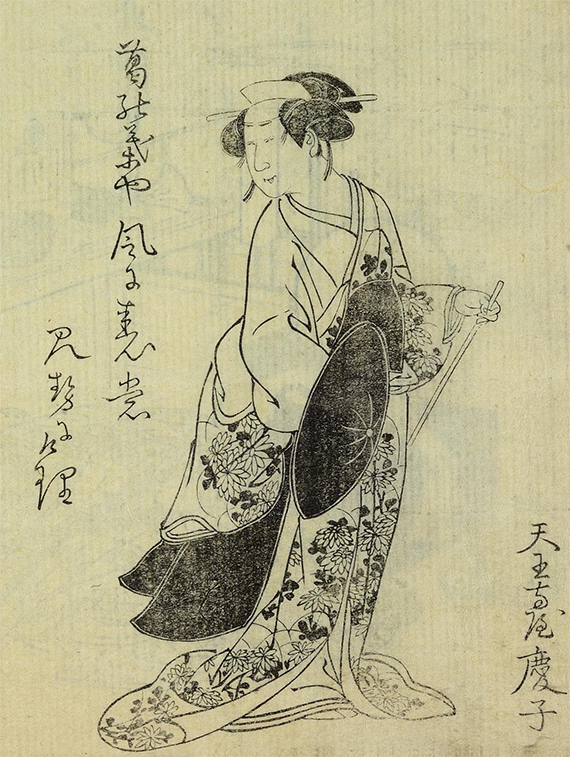
Nakamura Tomijûrô I in an illustration from the book "Yakusha Mono Iwai" (1784) The Nakamura Tomijûrô line of actors |
|
|
| Contact | Main | Top | Updates | Actors | Plays | Playwrights | Programs | Links | FAQ | Glossary | Chronology | Illustrations | Prints | Characters | Derivatives | Theaters | Coming soon | News |