| ICHIKAWA EBIZÔ III |
|
Stage names:
Other name:
Nickname: Kiba no Oyadama (the boss of Kiba, a famous district in Edo) Line number: SANDAIME (III) Poetry names: Sanshô (2), Hakuen, Kaigan, Goryû (?) Existence: 1711 ~ 25th day of the 2nd lunar month of 1778 [1] Connections: Grandfather: Ichikawa Danjûrô I Father: Ichikawa Ebizô II (Danjûrô II) Adoptive father: Matsumoto Kôshirô I Father-in-law: Iwai Hanshirô III Son: Ichikawa Hakuen I (Danjûrô V) Grandson: Ichikawa Momotarô Great-grandson: Ichikawa Ebizô V (Danjûrô VII) Great-great-grandson: Ichikawa Danjûrô VIII, Ichikawa Danjûrô IX, Ichikawa Ebizô VII, Ichikawa Ebizô VIII, Ichikawa Komazô VI, Ichikawa Saruzô I, Ichikawa Kôzô Disciples: Matsumoto Kôshirô IV, Iwai Hanshirô IV, Ichikawa Monnosuke II, Ichikawa Yaozô II, Ichikawa Kodanji II, Ichikawa Sôzaburô III, Ichikawa Datezô I Career: 1711: born in Edo in the district of Sakai-chô. His mother was the daughter of Fukuroya Genshichi, the owner of a chaya, and his illegitimate father was Ichikawa Danjûrô II. He was adopted by Izumiya Kanjûrô, the owner of a chaya, whose previous boss's wife was the elder sister of Ichikawa Danjûrô I. 1713: he was adopted by the actor Matsumoto Kôshirô I. 1st lunar month of 1719: he appeared on stage for the first time, at the Moritaza, where he received the name of Matsumoto Shichizô I, playing the role of Araoka Bunshin in the drama "Keisei Murasaki Tazuna"; the role of Araoka Genta was played by his adoptive father Matsumoto Kôshirô I. 11th lunar month of 1723: Shichizô played at the Nakamuraza the role of Tokiwaka in the kaomise drama "Sono Enpô Onna Migyôsho", which celebrated the arrival at the Nakamuraza of the Kamigata actors Yamashita Kinsaku I and Sanogawa Senzô. 11th lunar month of 1724: Shichizô played at the Nakamuraza the role of Princess Haru in the kaomise drama "Taiheiki Okuni Kabuki". 25th day of the 3rd lunar month of 1730 [2]: his adoptive father Matsumoto Kôshirô I died. 11th lunar month of 1735: great shûmei at the Ichimuraza for the Naritaya guild; Ichikawa Danjûrô II gave his name to his adopted son and took the name of Ichikawa Ebizô II. The actors Ichikawa Masugorô and Matsumoto Shichizô I respectively took the names of Ichikawa Danjûrô III and Matsumoto Kôshirô II; the new Kôshirô performed in the kaomise drama "Kongen Nana Komachi". 11th lunar month of 1736: Kôshirô moved to the Kawarasakiza and played the role of Nagasaki Jirô in the kaomise drama "Junpû Taiheiki". 1st lunar month of 1737: Kôshirô played in the same theater the role of Kyô no Jirô in the new year sogamono drama "Gozen Sumô Osana Soga". 11th lunar month of 1737: Kôshirô moved to the Ichimuraza and played the role of Taira no Munekiyo in the kaomise drama "Genji Kumo Ôgi no Shiba"; the line-up included Sawamura Sôjûrô I, Bandô Hikosaburô I, Tsuruya Nanboku II and Tomizawa Montarô I. 1st lunar month of 1738: Kôshirô played in the same theater the role of Oniô Shinzaemon in the new year sogamono drama "Ukematsuri Manbai Soga". 5th lunar month of 1738: Kôshirô became jitsuaku. Fall 1738: Kôshirô and Sawamura Sôjûrô I achieved together a great success by playing in the same theater the roles of Sasaki Ganryû and Tosa Jirô in the revenge play "Katakiuchi Ganryûjima". It was said that Kôshirô broke 2 teeth while performing in a tachimawari scene. He negociated with the Ichimuraza management 100 ryô of compensation for each tooth, rising his yearly salary from 300 ryô to 500 ryô. 11th lunar month of 1738: Kôshirô played at the Ichimuraza the role of Ashikaga Naoyoshi in the kaomise drama "Mitsugibune Taiheiki". 1st lunar month of 1739: Kôshirô played in the same theater the role of Kudô Saemon Suketsune in the new year sogamono drama "Hatsu Motoyui Kayoi Soga"; the roles of Soga Gorô Tokimune and Soga Jûrô Sukenari were played by Ichikawa Danjûrô III and Ichimura Uzaemon VIII. 11th lunar month of 1739: Kôshirô played at the Ichimuraza the role of Ôtô-no-Miya in the kaomise drama "Tokiwagi Taiheiki". 2nd lunar month of 1740: premiere at the Ichimuraza of the play "Sugatami Sumidagawa"; Kôshirô played the role of Kume no Heinai. The second part of this play contained a scene which was called "Nanatsu Men" ("Seven Masks") [3]. This performance was a triumphant success. 11th lunar month of 1740: Kôshirô played at the Ichimuraza the role of Nikki Danjô Saemon in the kaomise drama "Kichirei Imagawajô", which welcomed in Edo the Kamigata actor Matsushima Moheiji. 1st lunar month of 1741: Kôshirô played in the same theater the role of Kudô Saemon Suketsune in the new year sogamono drama "Wakamidori Kaneiri Soga".
3rd lunar month of 1741: Kôshirô's rank in the Edo hyôbanki, jitsuaku section, was jô-jô-kichi (superior - superior - excellent) [visual]. 6th lunar month of 1741: Kôshirô played in the same theater the role of Kawai Matagorô in the drama "Katakiuchi Mitsugumi Sakazuki". 7th lunar month of 1741: Kôshirô played in the same theater the role of Akuzenji in the drama "Yotsume Yui Katoku Sadame". 11th lunar month of 1741: Kôshirô moved to the Nakamuraza, where a great kaomise drama was produced to celebrate the arrival in Edo of the actors Nakamura Tomijûrô I, Nakayama Shinkurô I, Sanogawa Mangiku and Nakamura Shingorô I; Kôshirô played the role of the villain Kô no Moronô in Hayakawa Denshirô's drama "En'ya Hangan Kokyô no Nishiki". 1st lunar month of 1742: Kôshirô played in the same theater the roles of Kudô Saemon Suketsune and Yume no Ichirobê in the sogamono drama "Musume Soga Gaijin Yashima". 7th lunar month of 1742: the play "Keisei Hangonkô" was performed for the first time in Edo, at the Nakamuraza. Kôshirô played the role of Fuwa Banzaemon [casting]. 11th lunar month of 1742: Kôshirô played at the Nakamuraza the role of the nyûdô Itô in the kaomise drama "Keisei Akazawayama". 1st lunar month of 1743: Kôshirô played in the same theater the role of the ghost of the nyûdô Itô in the new year sogamono drama "Kadomidori Tokiwa Soga". 5th lunar month of 1743: special performance at the Nakamuraza related to the exhibition of a sacred image of Prince Shôtoku in the Shitennôji Temple in the district of Yûshima. Kôshirô played the roles of the ghost and the daughter of the minister Moriya in the drama "Yamato Morokoshi Aishô Kagami". 7th lunar month of 1743: Kôshirô played in the same theater the role of Kantetsu in the drama "Kichirei Sasaki Abumi". 11th lunar month of 1743: Kôshirô moved to the Ichimuraza and played the role of Nagasaki Kageyu Saemon in the kaomise drama "Ishizue Taiheiki", which celebrated the return in Edo of Segawa Kikujirô I. 1st lunar month of 1744: Kôshirô played in the same theater the role of Tatsuyasha in the new year sogamono drama "Nanakusa Wakayagi Soga". 7th lunar month of 1744: Kôshirô played in the same theater the role of the warlord Yamana Sôzen in the drama "Kaibyaku Imagawajô". 11th lunar month of 1744: Kôshirô moved to the Moritaza, which had been closed since Spring 1734, and played the roles of Fuwa Banzaemon and Ôyu no Koji in the kaomise drama "Higashiyama Bandai no Watamashi"; his stage partners were Tomizawa Tatsujûrô, Utagawa Shirogorô, Sakata Tôjûrô III, Tsuruya Nanboku II, Nakajima Kanzaemon II, Sanogawa Senzô and Yamamoto Kyôzô. 2nd lunar month of 1745: Kôshirô played in the same theater the role of Bandô Tarô in the new year sogamono drama "Haru Gasumi Omokage Soga". 11th lunar month of 1745: Kôshirô played at the Moritaza the roles of Taira no Kagekiyo and the nyûdô Itô in the kaomise drama "Chikyôdai Izu Nikki". 1st lunar month of 1746: Kôshirô played in the same theater the roles of Kumasaka Chôhan and the bonze Sôjôbô in the new year drama "Gosho Ganoko Jûnidan". 5th lunar month of 1746: Kôshirô achieved a great success by playing the role of the priest Seigen, the tayû Sanshô and Dozaemon Denkichi in the drama "Higashiyama Eitai Kabuki", which was staged in the same theater. 11th lunar month of 1746: Kôshirô played at the Moritaza the role of the rebel Abe no Sadatô in the kaomise drama "Ôtorii Gojûshigun", which celebrated the arrival of Onoe Kikugorô I in the new line-up; the roles of Abe no Munetô (Sadatô's brother) and Hachiman Tarô Yoshiie (the enemy of the Abe brothers) were played by Tsuuchi Monzaburô I and Utagawa Shirogorô. 1st lunar month of 1747: Kôshirô played in the same theater the roles of Kaba no Kaja Noriyori and Dozaemon Denkichi in the new year sogamono drama "Edo Murasaki Kongen Soga"; the roles of Yaoya Oshichi and Kichisaburô were played by Yamamoto Kyôzô and Sanogawa Senzô. 11th lunar month of 1747: Kôshirô moved to the Ichimuraza and played the roles of Minamoto no Tametomo, disguised as a sweet sake seller, and an ogress in the kaomise drama "Shusse Momijigari"; his stage partners were Yamamoto Kyôshirô I, Arashi Koroku I, Bandô Hikosaburô I, Segawa Kikujirô I, Ichimura Uzaemon VIII, Sanogawa Ichimatsu I, Ichimura Kamezô I and Ôtani Oniji I 1st lunar month of 1748: Kôshirô played in the same theater the roles of Fuwa Banzaemon and Kyô no Jirô in the new year sogamono drama "Mon-zukushi Nagoya Soga"; his stage partners in the roles of the courtesan Katsuragi and Nagoya Sanza are Segawa Kikujirô I and Yamamoto Kyôshirô I. 7th lunar month of 1748: Kôshirô played in the same theater the role Sasaki Ganryû in the drama "Katakiuchi Ganryûjima". 8th lunar month of 1748: Kôshirô played in the same theater the role of Sajima Hirofumi, disguised as the lawn-mower Gonzô, in the drama "Sandaizome Kanae Mondô". 11th lunar month of 1748: Kôshirô played at the Ichimuraza the roles of Akaboshi Tarô and Beniya Shôbei in the kaomise drama "Hôkasô Yunzei Hachinoki", which celebrated the shûmei of Ôtani Hiroji II. 1st lunar month of 1749: Kôshirô played in the same theater the role of Kumasaka Chôhan in the new year drama "Hatsutora Kurama Genji". 5th lunar month of 1749: the play "Kanadehon Chûshingura" was performed for the first time at the Ichimuraza; Kôshirô played the roles of Kakogawa Honzô and Ono Sadakurô. 11th lunar month of 1749: Kôshirô moved to the Nakamuraza and played the roles of Ashikaga Takauji and the ghost of the nyûdô Sagami in the kaomise drama "Onnô Taiheiki". 1st lunar month of 1750: Kôshirô played in the same theater the role of Oniô Shinzaemon in the new year sogamono drama "Ôkazari Saiwai Soga". 5th lunar month of 1750: Kôshirô played in the same theater the roles of Yamagaya Sashirô and Ôtomo no Kuronushi in the drama "Shio Mitsutama Kazaori Komachi". 11th lunar month of 1750: Kôshirô played at the Nakamuraza the roles of Minamoto no Tametomo and Reishû no Gonku in Tsuuchi Jihê II's kaomise drama "Wakaki no Ume Taira no Kiyomori". 1st lunar month of 1751: Kôshirô played in the same theater the roles of the ghost of Akugenta Yoshihira and Dozaemon Denkichi new year drama "Izu Kosode Shôbai Kagami". 7th lunar month of 1751: the play "Koi Nyôbô Somewake Tazuna" was performed for the first time in Edo, at the Nakamuraza; Kôshirô played the role of Ippei [casting]. 9th lunar month of 1751: Kôshirô achieved a great success by playing the role of Yuigahama Sadayuki in the same theater in the play "Keisei Fukubiki Nagoya". 11th lunar month of 1751: Kôshirô played at the Nakamuraza the role of Akita Jônosuke in the kaomise drama "Honryô Hachinoki-zome"; his stage partner in the role of Jônosuke's wife Asaoka was Segawa Kikujirô I. 1st lunar month of 1752: Kôshirô's rank in the Edo hyôbanki, tachiyaku section, was jô-jô-kichi (superior - superior - excellent) [visual]. He played in the same theater the role of Oniô Shinzaemon (Jûrô's retainer) in the new year sogamono "Kuruwa Kuruwa Akinai Soga"; the role of Soga Jûrô was played by Sawamura Sôjûrô II. Kôshirô also played the role of the Azuma otokodate Banzuiin Chôbê in the drama "Hana Sugata Sanpukutsui" (the second part (nibanme) of "Kuruwa Kuruwa Akinai Soga"), sharing the stage with Fujikawa Heikurô (the Naniwa otokodate Akaushi Yasubê) and Nakamura Sukegorô I (the Ôshû otokodate Teppeki Shôhei) [print]. 4th lunar month of 1752: Kôshirô played in the same theater the role of the warrior Kumagai Jirô Naozane in the drama "Ichi-no-Tani Futaba Gunki"; his stage partner in the role of Kumagai's wife Sagami was Segawa Kikujirô I. 7th lunar month of 1752: Kôshirô played in the same theater the role of the rebel Abe no Sadatô in the drama "Moro Tazuna Ôshû Kuro"; the role of Abe no Munetô (Sadatô's brother) was played by Nakamura Sukegorô I. 11th lunar month of 1752: Kôshirô moved to the Ichimuraza and played the role of Senju Tarô in the kaomise drama "Ume Sakura Ninin Semimaru". 1st lunar month of 1753: Kôshirô played in the same theater the roles of Kudô Saemon Suketsune and Amakawaya Gihei in the new year sogamono drama "Haru Fukami Iroha Soga", which mixed the sekai of the Soga Brothers and "Chûshingura". 7th lunar month of 1753: the play "Hirakana Seisuiki" was performed for the first time in Edo, at the Ichimuraza; Kôshirô played the roles of Matsuemon and Higuchi Jirô Kanemitsu [casting]. 11th lunar month of 1753: Kôshirô played at the Ichimuraza the role of Shioume Yoshiya Seibê in the kaomise drama "Kamuri Kurabe Yatsushi Kuronushi", which celebrated the arrival in Edo of the actor Kasaya Matakurô I. 1st lunar month of 1754: Kôshirô was listed as a jitsuaku actor in the Edo hyôbanki. He played in the same theater the roles of Kudô Saemon Suketsune and Suruga Jirô in the new year sogamono drama "Satsuki Matsu Soga no Tachibana"; the roles of Soga Gorô Tokimune and Soga Jûrô Sukenari were played by Ichikawa Yaozô I and Ichimura Kamezô I. 3rd lunar month of 1754: Kôshirô played in the same theater the role of the fox Tadanobu in the play "Yoshitsune Senbon Zakura" but it was a commercial failure. 5th lunar month of 1754: Kôshirô played in the same theater the role of Hirofumi in the drama "San no Tomi Genji Rokujô Gayoi". 11th lunar month of 1754: great shûmei at the Nakamuraza; Matsumoto Kôshirô II and Matsumoto Kôzô respectively took the names of Ichikawa Danjûrô IV and Matsumoto Kôshirô III; the new Danjûrô played the role of Okazaki Akushirô in the kaomise drama "Miura no Ôsuke Bumon no Kotobuki", which also celebrated the shûmei of Tsuuchi Monzaburô II. 1st lunar month of 1755: Danjûrô played in the same theater the role of Kyô no Jirô in the new year sogamono drama "Waka Midori Nishiki Soga". 3rd lunar month of 1755: Danjûrô played in the same theater the role of the wicked priest Narukami in the drama "Narukami Shônin Kitayama Zakura" [print]; the role of Princess Taema was played by Segawa Kikujirô I. 6th lunar month of 1755: Danjûrô played in the same theater the role of Dozaemon Denkichi in the drama "Edo Kanoko Shôchikubai". 8th lunar month of 1755: Danjûrô played in the same theater the roles of the farmer Kinezô, Koyama Hangan and Kasane in the drama "Shida Chôja Bashira". 11th lunar month of 1755: Danjûrô played at the Nakamuraza the role of Minamoto no Tametomo in the kaomise drama "Arigatashi Yunzei Genji". 14th day of the 1st lunar month of 1756 [4]: the Nakamuraza and the Ichimuraza were destroyed in a fire. 2nd lunar month of 1756: the Nakamuraza was rebuilt and Danjûrô played the roles of Mioya, Kudô Saemon Suketsune and Fuwa Banzaemon in the drama "Kotobuki Mimasu Soga" [5]; his stage partners in the roles of Nagoya Sanza, Oniô Shinzaemon, Katsuragi (Sanza's lover) and Banzaemon's wife were Yamashita Matatarô I, Ichikawa Ebizô II, Nakamura Kiyosaburô I and Nakamura Tomijûrô I. 4th lunar month of 1756: Danjûrô played in the same theater the role of Daidôji Tenbatanosuke in the drama "Chôseiden Fudan Zakura". He also played the eponymous role of the play Sukeroku, sharing the stage with Nakamura Kiyosaburô I (Agemaki) and Sawamura Sôjûrô II (Ikyû) but his performance was not well received by the audience. 7th lunar month of 1756: Danjûrô played in the same theater the role of Watônai in the drama "Zôho Kokusen'ya Gassen" (enlarged and revised version of Chikamatsu Monzaemon's "Kokusen'ya Gassen"). The performance was a commercial failure. 8th lunar month of 1756: Danjûrô played in the same theater the role of Matsuômaru in the drama "Sugawara Denju Tenarai Kagami"; his stage partners were Osagawa Tsuneyo I (Sakuramaru), Nakamura Denkurô II (Umeômaru), Kasaya Matakurô I (Matsuômaru's father Shiratayû), Nakajima Mihoemon I (Matsuômaru's master Fujiwara no Shihei) and Nakamura Tomijûrô I (Matsuômaru's wife Chiyo). 11th lunar month of 1756: Danjûrô played at the Nakamuraza the roles of Fujiwara no Tadabumi, Taira no Masakado and Katô Shigemitsu ("Shibaraku" scene) in the kaomise drama "Masakado Shôzoku no Enoki", which celebrated the arrival of Arashi Tominosuke I in Edo. 1st lunar month of 1757: Danjûrô's rank in the Edo hyôbanki, taibi section (the "final" section, created for Danjûrô and Ôtani Hiroji II), was jô-jô-kichi (superior - superior - excellent) [visual]. He also played in the same theater the role of Kagekiyo, disguised as Monogusa Tarô, in the new year sogamono drama "Nippon Zutsumi Tori no Ne Soga". 7th lunar month of 1757: Danjûrô played in the same theater the roles of Yasunari and Gotô Byôei, disguised as tayû Sanshô, in the dramas "Abe no Yasunari Inaba no Mitegura" and "Kiku Zukuri Kiredo no Iezuto". He fell ill during this performance. 11th lunar month of 1757: Danjûrô played at the Nakamuraza the roles of Chichibu no Shôji Shigetada, Sasaki Gorô and the yakko Akampei in the kaomise drama "Onna Musha Kaijin Yashima"; his stage partners in the roles of Sasaki Moritsuna and Sasaki Takatsuna were Onoe Kikugorô I and Ichikawa Yaozô I. 1st lunar month of 1758: Danjûrô's rank in the Edo hyôbanki, tachiyaku section, was (shiro)goku-jô-jô-kichi ((white) extreme - superior - superior - excellent) [Visual]. He played in the same theater the roles of Kudô Saemon Suketsune, Kagekiyo and Kumagai Jirô Naozane in the new year sogamono drama "Toki Tsukaze Irifune Soga". This program integrated Chikamatsu Monzaemon's "Sonezaki Shinjû", in which Danjûrô played the role of Aburaya Kuheiji; his stage partners in the roles of Tenmaya Ohatsu and Hiranoya Tokubê were Arashi Tominosuke I and Onoe Kikugorô I. He also played the role of Kyûsaku in the drama "Osome Hisamatsu", sharing the stage with Segawa Kikunojô II and Nakamura Kiyosaburô in the roles of Osome and Hisamatsu. 9th lunar month of 1758: Danjûrô played in the same theater the role of Ono no Tôfû in the drama "Ono no Tôfû Aoyagi Suzuri"; his stage partner in the role of Onui was Segawa Kikunojô II. 24th day of the 9th lunar month of 1758 [6]: Ichikawa Ebizô II died. 11th lunar month of 1758: Danjûrô played at the Nakamuraza the roles of Kôga Saburô and Sano Genzaemon in the kaomise drama "Kigoto no Hana Aioi Hachinoki", which welcomed the Kamigata actor Nakamura Utaemon I, who left the Ichimuraza, and also celebrated the shûmei of Mizuki Tatsunosuke III. 1st lunar month of 1759: Danjûrô played in the same theater the roles of Kagekiyo, disguised as Aragorô Mohei, Kinugasa Minbunosuke and Kudô Saemon Suketsune in the new year drama "Hatsugai Wada no Sakamori"; his stage partners in the roles of Soga Gorô and Soga Jûrô were Ichikawa Yaozô I and Nakamura Shichisaburô II. 11th lunar month of 1759: Danjûrô moved to the Ichimuraza and played the roles of Arajishi Otokonosuke, Watanabe Minbu and Atake Jinbê in the kaomise drama "Okunizome Shusse Butai"; his stage partners were Onoe Kikugorô I, Nakamura Utaemon I, Bandô Hikosaburô II and Ichimura Kamezô I. Danjûrô and Omatsu, the adopted daughter of Iwai Hanshirô III and the widow of late Segawa Kikujirô I, celebrated their wedding the 16th day of this month. It was said that the actor Bandô Sanpachi I, who had also a crush on Omatsu and repudiated his first wife in order to marry her, lost this love competion against Danjûrô and quarreled seriously with him. 1st lunar month of 1760: Danjûrô's rank in the Edo hyôbanki, tachiyaku section, was goku-jô-jô-kichi (extreme - superior - superior - excellent) [Visual]. He performed in the same theater in the new year drama "Furiwakegami Suehiro Genji". 6th day of the 2nd lunar month of 1760 [7]: a fire broke out in the district of Kanda Hatago-chô and spread to Susaki in Fukagawa. It destroyed both the Ichimuraza and the Nakamuraza. It was called Akashiya no Kaji ('The Akashiya fire'), based on the name of the shop where it started. Danjûrô had to take some unintended vacation during the rebuilding of the theater. 3rd lunar month of 1760: Danjûrô played in the rebuilt Ichimuraza the roles of Kagekiyo, Kyô no Jirô, the tayû Sanshô and Kudô Saemon Suketsune in the drama "Soga Mannen Bashira", which included the bombastic play "Kaneiri Gedatsu no Koromo" [8]; his stage partners were Ichimura Uzaemon VIII (Mankô, Oniô Shinzaemon, the ghost of Shôki), Ichimura Kamezô I (Soga Gorô, Soga Jûrô), Nakamura Utaemon I (Yamaoka Saburô), Onoe Kikugorô I (Danzaburô, Chichibu no Shôji Shigetada, Minamoto no Yoritomo), Sanogawa Ichimatsu I (Tora) and Anegawa Daikichi I (Princess Hitomaru, Kewaizaka no Shôshô). 11th lunar month of 1760: Danjûrô played at the Ichimuraza the roles of Kamakura Gonnokami Kagemori and Miura Heitarô Kunitae in the kaomise drama "Ume Momiji Date no Ôkido". An unusual hyôbanki ranking actors' wifes was published under the title "Yakusha Nyôbô Hyôbanki" and Omatsu's rank was goku-jô-jô-kichi (extreme - superior - superior - excellent) [Visual]. 1st lunar month of 1761: Danjûrô performed in the same theater in the new year sogamono drama "Edo Murasaki Kongen Soga". 3rd lunar month of 1761: Danjûrô played in the same theater the role of the shirozake seller Shinbê in the drama "Sukeroku Yukari no Edo Zakura"; his stage partners were Ichimura Kamezô I (Sukeroku), Segawa Kikunojô II (Agemaki) and Sawamura Sôjûrô II (Ikyû). 8th lunar month of 1761: Danjûrô played in the same theater the roles of Kumedera Danjô and Mikasamura Sukesaku in the dramas "Nishikidori Yamato Bunshô" and "Asama no Dake". 17th day of the 9th lunar month of 1761 [9]: a fire broke out from the puppet theater Gekiza and destroyed the Ichimuraza. Danjûrô had to take some unintended vacation during the rebuilding of the theater. 11th lunar month of 1761: Danjûrô moved to the Nakamuraza and played several roles, including the great warrior Taira no Tomomori, in the kaomise drama "Nihongahana Hôgan Biiki", which celebrated the shûmei of Ichikawa Raizô I. 2nd lunar month of 1762: Danjûrô played in the same theater the role of Yawata no Saburô in the drama "Soga Biiki Nihon Zakura". 7th lunar month of 1762: Danjûrô played in the same theater the role of Ashiya Dôman in the drama "Tamamo-no-Mae Katsura no Mayuzumi", sharing the stage with Arashi Sankatsu I (Tamamo-no-Mae) Ichikawa Raizô I (Miuranosuke) and Nakamura Denkurô II (Satô Norikiyo). 11th lunar month of 1762: Danjûrô played at the Nakamuraza the roles of Endô Musha, Chinzei Hachirô and Kasaya Rokurobê in the kaomise drama "Nagi no Ha Izu no Sugatami". This performance celebrated the shûmei of 3 of his disciples, Takinaka Hidematsu II, Ichikawa Takejûrô and Matsumoto Chômatsu, who respectively took the names of Ichikawa Benzô I, Ichikawa Somegorô I and Matsumoto Shichizô II. Danjûrô also played the role of the Deity Meguro no Fudô (the black-eyed Fudô Myôô) in the "Fudô" scene, which was staged at the end of the program; the roles of Seitaka Dôji and Konkara Dôji, sitting close to Fudô Myôô, were played by Matsumoto Kôshirô III and Ichikawa Somegorô I. 2nd lunar month of 1763: Danjûrô played in the same theater several roles, including Kagekiyo, in Kanai Sanshô's new year drama "Momo Chidori Ôiso Gayoi". 5th lunar month of 1763: Danjûrô played in the same theater the role of Tanba no Suketarô in the drama "Kôyasan Jayanagi" [10]. 11th lunar month of 1763: Danjûrô played at the Nakamuraza several roles, including Sanada Bunzô Masayasu, in the kaomise drama "Daijôbu Takadachi Jikki". This performance celebrated the shûmei of 2 of his disciples, Nakamura Denzô I and Ichikawa Somegorô I, who respectively took the names of Ichikawa Yaozô II and Ichikawa Komazô II. 2nd lunar month of 1764: Danjûrô played in the same theater the role of Kagekiyo, disguised as Sazame Shichirô, in the new year sogamono drama "Hitokidori Harutsuge Soga"; the roles of Akoya and Chichibu no Shôji Shigetada were played by Hanakawa Ichinojô and Nakamura Shichisaburô II. 3rd lunar month of 1764: Danjûrô made a welcome speech for the arrival of Ichikawa Danzô III at the Nakamuraza. Both actors performed together for the first time, Danjûrô in the role of Kagekiyo and Danzô in the role of Kumagai Tarô. The performance was a big success. 5th lunar month of 1764: Danjûrô played in the same theater the roles of Kan Shôjô, transformed into the God of Thunder, and Matsuômaru in the drama "Sugawara Denju Tenarai Kagami"; his stage partners in the role of Umeômaru (Matsuômaru's brother and Kan Shôjô's retainer), Sakuramaru (Matsuômaru's brother), Chiyo (Matsuômaru's wife), Fujiwara no Shihei (Matsuômaru's master) and Shiratayû (Matsuômaru's father) were Ichikawa Raizô I, Ichikawa Komazô II, Yoshizawa Goroichi I, Nakajima Mihoemon II and Nakamura Denkurô II. The performance was a big success and was extended up to the middle of the 6th lunar month. 6th lunar month of 1764: Danjûrô played in the same theater the role of Saitô Tarozaemon in the drama "Ôtô-no-Miya Asahi no Yoroi". 8th lunar month of 1764: Danjûrô played in the same theater the role of Kumedera Danjô in the "Kenuki" scene, which was included within the drama "Heike Nyogo no Shima" which was staged to commemorate the 6th anniversary (7th memorial service) of the passing away of Ichikawa Ebizô II. 11th lunar month of 1764: Danjûrô played at the Nakamuraza the roles of Ibaraki Chôbê, Taira no Yoshikado and the spirit of Taira no Masakado in the kaomise drama "Azuma no Hana Sôma no Dairi". 1st lunar month of 1765: Danjûrô played in the same theater the role of Kagekiyo in the new year sogamono drama "Amatsukaze Nenriki Soga"; the roles of Akoya and Chichibu no Shôji Shigetada were played by Azuma Tôzô II and Nakamura Shichisaburô II. 5th lunar month of 1765: Danjûrô played in the same theater the roles of Kakogawa Honzô and Teraoka Heiemon in the drama "Kanadehon Chûshingura". 8th lunar month of 1765: Danjûrô played in the same theater the roles of the zegen Hachibê and Yoshiigahama no Tadanori in the drama "Keisei Fukubiki Nagoya", which commemorated the 16th anniversary (17th memorial service) of the passing away of late of Segawa Kikunojô I; his stage partners were Segawa Kikunojô II (the courtesan Katsuragi), Matsumoto Shichizô II (Katsuragi's daughter Omina) and Ichikawa Komazô II (Nagoya Sanzaburô). 11th lunar month of 1765: Danjûrô played at the Nakamuraza the role of Kujaku Saburô in the kaomise drama "Kagura Uta Amagoi Komachi", which celebrated the shûmei of Iwai Hanshirô IV. 1st lunar month of 1766: Danjûrô played in the same theater the roles of Sasaki Tarô, disguised as the wholesaler Date Yosaku, and Konnômaru in the new year drama "Kaidô Ichi Izu no Harugoma". 5th lunar month of 1766: premiere of the play "Yaoya Oshichi Koi no Edozome", which was staged at the Nakamuraza; Danjûrô played the role of Noriyori; his stage partners in the roles of Yaoya Oshichi and Kichisaburô were Nakamura Matsue I and Ichikawa Benzô I. 11th lunar month of 1766: Danjûrô played at the Nakamuraza several roles, including the Kurozuka ogress, in the kaomise drama "Kogane no Hana Kaijin Arasmusha", which celebrated the arrival in Edo of the Kamigata actor Kirishima Gizaemon I; his stage partners in the roles of Abe no Munetô, Abe no Sadatô and Hachiman Tarô Yoshiie were Matsumoto Kôshirô III, Kirishima Gizaemon I and Bandô Hikosaburô II. 1st lunar month of 1767: Danjûrô played in the same theater the role of Kagekiyo, disguised as a sweet seller, in the new year sogamono drama "Hatsu Akinai Ômise Soga"; the roles of Akoya and Chichibu no Shôji Shigetada were played by Yoshizawa Sakinosuke III and Nakamura Shichisaburô II. 7th lunar month of 1767: Danjûrô played in the same theater the roles of Tokaiya Ginpei, Taira no Tomomori and Yokawa no Zenji Kakuhan in the drama "Yoshitsune Senbon Zakura". 8th lunar month of 1767: Danjûrô played in the same theater the role of the wicked priest Narukami in the drama "Sono Namo Tsuki no Irobito" (similar to "Narukami"); the roles of Princess Taema, Hakuunbô (white cloud bonze) and Kokuunbô (dark cloud bonze) were played by Nakamura Matsue I, Arashi Otohachi I and Ichikawa Komazô II. 11th lunar month of 1767: Danjûrô played at the Nakamuraza the role of Hata Rokurôzaemon, disguised as the tea seller Ichibê, in the kaomise drama "Taiheiki Shizu no Furisode". 1st lunar month of 1768: Danjûrô's rank in the Edo hyôbanki, tachiyaku section, was ô-goku-jô-jô-kichi (grand - extreme - superior - superior - excellent) [Visual]. He played in the same theater the roles of Kudô Saemon Suketsune, Umezawa Kogorobê, Kazusa Gorobê and Taira no Kagekiyo in the new year sogamono drama "Fude Hajime Soga no Tamazusa"; the roles of Soga Gorô Tokimune and Soga Jûrô Sukenari, the enemies of Kudô, were played by Ichikawa Yaozô II and Ichikawa Komazô II (who also played Chichibu no Shôji Shigetada, Kagekiyo's enemy). 4th lunar month of 1768: Danjûrô played in the same theater the role of Teraoka Heiemon in the drama "Kanadehon Chûshingura"; his stage partners were Nakamura Shichisaburô II (Ôboshi Yuranosuke) and Segawa Kikunojô II (Okaru). 7th lunar month of 1768: Danjûrô played in the same theater the role of Matsunaga Daizen in the drama "Gion Sairei Shinkôki"; his stage partners in the roles of Princess Yuki and Tôkichi were Segawa Kikunojô II and Nakamura Denkurô II. 8th lunar month of 1768: premiere at the Nakamuraza of the drama "Tenjiku Tokubê Kokyô no Torikaji"; Danjûrô played the role of Nanagusa Shirô disguised as Tenjiku Tokubê [more details]. 11th lunar month of 1768: Danjûrô played at the Nakamuraza the roles of Munekiyo and Kisanta in the kaomise drama "Ima o Sakari Suehiro Genji", which celebrated the arrival in Edo of Nakamura Utaemon I and the shûmei of Osagawa Tsuneyo II. 1st lunar month of 1769: Danjûrô played in the same theater the role of Kagekiyo in the new year sogamono drama "Soga Moyô Aigo no Wakamatsu", which included a "Kamahige" scene [11]. 11th lunar month of 1769: Danjûrô played at the Nakamuraza the role of the tayû Sanshô (4th time) and Sano Gentôta in the kaomise drama "Kawaranu Hanasakae Hachinoki". 1st lunar month of 1770: Danjûrô played in the same theater the roles of Kurizu no Rokurô and Kazusa Shichibyôei Kagekiyo, disguised as the farmer Kakezuri no Jûbê, in the new year sogamono drama "Kagamigaike Omokage Soga". 6th lunar month of 1770: Danjûrô played in the same theater the roles of the money broker Hachibê, the priest Renshôbô and Asari no Yoichi in Sakurada Jisuke I's drama "Katakiuchi Chûkô Kagami". 9th lunar month of 1770: Danjûrô played in the same theater the role of the Deity Fudô Myôô in a memorial performance for the 12th anniversary (13th memorial service) of the passing away of Ichikawa Ebizô II. 11th lunar month of 1770: great shûmei at the Nakamuraza; Ichikawa Danjûrô IV took back his previous name of Matsumoto Kôshirô II and his son Matsumoto Kôshirô III received the name of Ichikawa Danjûrô V. Kôshirô played several roles, including Osada no Tarô and the God of the Mountain, in the kaomise drama "Nue no Mori Ichiyô no Mato", which also celebrated the arrival of Ichikawa Danzô III and Yamashita Kinsaku II at the Nakamuraza and the shûmei of the actors Nakamura Shôchô, Ichikawa Monnosuke II, Nakamura Shichisaburô III and Bandô Sanpachi II. 1st lunar month of 1771: Kôshirô's rank in the Edo hyôbanki was murui (unequaled). Kôshirô portrays in the same theater the Deity Aizen Myôô and played the seven roles of Kagekiyo in the new year sogamono drama "Sakaichô Soga no Nendaiki"; the roles of Akoya (Kagekiyo's lover) and Chichibu no Shôji Shigetada (Kagekiyo's enemy) were played by Yamashita Kinsaku II and Nakamura Shôchô. 7th lunar month of 1771: Kôshirô played in the same theater the roles of Dozaemon Denkichi and the God of the Wind in the drama "Tamura Maro Nanae Gasane". 11th lunar month of 1771: Kôshirô, who decided to stay at the Nakamuraza while his son Ichikawa Danjûrô V moved to the Moritaza, played the role of Ôtomo Sannô in the kaomise drama "Kuni no Hana Ono no Itsumoji". 1st lunar month of 1772: Kôshirô played in the same theater the role of Kagekiyo, disguised as Ômi no Yawatanosuke, in Nakamura Jûsuke II's new year sogamono drama "Haru ha Soga Akebono Zôshi". 8th lunar month of 1772: Kôshirô played in the same theater the role of Maboroshi Takeemon in the drama "Futatsu Chôchô Kuruwa Nikki". 11th lunar month of 1772: great shûmei at the Nakamuraza; the actors Matsumoto Kôshirô II, Ichikawa Komazô II and Ichikawa Sumizô I respectively took the names of Ichikawa Ebizô III, Matsumoto Kôshirô IV and Ichikawa Komazô III; the new Ebizô played the roles of Kuryû Saemon, the hag Aomugi (?), Nagasaki Kageyu Saemon and Shinozuka Gorô in the kaomise drama "Ôyoroi Ebidô Shinozuka". 1st lunar month of 1773: Ebizô played in the same theater the roles of Wada Yoshimori, the ghost of Miura Ôsuke and the warrior Taira no Kagekiyo in the new year drama "Wada Sakamori Eiga Kagami"; the role of Akoya was played by Yoshizawa Sakinosuke III. 5th lunar month of 1773: Ebizô played in the same theater the role of Watônai, disguised as Nanagusa Shirô, in the drama "Dainippon Ise no Kamikaze". 7th lunar month of 1773: Ebizô played in the same theater the role of the express messenger Takumi in the drama "Keisei Kataokayama". 9th lunar month of 1773: Ebizô played in the same theater the role of Kan Shôjô, transformed into the God of Thunder, in the drama "Sugawara Denju Tenarai Kagami". 11th lunar month of 1773: premiere at the Nakamuraza of the kaomise drama "Gohiiki Kanjinchô"; Ebizô played the roles of Benkei, Anewa no Heiji and Shigetada [casting]. This 46-days long performance, which also celebrated the shûmei of Nakamura Rikô I, was a tremendous success. 1st lunar month of 1774: Ebizô played in the same theater the roles of Taira no Kagekiyo and Minamoto no Tametomo in the new year sogamono drama "Oatsuraezome Soga Hinagata"; the roles of Akoya (Kagekiyo's lover) and Chichibu no Shôji Shigetada (Kagekiyo's enemy) were played by Yoshizawa Sakinosuke III and Matsumoto Kôshirô IV. 5th lunar month of 1774: big crisis at the Nakamuraza; several high-ranking actors, including Ebizô, Ichikawa Danjûrô V, Iwai Hanshirô IV and Matsumoto Kôshirô IV left the theater. Ebizô seized this opportunity to take long vacation. 11th lunar month of 1775: Ebizô was back on stage, at the Ichimuraza, meeting up again Matsumoto Kôshirô IV and Iwai Hanshirô IV, who left the Moritaza. He played the role of Hata Rokurôzaemon in the kaomise drama "Oyafune Taiheiki". This kaomise was a huge success, starting the 1st day of the 11th lunar month and ending the 15th day of the 12th lunar month. 1st lunar month of 1776: Ebizô's rank in the Edo hyôbanki, sôkantô section ("global leader"), was goku-jô-jô-kichi (extreme - superior - superior - excellent) [Visual]. He played in the same theater the roles of Taira no Kagekiyo and Kudô Saemon Suketsune in the new year sogamono drama "Kamuri Kotoba Soga no Yukari". 3rd lunar month of 1776: Ebizô replaced Sakata Hangorô II in the role of the villain Ikyû in the drama "Sukeroku Yukari no Hatsuzakura"; the roles of Agemaki and Sukeroku were played by Iwai Hanshirô IV and Ichikawa Yaozô II (replaced because of illness by Ichimura Uzaemon IX). The performance was a huge success and was extended up to the 6th lunar month. 7th lunar month of 1776: Ebizô played in the same theater the roles of Matsuômaru and Kan Shôjô, transformed into the God of Thunder, in the drama "Sugawara Denju Tenarai Kagami"; his stage partners were Ichimura Uzaemon IX (Umeômaru), Ichikawa Yaozô II (Sakuramaru), Nakamura Noshio I (Matsuômaru's wife Chiyo), Sakata Hangorô II (Matsuômaru's father Shiratayû) and Nakajima Mihoemon II (Fujiwara no Shihei). 9th lunar month of 1776: Ichikawa Ebizô III appeared on stage for the last time, making his isse ichidai speech on the stage of the Ichimuraza. He shaved his head, became a bonze called Zuinen and retired in the district of Kiba (Fukagawa). 5th day of the 10th lunar month of 1776 [12]: his grandson Momotarô died at the age of 8. 25th day of the 2nd lunar month of 1778 [1]: Ebizô died in Edo. Comments: Ichikawa Ebizô III was a versatile actor, who excelled in playing jitsuaku or jitsugotoshi roles. It should be noted that he was not an aragotoshi as talented as Ichikawa Danjûrô I or Ichikawa Ebizô II and that he was also able to play onnagata roles. He reached the jô-jô-kichi rank in the 3rd lunar month of 1741 and the goku-jô-jô-kichi rank in the 1st lunar month of 1760. "Danjûrô the fourth's career was full of vicissitudes, and towards the end of his life he cut off his hair to signify retirement from the world, and kept religiously aloof from the theatre. When Danjûrô, the second, died, the fourth was but twenty years of age, and it took a long time for the public to appreciate him. He was thought unworthy of the great stage name, and it was considered that he had not inherited the family genius. His talent matured slowly, however, and he finally came to be looked upon as the head actor of Edo Kabuki. He was entirely different from his supposed father, the second Danjûrô, for he had a fine, large physique, while the second Danjûrô was small; the fourth had an oval, long face, the countenance of the second being round; the temperament of the second Danjûrô was placid, that of the fourth was nervous." (Zoë Kincaid in "Kabuki, the Popular Stage of Japan") Ichikawa Ebizô III's best roles : Matsuômaru ("Sugawara Denju Tenarai Kagami") and Taira no Kagekiyo. Ichikawa Ebizô III was also the creator of three bombastic plays belonging to the Kabuki Jûhachiban collection: "Gedatsu" (3rd lunar month of 1760), "Jayanagi" (5th lunar month of 1763) and "Kamahige" (1st lunar month of 1769). "Considered a progressive, Ichikawa Danjûrô IV mixed with every class, realizing that the key to character portrayal was accurate observation of human beings. The realism he infused into his roles was an important development in his family style" (Samuel Leiter, "New Kabuki Encyclopedia"). Ichikawa Ebizô III was also the organizer of acting classes, which helped to polish the skills of actors like Nakamura Nakazô I or Matsumoto Kôshirô IV. [1] The 25th day of the 2nd lunar month of the 7th year of the An'ei era was the 23rd of March 1778 in the western calendar. [2] The 25th day of the 3rd lunar month of the 15th year of the Kyôhô era was the 11th of May 1730 in the western calendar. [3] It was considered as the first performance of "Nanatsu Men", one drama belonging to the Kabuki Jûhachiban. [4] The 14th day of the 1st lunar month of the 6th year of the Hôreki era was the 13th of February 1756 in the western calendar. [5] Mimasu was the blazon (3 squares fitting into each other and representing 3 measures of rice) of the Naritaya guild. [6] The 24th day of the 9th lunar month of the 8th year of the Hôreki era was the 25th of October 1758 in the western calendar. [7] The 6th day of the 2nd lunar month of the 10th year of the Hôreki era was the 22nd of March 1760 in the western calendar. [8] It was considered as the first performance of "Gedatsu", one drama belonging to the Kabuki Jûhachiban. [9] The 17th day of the 9th lunar month of the 11th year of the Hôreki era was the 14th of October 1761 in the western calendar. [10] It was considered as the first performance of "Jayanagi", one drama belonging to the Kabuki Jûhachiban. [11] It was considered as the first performance of "Kamahige", one drama belonging to the Kabuki Jûhachiban. [12] The 5th day of the 10th lunar month of the 5th year of the An'ei era was the 15th of November 1776 in the western calendar. |

 |
|
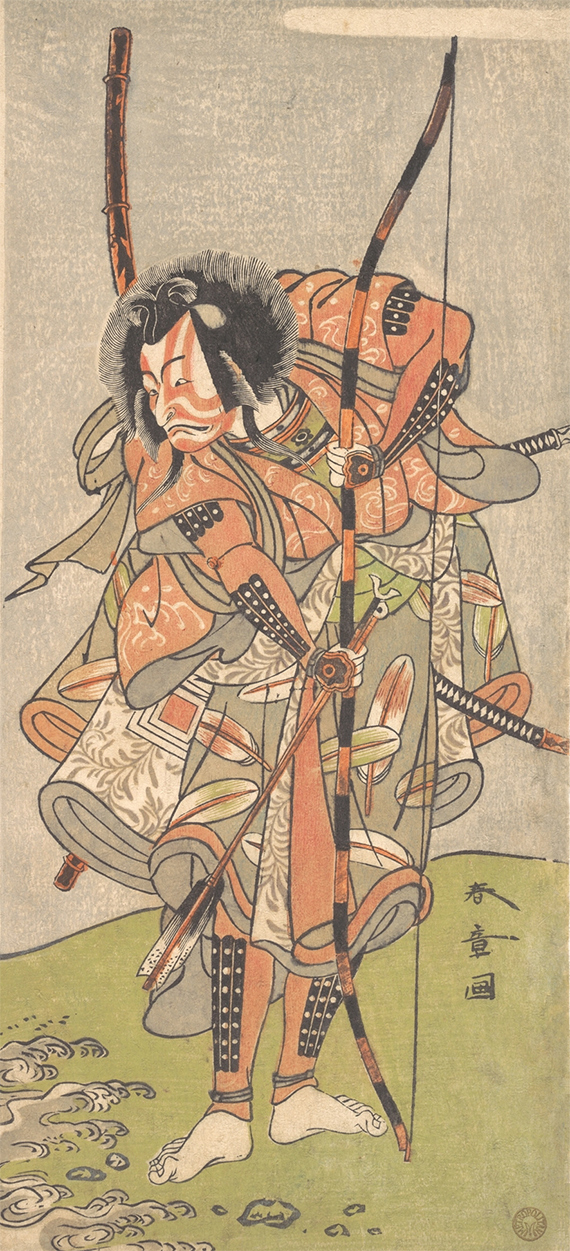
Ichikawa Ebizô III in a print made by Katsukawa Shunshô in 1774 Print made by Torii Kiyohiro in 1755 Print made by Ippitsusai Bunchô (1758~1760) Print made by Torii Kiyotsune in 1763 Print made by Ippitsusai Bunchô in 1769 Print made by Katsukawa Shunkô The Ichikawa Sanshô line of actors The Matsumoto Shichizô line of actors The Matsumoto Kôshirô line of actors The Ichikawa Danjûrô line of actors The Ichikawa Ebizô line of actors |
|
|
| Contact | Main | Top | Updates | Actors | Plays | Playwrights | Programs | Links | FAQ | Glossary | Chronology | Illustrations | Prints | Characters | Derivatives | Theaters | Coming soon | News |