| SEGAWA KIKUNOJÔ I |
|
Stage names:
Others names:
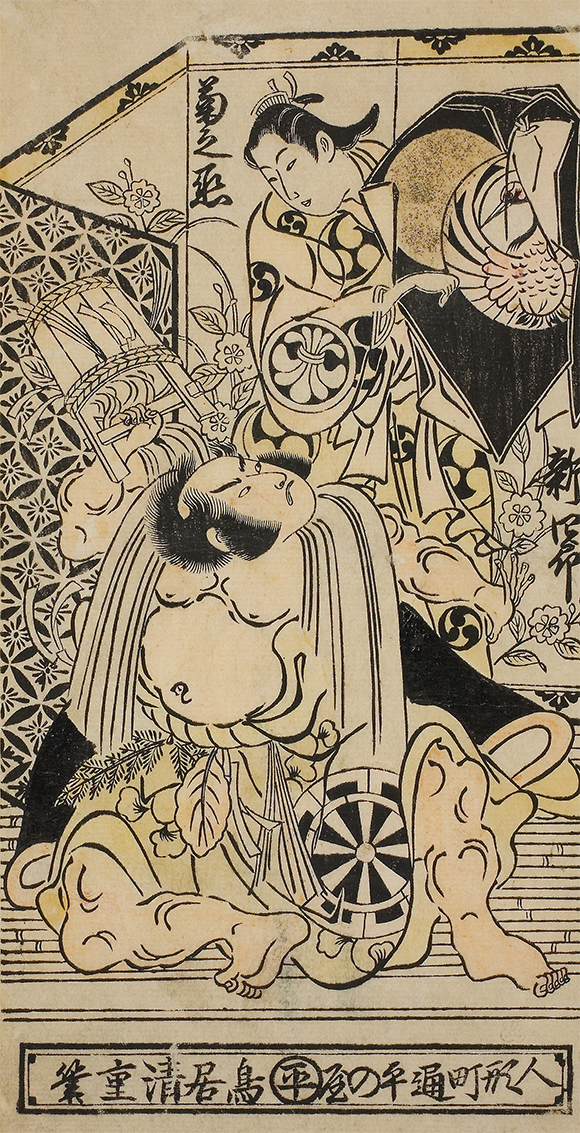
Guild: Hamamuraya Line number: SHODAI (I) Poetry name: Rokô (1) Blazon: the spray of tied cotton (yui wata) Existence: 1693 ~ 2nd day of the 9th lunar month of 1749 [1] Connections: Master: Segawa Takenojô I Brother: Segawa Kikujirô I (Adopted/illegitimate ?) son: Segawa Kikunojô II Disciple: Segawa Somematsu Career: 1693 ~ 1708: born in Kyôto (born in 1691 according to some documents). He started his career in Ôsaka in a little theater on the Dôtonbori managed by Kaizukaya Nizaburô, performing under the name of Hamamuraya Kichiji. He became disciple of Segawa Takenojô I at an unknown date and received the name of Segawa Kichiji I. 1st lunar month of 1709: he became wakaonnagata and took the name of Segawa Kikunojô I in Kyôto, performing in the drama "Nishi no Miya Hiruko no Inochi", which was produced by Arashi Sanjûrô I. 11th lunar month of 1713: Kikunojô played in Ôsaka at Shioya Kuroemon's theater the role of Iwachiyo in the kaomise drama "Yoyo Meoto Tsuru no Mago". 11th lunar month of 1722: Kikunojô became zamoto in Kyôto and produced at Miyako Mandayû's theater the kaomise drama "Ôbashira Kogane no Sazare Ishi", in which he played the role of Shiraume. 11th lunar month of 1723: Kikunojô produced in Kyôto Fukuoka Yagoshirô's kaomise drama "Teono Hajime Kogane no Ishizue", in which he played the role of Okyô. 11th lunar month of 1725: Kikunojô played in Kyôto at Kameya Kumenojô's theater the role of Princess Komatsu in Azuma Sanpachi's kaomise drama "Senzai Gura Sangai Matsu", which was produced by Arashi Jûjirô. 11th lunar month of 1728: Kikunojô played the role of Okane in the kaomise drama "Daimyô Kogane no Uroko", which was produced by Sanogawa Mangiku at Hayagumo Chôdayû's theater. 10th lunar month of 1730: Kikunojô settled in Edo. He achieved a great success at the Nakamuraza by performing the leading role of the Shakkyô dance "Aioi Jishi". 11th lunar month of 1730: Kikunojô performed in the same theater in the kaomise drama "Irifune Hiru-ga-Kojima"; his stage partners were Ichikawa Danjûrô II, Sawamura Sôjûrô I, Ôtani Hiroji I, Ogino Izaburô I, Nakajima Mihoemon I and Sodesaki Miwano I. 1st lunar month of 1731: Kikunojô's rank in the Edo hyôbanki, wakaonnagata section, was jô-jô-kichi (superior - superior - excellent) [visual]. He played at the Nakamuraza the role of the courtesan Katsuragi in the drama "Keisei Fukubiki Nagoya" [casting]. 2nd lunar month of 1731: Kikunojô played in the same theater the leading role of the first dôjôjimono of Kabuki history, entitled "Mugen no Kane Shindôjôji". 11th lunar month of 1731: Kikunojô played at the Nakamuraza the role of Shinobu in the kaomise drama "Wagô Ichiji Taiheiki", which celebrated the arrival in Edo of the Kamigata star Sadoshima Chôgorô I. 11th lunar month of 1732: Kikunojô performed at the Nakamuraza in the kaomise drama "Yamato Kotoba Imagawajô", which was written by Sawamura Sôjûrô I; this kaomise program welcomed in Edo the 2 Kamigata stars Anegawa Shinshirô I and Sakakiyama Koshirô I. 11th lunar month of 1733: Kikunojô performed at the Nakamuraza in the kaomise drama "Nagi no Hana Asahi Genji". 1st lunar month of 1734: Kikunojô performed at the Nakamuraza in the new year drama "Jûhakkô Imayô Soga". He also played the leading role of the spirit of the shishi for the premiere of the dance "Fûryû Aioi Jishi". The hat he used on stage became the latest fashion in the city of Edo and was called "Segawa Bôshi" ('the Segawa Hat'). 11th lunar month of 1734: Kikunojô moved to the Ichimuraza and played the role of Kunitae's wife Matsushima in the kaomise drama "Michinoku Yunzei Genji"; his stage partners were Ichikawa Danjûrô II (who plays Kunitae), Ôtani Hiroji I, Segawa Kikujirô I, Ichikawa Danzô I, Tsuruya Nanboku I, Ichikawa Sôzaburô I, Sakata Hangorô I and Ichimura Takenojô IV. 11th lunar month of 1735: Kikunojô played at the Ichimuraza the role of Ono no Komachi in the kaomise drama "Kongen Nana Komachi", which celebrated the great shûmei of Ichikawa Ebizô II, Ichikawa Danjûrô III and Matsumoto Kôshirô II. 1st lunar month of 1736: the trio made up of Kikunojô, Ichimura Takenojô IV and Ichimura Manzô performed together at the Ichimuraza in "Sayo no Nakayama Asama-ga-Dake", the first Tokiwazu-based dance-drama in Kabuki history. 11th lunar month of 1736: Ôtani Hiroji I and the Segawa brothers, Kikunojô and Kikujirô, moved together to the Nakamuraza and performed in the kaomise drama "Kuni no Tomi Sesshôseki". 9th lunar month of 1737: Kikunojô celebrated his coming departure from Edo, achieving a great success at the Nakamuraza by playing the role of Kuzu-no-Ha (a female fox disguised as a woman who had to depart from his human child) in the drama "Ashiya Dôman Ôuchi Kagami". Fall 1737: Ôtani Hiroji I and the Segawa brothers, Kikunojô and Kikujirô, went together to Kamigata. 11th lunar month of 1737: Kikunojô and his brother Kikujirô settled in Kyôto and performed in the kaomise drama "Yamato Uta Kamiyo no Kagami", which was produced by Mizuki Tatsunosuke II (who celebrated his shûmei) at Hayagumo Chôdayû's theater; their stage partners were Anegawa Shinshirô I, Shinozuka Kazaemon, Yamanaka Heijûrô I, Arashi Sanshirô III and Somenoi Utamatsu. 2nd lunar month of 1738: the Segawa brothers performed in the same theater in the play "Shimada Kagekiyo", which was a big audience failure. 2nd lunar month of 1738: premiere in Kyôto of Matsuda Bunkôdô's drama "Yukihira Isonare Matsu"; Kikunojô played the roles of Takamatsu's nyôbô and Suma no Kofuji [more details]. 3rd lunar month of 1738: Kikunojô's rank in the Kyôto hyôbanki, wakaonnagata section, was ô-jô-jô-kichi (grand - superior - superior - excellent) [Visual]. Fall 1738: Kikunojô moved to Ôsaka. 11th lunar month of 1738: Kikunojô performed at the Ônishi no Shibai in the kaomise drama "Kusunoki Yakata Sennen Gitsune", which was produced by Yoshizawa Ayame II and also celebrated the arrival in Ôsaka of Bandô Hikosaburô I. The line-up included the actors Tsuuchi Monzaburô I, Ichiyama Sukegorô I, Ichiyama Dengorô and Matsushima Moheiji. 1st lunar month of 1739: Kikunojô's rank in the Ôsaka hyôbanki, wakaonnagata section, was ô-jô-jô-kichi (grand - superior - superior - excellent) [Visual]. He played in the same theater the leading role of the dance-drama "Mugen no Kane". 12th lunar month of 1739: Kikunojô played in the same theater the role of the courtesan Tôyama in the drama "Kewai Musha Ômi Genji"; his stage partners were Yoshizawa Ayame II (Okichi), Nakamura Sôjûrô (Shôgen), Sakakiyama Shirotarô I (Nagoya Sanza), Arashi Shichigorô I (Fuwa Banzaemon) and Anegawa Shinshirô I (Matahei). 11th lunar month of 1740: Kikunojô performed at the Ônishi no Shibai in the kaomise drama "Yaguruma Yakata no Fuji", which was produced by Nakamura Tomijûrô I; his stage partners were Yamamoto Kyôshirô I, Nakamura Shingorô I, Nakayama Shinkurô I, Sanogawa Mangiku, Onoe Kikugorô I, Nakamura Sôjûrô and Arashi Shichigorô I. 12th lunar month of 1740: Kikunojô played in the same theater the leading role of the dôjôjimono "Keisei Imayô Dôjôji". 1st lunar month of 1741: Kikunojô's rank in the Ôsaka hyôbanki, wakaonnagata section, was goku-jô-jô-kichi (extreme - superior - superior - excellent) [Visual]. 5th lunar month of 1741: Kikunojô played in the same theater the role of Ochô in the drama "Onna Hinin Adauchi". 7th lunar month of 1741: Kikunojô achieved a great success in the same theater by performing in the drama "Sôen Musha Makura Gundan"; the performance was a 100 days long run. Fall 1741: Kikunojô went back to Edo with Ôtani Hiroji I. 11th lunar month of 1741: Kikunojô played at the Ichimuraza the role of Iwato Saemon's wife Uraba in the kaomise drama "Sugatae Onna Narihira"; his stage partners were Ôtani Hiroji I (playing Iwato Saemon), Bandô Hikosaburô I, Segawa Kikujirô I, Bandô Matatarô III, Ichimura Uzaemon VIII, Matsushima Moheiji, Nakajima Mihoemon I, Miyazaki Jûshirô II, Ichiyama Dengorô, Tamazawa Saijirô I and Ichimura Manzô. 3rd lunar month of 1742: premiere at the Ichimuraza of the dance "Hanabusa Shishi no Rangyoku", the third part (sanbanme) of the new year sogamono drama "Fuji Miru Sato Sakae Soga"; Kikunojô played the leading role of this Lion dance [2]. 11th lunar month of 1742: Kikunojô played at the Ichimuraza the role of Miyagino in the kaomise drama "Furisode Shinoda no Zuma", which celebrated the arrival in Edo of the actor Onoe Kikugorô I. 11th lunar month of 1743: Kikunojô moved to the Nakamuraza and performed in the kaomise drama "Funayosooi Mitsugi Taiheiki". 1st lunar month of 1744: Kikunojô's rank in the Edo hyôbanki, wakaonnagata section, was goku-jô-jô-kichi (extreme - superior - superior - excellent) [Visual]. 2nd lunar month of 1744: premiere at the Nakamuraza of the Nagauta-based dôjôjimono "Momo Chidori Musume Dôjôji". The leading female role was played by Kikunojô and his two stage partners were Ichikawa Ebizô II and Ôtani Hiroji I. 11th lunar month of 1744: Kikunojô performed at the Nakamuraza in the kaomise drama "Kachô Taiheiki". 11th lunar month of 1745: Kikunojô performed at the Nakamuraza in the kaomise drama "Suehiro Izu Nikki", which celebrated the arrival in Edo of the Kamigata actor Fujikawa Heikurô and the shûmei of Ôtani Hiroemon II and Nakamura Denkurô II. 1st lunar month of 1746: Kikunojô played in the same theater the leading role of the Miyakoji-based dance "Mugen no Kane Omoi no Akatsuki", which was based on the Mugen no Kane legend. 11th lunar month of 1746: Kikunojô moved to the Ichimuraza and played the role of Ofuji in the kaomise drama "Aioi Izu Nikki", which celebrated the arrival in Edo of the Kamigata actors Yamamoto Kyôshirô I and Iwai Hanshirô III. 5th lunar month of 1747: Kikunojô played in the same theater the role of Onna Kan Shôjô, the female Kan Shôjô (the hero of the drama "Sugawara Denju Tenarai Kagami"), in the drama "Onna Kan Shôjô Utsutsu no Narukami". 11th lunar month of 1747: Kikunojô moved to the Nakamuraza and played the roles of Sanemori's daughter Kumano and the courtesan Nishikigi in the kaomise drama "Izu Gunzei Sumô no Nishiki", sharing the top of the bill with the 2 stars Sawamura Chôjûrô III and Ichikawa Ebizô II. 1st lunar month of 1748: Kikunojô played at the Nakamuraza the role of the courtesan Akoya in the drama "Kazari Ebi Yoroi Soga". 2nd lunar month of 1748: Kikunojô appeared on stage for the last time, in Edo at the Nakamuraza, where he successfully played the role of Onna Kan Shôjô, the female Kan Shôjô, in the drama "Sugawara Denju Tenarai Kagami". He suddenly fell ill in the 3rd lunar month and had to stop acting. 2nd day of the 9th lunar month of 1749 [1]: Kikunojô died in Edo. Comments: Segawa Kikunojô I was the best onnagata in Edo during the first half of the eighteenth century. He was an excellent dancer and the author of a book, "Onnagata Hiden" ("the secrets of an onnagata") in which he wrote that in order to be successful, an onnagata had to live his daily life as a woman. He was also the owner of a prosperous cosmetics shop located in Edo in the district of Ningyô-chô. [1] The 2nd day of the 9th lunar month of the 2nd year of the Kan'en era was the 12th of October 1749 in the western calendar. [2] This dance is still in the Kabuki repertoire and is commonly called "Makura Jishi". |

 |
|
The Actors Anegawa Shinshirô I and Segawa Kikunojô I The Segawa Rokô line of actors The Segawa Kichiji line of actors The Segawa Kikunojô line of actors |
|
|
| Contact | Main | Top | Updates | Actors | Plays | Playwrights | Programs | Links | FAQ | Glossary | Chronology | Illustrations | Prints | Characters | Derivatives | Theaters | Coming soon | News |