| NAKAMURA KUMETARÔ I |
|
Stage names:
Guild: Tanbaya Line number: SHODAI (I) Poetry name: Richô Existence: 1724 ~ 15th day of the 7th lunar month of 1777 [1] Connection: Father: Nakamura Kichisaburô II Disciples: Nakamura Kumejirô, Nakamura Kichijûrô I, Nakamura Kichinosuke Career: 1724: born in Kyôto. His father was the actor Nakamura Kichisaburô II. He received the name of Nakamura Kumetarô and performed in miyaji shibai at the beginning of the 1730s. 11th lunar month of 1739: Kumetarô became zamoto and produced in Kyôto the kaomise drama "Oiwai Nô Nishiki no Manmaku". He also changed the writing of his first name:
You need a Japanese Language Kit installed within your system in order to be able to read the characters 1st lunar month of 1740: Kumetarô produced in Kyôto at Nakamura Wakadayû's theater the ni-no-kawari drama "Keisei Ujimiyama". 11th lunar month of 1740: Kumetarô produced in Kyôto at Miyako Mandayû's theater the kaomise drama "Asuka Miyako Jindai no Maki" and the kiri kyôgen "Hayazaki Taiheiki". The latter drama welcomed in Kyôto the actor Ogino Izaburô I. 11th lunar month of 1742: Kumetarô produced in Kyôto at the Minamigawa no Shibai the kaomise drama "Kaeribana Konrei Nagoya". 1st lunar month of 1743: Kumetarô produced in the same theater the ni-no-kawari drama "Keisei Mutsu no Kane". 11th lunar month of 1743: Kumetarô produced in Kyôto at Hoteiya Umenojô's theater the kaomise drama "Yomeiri Ôshimadai", which celebrated the shûmei of Sanjô Mankatsu. 11th lunar month of 1744: Kumetarô produced in Kyôto at Hoteiya Umenojô's theater the kaomise drama "Tanba Yosaku Kameyama Kayoi". 11th lunar month of 1745: Kumetarô produced in Kyôto Namiki Eisuke's kaomise drama "Toragoyomi Hoteibukuro". 11th lunar month of 1746: Kumetarô produced in Kyôto at Hoteiya Umenojô's theater the kaomise drama "Tomi Yakata Ômu Kotoba"; his stage partners were Sawamura Sôjûrô I, Anegawa Shinshirô I, Sanogawa Jûkichi (final performance before his death), Nakamura Utaemon I, Nakamura Tomijûrô I, Nakamura Shingorô I (final performance before his death), Tamiya Jûzaburô I (final performance before his death) and Nakamura Kiyosaburô I. 11th lunar month of 1747: Kumetarô produced in Kyôto the kaomise drama "Meiken Kogane Zukuri". Fall 1748: Kumetarô went to Edo. 11th lunar month of 1748: Kumetarô performed at the Nakamuraza in the kaomise drama "Onna Moji Heike Monogatari". He achieved a great success by performing the 5 roles of a hengemono entitled "Kyô Ningyô Gohenge", made up of a dance in the tanzen style, a flower-adorned hat dance, a courtesan dance, a spear dance and a shôjô dance. 6th lunar month of 1749: the play "Kanadehon Chûshingura" was produced at the Nakamuraza for the first time; Kumetarô played the role of Okaru [casting]; the role of Hayano Kanpei was played by Nakamura Shichisaburô II. 11th lunar month of 1749: Kumetarô played at the Nakamuraza the role of Kôtô-no-Naishi in the kaomise drama "Onnô Taiheiki". 1st lunar month of 1750: Kumetarô played in the same theater the role of Ôiso no Tora in the new year drama "Ôkazari Saiwai Soga". 11th lunar month of 1750: Kumetarô performed at the Nakamuraza in Tsuuchi Jihê II's kaomise drama "Wakaki no Ume Taira no Kiyomori". 11th lunar month of 1751: Kumetarô moved to the Ichimuraza and performed in the kaomise drama "Kamimukae Nigiwai Genji", which celebrated the shûmei of Bandô Hikosaburô II and welcomed in Edo the Kamigata actor Arashi Shichigorô I. 1st lunar month of 1752: Kumetarô's rank in the Edo hyôbanki, wakaonnagata section, was jô-jô-(hanshiro)kichi (superior - superior - (half-white) excellent) [visual]. He shared the same rank with Sanogawa Hanazuma II. 11th lunar month of 1752: Kumetarô played at the Ichimuraza the role of Semimaru in the kaomise drama "Ume Sakura Ninin Semimaru". 7th lunar month of 1753: the play "Hirakana Seisuiki" was performed for the first time in Edo, at the Ichimuraza; Kumetarô played the roles of Chidori and Umegae [casting]. 11th lunar month of 1753: Kumetarô played at the Ichimuraza the role of Komachi in the kaomise drama "Kamuri Kurabe Yatsushi Kuronushi", which celebrated the arrival in Edo of the actor Kasaya Matakurô I. 11th lunar month of 1754: Kumetarô played at the Ichimuraza the role of Princess Tamayo in the kaomise drama "Keisei Asakusa no Kane". 1st lunar month of 1755: Kumetarô played in the same theater the role of Ôiso no Tora in the new year drama "Kodakara Aigo Soga"; the role of Tora's lover Soga Jûrô was played by Ichimura Kamezô I. 9th lunar month of 1755: Kumetarô performed his onagori kyôgen at the Ichimuraza, playing the role of the courtesan Yûgiri in Chikamatsu Monzaemon's drama "Keisei Awa no Naruto". He also performed one more time the hengemono "Kyô Ningyô Gohenge", which was staged for the first time in the 11th lunar month of 1748 at the Nakamuraza; the program was made up of a dance in the tanzen style, a flower-adorned hat dance, a courtesan dance, a spear dance and a shôjô dance. Fall 1755: Kumetarô went back to Kyôto. 11th lunar month of 1755: Kumetarô played at the Kitagawa no Shibai the role of Azuma no Omuku in the kaomise drama "Onna Monji Heike Monogatari". 1st lunar month of 1756: Kumetarô's rank in the Kyôto hyôbanki, wakaonnagata section, was jô-jô-(shiro)kichi (superior - superior - (white) excellent) [visual]. 11th lunar month of 1756: Kumetarô played at the Kitagawa no Shibai the role of the courtesan Kurenai in the kaomise drama "Ukematsuri Hôrai Yakata", which was produced by Somematsu Matsujirô. 3rd lunar month of 1757: Kumetarô played in the same theater the role of Princess Taema in the drama "Narukami Fudô Kitayama Zakura"; the role of the wicked priest Narukami was played by Ichikawa Danzô III. 11th lunar month of 1757: Kumetarô became zamoto and produced at the Kitagawa no Shibai Sakurato Bunsaku's kaomise drama "Tsunomoji Keman no Yurai". 1st lunar month of 1758: first Kabuki adaptation of the 5 acts puppet theater drama "Gion Sairei Shinkôki", which was simultaneously produced at the Minamigawa no Shibai [casting] and the Kitagawa no Shibai [casting]. It used its real title at the former theater but it was entitled "Keisei Niwatoriyama" at the latter theater; Kumetarô produced this drama in the latter theater and played the roles of Princess Yuki and Kichô-no-Mae. Fall 1758: Kumetarô went to Ôsaka. 11th lunar month of 1758: Kumetarô played at the Naka no Shibai the role of Okyô in the kaomise drama "Shitennô Chikara Kurabe", which was produced by Arashi Kichisaburô I and celebrated the shûmei of Fujikawa Hanzaburô III. 7th lunar month of 1759: Kumetarô played in the same theater the role of Onaka in the drama "Natsu Matsuri Naniwa Kagami". 11th lunar month of 1759: Kumetarô performed at the Naka no Shibai in the kaomise drama "Mibae Soga Azuma Tanzen", which was produced by Arashi Kichisaburô I. 7th lunar month of 1760: Kumetarô played in the same theater the roles of Chidori and Umegae in the drama "Hirakana Seisuiki". Fall 1760: Kumetarô went back to Kyôto. 11th lunar month of 1760: Kumetarô played the role of the courtesan Tamagawa in the kaomise drama "Kiku Nagashi Kokka Taiheiki", which was produced in Kyôto by Nakamura Senzô. Fall 1761: Kumetarô went to Ôsaka. 11th lunar month of 1761: Kumetarô performed at the Naka no Shibai in the kaomise drama "Miyo no Hana Yunzei Kagami", which was produced by Mimasu Daigorô I. 12th lunar month of 1761: premiere at the Naka no Shibai of Takeda Haruzô's ni-no-kawari drama "Akiba Gongen Kaisen Banashi". It was the first drama in Kabuki history using gandô-gaeshi on stage; Kumetarô played the roles of Princess Mitsu and Enshû's wife Misao [casting]. 4th lunar month of 1762: first Kabuki adaptation of the 5-act puppet theater drama "Gosho Zakura Horikawa no Youchi", which was staged at the Naka no Shibai; Kumetarô played the role of Shizuka Gozen [casting]. 9th lunar month of 1762: Kumetarô played in the same theater the roles of Shizuka Gozen and Osato in the drama "Yoshitsune Senbon Zakura". 11th lunar month of 1762: Kumetarô played at the Naka no Shibai the role of Uraha in the kaomise drama "Uchide no Kozuchi Tezuma Urakata", which was produced by Mimasu Daigorô I. 3rd lunar month of 1763: Kumetarô's rank in the Ôsaka hyôbanki, wakaonnagata section, was jô-jô-kichi (superior - superior - excellent) [visual]. 7th lunar month of 1763: Kumetarô played in the same theater the roles of Chiyo and Tatsuta-no-Mae in the drama "Sugawara Denju Tenarai Kagami". 9th lunar month of 1763: Kumetarô played in the same theater the role of Kurofune's wife in the drama "Kurofune Deiri Minato"; the role of Kurofune was played by Mimasu Daigorô I. 11th lunar month of 1763: Kumetarô performed at the Naka no Shibai in a special kaomise program in 3 parts, which were produced by Mimasu Daigorô I and entitled "Fuyu Gomori Kôbai Tazuna", "Sakigake Genpei Tsutsuji" [2] and "Futaba Musha Senbon Zakura". 7th lunar month of 1764: Kumetarô played in the same theater the role of Princess Tamaori in the drama "Ichi-no-Tani Futaba Gunki". 9th lunar month of 1764: première in Ôsaka at the Naka no Shibai of "Hare Kosode Tsuzure no Nishiki", based on the puppet drama "Katakiuchi Tsuzure no Nishiki", which was produced by Mimasu Daigorô I. A similar play was staged one day before under a different title, "Oriawase Tsuzure no Nishiki", at the Kado no Shibai. The competition for the best performance and the best line-up was open between the 2 theaters. The performance at the Kado no Shibai was more successful than the one at the Naka no Shibai; Kumetarô played at the Naka no Shibai the role of Sahê's nyôbô [casting]. 11th lunar month of 1764: Kumetarô moved to the Kado no Shibai and performed in the kaomise drama "Momotarô Obako Banashi", which was produced by Nakayama Bunshichi I and celebrated the shûmei of Yoshizawa Ayame III. 2nd lunar month of 1765: Kumetarô played in the same theater the role of Shigenoi in the drama "Koi Nyôbô Somewake Tazuna". Fall 1765: Kumetarô went back to Kyôto. 11th lunar month of 1765: Kumetarô played the role of Yoichi's wife (in reality a fox) in the kaomise drama "Kachidoki Asahi no Ôgi", which was produced by Ichiyama Sukegorô II and Yamashita Kyônosuke at the Minamigawa no Shibai and welcomed in Kyôto the Edo actor Ichikawa Danzô III. 1st lunar month of 1766: Kumetarô's rank in the Kyôto hyôbanki, wakaonnagata section, was jô-jô-kichi (superior - superior - excellent) [visual]. 7th lunar month of 1766: Kumetarô played in the same theater the role of the courtesan Hanjo in the drama "Keisei Sumidagawa". 11th lunar month of 1766: Kumetarô performed at the Minamigawa no Shibai in the kaomise drama "Yuki no Asa Daimonjitsu Miyako no Fuku", which was produced by Ichiyama Sukegorô II and Yamashita Kyônosuke. 11th lunar month of 1767: Kumetarô moved to the Kitagawa no Shibai and played the role of Omiya in the kaomise drama "Daikokuten", which was produced by Onoe Montarô and Onoe Kumesuke and celebrated the shûmei of Bandô Yasuke and Bandô Sukesaburô II. 3rd lunar month of 1768: Kumetarô played in the same theater the roles of Osono and Okaru in the drama "Kanadehon Chûshingura". 6th lunar month of 1768: Kumetarô played in the same theater the roles of Chidori and Umegae in the drama "Hirakana Seisuiki". 11th lunar month of 1768: Kumetarô played in Kyôto the role of Princess Sakura (in reality a fox) in the kaomise drama "Enmusubi Asahi no Shimadai", which was produced by Onoe Kumesuke. 11th lunar month of 1769: Kumetarô moved to the Minamigawa no Shibai. 3rd lunar month of 1770: Kumetarô played in the same theater the roles of Owasa and Shizuka Gozen in the drama "Gosho Zakura Horikawa no Youchi". Fall 1770: Kumetarô went to Ôsaka. 11th lunar month of 1770: Kumetarô played at the Naka no Shibai the roles of Tamasasa and the fox Otaki in the kaomise drama "Ma'ichimonjiya Sakigake Hyôban", which was produced by Ogawa Kichitarô I. 1st lunar month of 1771: premiere at the Naka no Shibai of Namiki Shôzô I's drama "Kuwanaya Tokuzô Irifune Monogatari"; Kumetarô played the role of the keisei Higaki [casting]. Kumetarô's rank in the Ôsaka hyôbanki, wakaonnagata section, was (shiro)ô-jô-jô-kichi ((white) grand - superior - superior - excellent) [Visual]. 8th lunar month of 1771: Kumetarô played in the same theater the roles of Hinadori and Omiwa in the drama "Imoseyama Onna Teikin". 11th lunar month of 1771: Kumetarô went to the Kado no Shibai and played the role of the courtesan Konohana (in reality Nikaidô's daughter) in the kaomise drama "Ganjitsu Eiga no Toshikoshi", which was produced by Ogawa Kichitarô I. 3rd lunar month of 1772: Kumetarô played in the same theater the role of Shigenoi in the drama "Koi Nyôbô Somewake Tazuna". 7th lunar month of 1772: Kumetarô played in the same theater the roles of Shizuka Gozen and Osato in the drama "Yoshitsune Senbon Zakura". 11th lunar month of 1772: Kumetarô went to the Naka no Shibai and played the role of the koshimoto Shikinami and Shizuka Gozen in the kaomise drama "Onoe Kikugorô no Baranu Banashi", which was produced by Nakamura Utaemon I. 4th lunar month of 1773: Kumetarô played in the same theater the role of Okaji in the drama "Natsu Matsuri Naniwa Kagami". Fall 1773: Kumetarô went back to Kyôto. 11th lunar month of 1773: Kumetarô played in Kyôto the role of Tamasasa in the kaomise drama "Etari ya Etari Tsuwamono Majiwari", which was produced by Yoshizawa Iroha I. 1st lunar month of 1774: Kumetarô's rank in the Kyôto hyôbanki, wakaonnagata section, was (shiro)ô-jô-jô-kichi ((white) grand - superior - superior - excellent) [Visual]. 10th lunar month of 1774: Kumetarô performed in the same theater in the dance "Shakkyô". 1st lunar month of 1775: Kumetarô appeared on stage for the last time, in Ôsaka at the Naka no Shibai, playing the role of Ofusa in the drama "Kumetono Aiaigasa". The first ideogram of this title was the same as the first one in Kumetarô; the second ideogram was the first one in the first name of Kumetarô's stage partner Nakamura Jûzô II, who played the role of Ofusa's lover Tokubê. Kumetarô decided to retire and became a priest. He calls himself Kaiin and settled in Ôsaka, near the famous Shitennôji temple. 15th day of the 7th lunar month of 1777 [1]: Kumetarô died. Comments: Nakamura Kumetarô I was talented and popular Kyôto onnagata actor. He was able to play almost any kind of female roles, excelling in musume, hime and keisei roles. He was nicknamed wakaonnagata no meika, "the celebrated flower of wakaonnagata". [1] The 15th day of the 7th lunar month of the 6th year of the An'ei era was the 17th of August 1777 in the western calendar. [2] This was the premiere of "Ôgiya Kumagai". |

 |
|
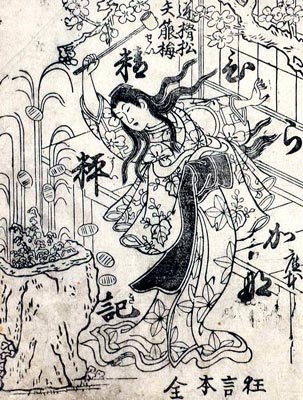
Nakamura Kumetarô I playing the role of the courtesan Umegae in the "Kanzaki Ageya" scene of the drama "Hirakana Seisuiki", which was staged in the 6th lunar month of 1768 at the Kitagawa no Shibai Print made by Torii Kiyoshige (1752~1755) The Nakamura Kumetarô line of actors |
|
|
| Contact | Main | Top | Updates | Actors | Plays | Playwrights | Programs | Links | FAQ | Glossary | Chronology | Illustrations | Prints | Characters | Derivatives | Theaters | Coming soon | News |