| ICHIKAWA DANZÔ IV |
|
Stage names:
Guild: Mikawaya Nicknames: Meguro Danzô ("Danzô from Meguro") Line number: YODAIME (IV) Poetry name: Shikô Existence: 1745 ~ 9th day of the 10th lunar month of 1808 [1] Connection: Master: Ichikawa Danzô III Adopted mother: Ichikawa Danzô III's widow Sons: Ichikawa Dannosuke III, Ichikawa Dannosuke IV Adopted son: Ichikawa Danzô V Disciples: Ichikawa Ichizô I, Ichikawa Aragorô I, Ichikawa Tomozô II, Ichikawa Monzaburô I, Ichikawa Monzaburô II Career: 1745~1763: born in Kyôto. He started his career at an early age, performing under the name of Kameya Torazô in a troupe of children actors located at the Izumi Shikibeza. He spent some years in the minor theaters of Ôsaka (hama shibai). 1763: he became disciple of Nakamura Tomijûrô I and received the name of Nakamura Torazô. 1768: Torazô settled in Edo. 11th lunar month of 1768: he became disciple of the actor Ichikawa Danzô III and received the name of Ichikawa Tomozô I, performing at the Ichimuraza in the kaomise drama "Otokoyama Yunzei Kurabe". 1769: Tomozô went back to Kyôto. 11th lunar month of 1771: Tomozô played in Kyôto at the Kitagawa no Shibai the role of Shinozuka Gorô in the kaomise drama "Miyako Yoshino Mikado no Takadono", which was produced by Mimasu Tokujirô I, welcomed in Kyôto the Edo actor Sakata Hangorô II and celebrated the shûmei of Sawamura Sôjûrô III, Anegawa Minato II and Yamatoyama Rinzaemon II. 24th day of the 6th lunar month of 1772 [2]: his master Ichikawa Danzô III died. Tomozô went back to Edo in the family of Ichikawa Danzô III's widow, who adopted him. 11th lunar month of 1772: Ichikawa Tomozô I took the name of Ichikawa Danzaburô III at the Ichimuraza, performing in the kaomise drama "Edo Katagi Hikeya Tsunazaka". 11th lunar month of 1773: Ichikawa Danzaburô III took the name of Ichikawa Danzô IV at the Ichimuraza, performing in the kaomise drama "Kaeri Kiso Kigoto no Hatsumono". 3rd lunar month of 1776: first Kabuki adaptation of Matsu Kanshi's puppet theater drama "Koi Musume Mukashi Hachijô", which was staged at the Nakamuraza; Danzô played the role of Shirokiya Shôbei [casting]. 5th lunar month of 1776: the play "Honchô Nijûshikô" was performed for the first time in Edo, at the Nakamuraza; Danzô played the role of the hyakushô Jihizô (in reality Naoe Yamashiro-no-Kami) [casting]. 1st lunar month of 1778: the drama "Imoseyama Onna Teikin" was staged for the first time in Edo, at the Moritaza [casting]; Danzô played the roles of Daihanji no Kiyosumi and Soga no Iruka. 4th lunar month of 1780: first Kabuki adaptation of Utei Enba, Kijô Tarô and Yô Yôdai puppet theater drama "Go Taiheiki Shiraishi Banashi", which was written in the 1st lunar month of 1780. The play was produced in Edo at the Moritaza; Danzô played the roles of the shôya Shichirobê and Daifukuya Sôroku (in reality Shimada Saburôbê) [casting]. 9th lunar month of 1780: Danzô played for the first time the role of Saitô Bettô Sanemori in the drama "Genpei Nunobiki no Taki", which was staged at the Moritaza. 3rd lunar month of 1781: Danzô played for the first time 7 roles (nanayaku) in the drama "Kanadehon Chûshingura", which was staged at the Moritaza. Roles: En'ya Hangan, Ôboshi Yuranosuke, Honzô's wife Tonase, Amakawaya Gihei, Yoichibê, Ono no Sadakurô and Ôwashi Bungo. This was the first time in Kabuki history that an actor plays seven roles in the classic "Kanadehon Chûshingura". 5th lunar month of 1783: Danzô played at the Nakamuraza the roles of Ishidô Umanojô, Kakogawa Honzô and Teraoka Heiemon in the drama "Kanadehon Chûshingura". 9th lunar month of 1783: Danzô celebrated his coming departure from Edo, playing the role of Konishi Suketarô in the drama "Buke no Hana Musume no Adauchi", which was staged at the Nakamuraza. Fall 1783: Danzô went to Kamigata after 16 years spent in Edo. 1st lunar month of 1784: Danzô played at the Kado no Shibai the roles of Kô no Moronô, Ôboshi Yuranosuke and Kakogawa Honzô in the drama "Kanadehon Chûshingura", which was produced by Fujikawa Kikumatsu. 4th lunar month of 1784: premiere at the Kado no Shibai of Nagawa Shimesuke I's drama "Sumidagawa Gonichi no Omokage"; Danzô played the role of Hôkaibô [casting]. 5th lunar month of 1784: première in ôshibai, in Ôsaka at the Kado no Shibai, of the gidayû kyôgen "Yura no Minato Sengen Chôja"; Danzô played the role of Ôwada Kuranoshin [casting]. 11th lunar month of 1784: Danzô played at the Kado no Shibai the roles of Takebe Genzô and Terukuni in the drama "Sugawara Denju Tenarai Kagami", which was produced by Onoe Ushinosuke I. 7th lunar month of 1785: Danzô played at the Kado no Shibai the roles of the yakko Dennai, Kumedera Danjô and the wicked priest Narukami in the drama "Otsuginasai Iwafute Shikisan". Summer 1785: tour in Akashi in the company of the great onnagata Iwai Hanshirô IV. 1st lunar month of 1786: Danzô's rank in the Ôsaka hyôbanki, tachiyaku section, was jô-jô-kichi (superior - superior - excellent) [visual]. 10th lunar month of 1786: tour in the Island of Shikoku. 4th lunar month of 1787: Danzô played the roles of Kô no Moronô, Ishidô Umanojô and Amakawaya Gihei in the classic "Kanadehon Chûshingura", which was produced in Ôsaka by Nakamura Kumetarô II 1788: tour in Ise; Danzô played in the classic "Kanadehon Chûshingura" at the Furuichi Shibai. 5th lunar month of 1788: first Kabuki adaptation of the puppet theater drama "Hikosan Gongen Chikai no Sukedachi", which was staged in Ise at the Furuichi no Shibai; Danzô played the roles of Kinugawa Yasozaemon and Todoroki Dengoemon [casting]. He replaced Mimasu Daigorô II for the role of Rokusuke in the 6th lunar month. Spring 1789: tour in Ise; Danzô played in the classic "Sugawara Denju Tenarai Kagami". 12th lunar month of 1789: Danzô played 6 roles in the drama "Kanadehon Chûshingura", which was staged at the Kita-Shinchi no Shibai. Roles: En'ya Hangan, Ôboshi Yuranosuke, Kakogawa Honzô, Amakawaya Gihei, Yoichibê and Ono no Sadakurô. 1st lunar month of 1790: Danzô's rank in the Ôsaka hyôbanki, tachiyaku section, was (shiro)ô-jô-jô-kichi (almost grand - superior - superior - excellent) [Visual]. Spring 1791: Danzô played the role of Saitô Bettô Sanemori in the drama "Genpei Nunobiki no Taki", which was staged in Kyôto at the Shijô Nishi no Shibai. 4th lunar month of 1791: Danzô played in Kyôto the roles of Kumedera Danjô and the wicked priest Narukami in the drama "Narukami Fudô Kitayama Zakura"; the role of Princess Taema was played by Yamashita Yaozô I. 9th lunar month of 1791: premiere of Nagawa Shimesuke I's chûshinguramono "Iroha Gana Shijûshichi Moji" in Ôsaka at the Kado no Shibai; Danzô played the roles of En'ya Hangan and Ôboshi Yuranosuke [more details]. 3rd lunar month of 1793: Danzô's rank in the Kamigata hyôbanki, tachiyaku section, was ô-jô-jô-kichi (grand - superior - superior - excellent) [Visual]. 12th lunar month of 1793: Danzô played the role of Saitô Bettô Sanemori in the drama "Genpei Nunobiki no Taki", which was staged in Ôsaka at the Kita-Shinchi no Shibai. He also played the role of the exiled priest Shunkan in the drama "Heike Nyogo no Shima". 1st lunar month ~ 3rd lunar month of 1794: premiere of Tatsuoka Mansaku's drama "Keisei Haru no Tori", which was famous for its "Umagiri" scene and was produced by the zamoto Asao Okujirô I in Ôsaka at the Kado no Shibai; Danzô played the roles of Oda Sanshichirô Nobutaka and Mashiba Hisayoshi [more details]. Summer 1794: tour in Ise. 8th lunar month of 1794: Danzô played at the Kado no Shibai the role of the exiled priest Shunkan in the drama "Heike Nyogo no Shima"; the role of Chidori was played by Nakamura Noshio II. 9th lunar month of 1794: first Kabuki adaptation of Chikamatsu Hanji's puppet theater drama "Kamakura Sandaiki"; Danzô played the role of Sasaki Takatsuna [casting]. 10th lunar month of 1795: Danzô played at the Naka no Shibai the roles of the wicked priest Narukami and the deity Fudô Myôô in the drama "Narukami Fudô Kitayama Zakura"; the role of Princess Taema was played by Yoshizawa Iroha I. 1st lunar month of 1796: Danzô's rank in the Ôsaka hyôbanki, tachiyaku section, was shin-jô-jô-kichi (truly - superior - superior - excellent) [Visual]. 5th lunar month of 1796: tour in Miyajima with Iwai Hanshirô IV. 10th lunar month of 1796: Danzô played at the Minamigawa no Shibai the roles of Kumedera Danjô and the wicked priest Narukami in the drama "Narukami Fudô Kitayama Zakura"; the role of Princess Taema was played by Yamashita Yaozô I. Summer 1798: Danzô went back to Edo. 7th lunar month of 1798: Danzô played at the Moritaza the roles of Daidôji Denbatanosuke and Araki Saemon in the drama "Katsura Otoko Yaiba no Ôdachi". 8th lunar month of 1798: Danzô played in the same theater the role of Saitô Bettô Sanemori in the drama "Genpei Nunobiki no Taki". 9th lunar month of 1798: Danzô played in the same theater the role of Daihanji no Kiyosumi in the drama "Imoseyama Onna Teikin". 11th lunar month of 1798: Danzô played at the Moritaza several roles, including Shinozuka Iganokami (in a "Shibaraku" scene) and Nagasaki Kageyu Saemon, in the kaomise drama "Taiheiki Mitsugi no Funauta". 1st lunar month of 1799: Danzô's rank in the Edo hyôbanki, tachiyaku section, was goku-jô-jô-kichi (extreme - superior - superior - excellent) [Visual]. 3rd lunar month of 1800: Danzô played at the Nakamuraza the role of the exiled priest Shunkan in the drama "Shunkan Futatsu Omokage". 9th lunar month of 1801: Danzô played at the Nakamuraza the roles of Sanemori and Yoshikata in the drama "Genpei Nunobiki no Taki". 10th lunar month of 1801: Danzô played at the Nakamuraza the role of Matahei in the drama "Keisei Hangonkô"; the role of Otoku was played by Osagawa Tsuneyo II. 11th lunar month of 1801: Danzô planned to go to Ôsaka, yet he took part in the kaomise drama "Meika no Toku Mimasu no Tamagaki", which was staged at the Kawarasakiza. 1st lunar month of 1802: Danzô went back to Kamigata; he played the roles of Karasuka Koroku and Tokichi in the new year ni-no-kawari drama "Keisei Midori no Hayashi", which was produced by Anegawa Kamesaburô at the Kado no Shibai. 2nd lunar month of 1802: Danzô played at the Kado no Shibai the role of Saitô Bettô Sanemori in the drama "Genpei Nunobiki no Taki". 3rd lunar month of 1802: Danzô played at the Kado no Shibai the role of the exiled priest Shunkan in the drama "Heike Nyogo no Shima"; the role of Chidori was played by Fujikawa Tomokichi I. 3rd ~ 5th lunar months of 1802: Danzô played at the Kado no Shibai 7 roles in the drama "Kanadehon Chûshingura". Roles: Kô no Moronô, Ôboshi Yuranosuke, Kakogawa Honzô, Amakawaya Gihei, Okaru's mother, Yoichibê and Ono no Sadakurô; the roles of En'ya Hangan, Honzô's wife Tonase and Okaru were played by Kataoka Nizaemon VII, Sawamura Kunitarô I and Nakayama Ittoku I. 5th lunar month of 1802: Danzô played at the Kita-Shinchi no Shibai the role of the exiled priest Shunkan in the drama "Heike Nyogo no Shima"; the role of Chidori was played by Fujikawa Tomokichi I. Summer 1802: the play "Ehon Taikôki" was staged for the first time in Kyôto, produced by Arashi Sankichi at the Kitagawa no Shibai; Danzô played the role of Takechi Mitsuhide [casting]. 1st lunar month of 1803: Danzô's rank in the Kamigata hyôbanki, tachiyaku section, was goku-jô-jô-kichi (extreme - superior - superior - excellent) [Visual]. 5th lunar month of 1803: Danzô played at the Kitagawa no Shibai the role of the exiled priest Shunkan in the drama "Heike Nyogo no Shima"; the role of Chidori was played by Yoshizawa Iroha I. 7th lunar month of 1803: Danzô played at the Naka no Shibai the role of the wicked priest Narukami in the drama "Narukami Fudô Kitayama Zakura"; the role of Princess Taema was played by Kanô Minshi I. 3rd lunar month of 1804: Danzô played the role of Mashiba Hisayoshi in the drama "Kinmon Gosan no Kiri", which was produced by Hayagumo Chôdayû and Kameya Kumenojô at the Kitagawa no Shibai (Kyôto); the role of the king of thieves Ishikawa Goemon was played by Kataoka Nizaemon VII. 9th lunar month of 1805: Danzô played the role of Saitô Bettô Sanemori in the drama "Genpei Nunobiki no Taki", which was staged in a little theater of the district of Kitano in Kyôto. 1st lunar month of 1806: Danzô's rank in the Kamigata hyôbanki, sôkanjiku section ("all kanjiku"), was goku-jô-jô-kichi (extreme - superior - superior - excellent) [Visual]. 5th lunar month of 1806: tour in Nagoya; Danzô played the role of Saitô Bettô Sanemori in the drama "Genpei Nunobiki no Taki", which was staged in the precinct of the Seijuin Temple. 6th lunar month of 1806: Danzô played in the same theater the role of the wicked priest Narukami in the drama "Narukami Fudô Kitayama Zakura"; the role of Princess Taema was played by Fujikawa Tomokichi I. 12th lunar month of 1806: Danzô took part in the kaomise of the Kado no Shibai, with Kataoka Nizaemon VII and Nakamura Utaemon III. The three stars performed together in the drama "Ôsakazuki Asahi no Hôrai", which was produced by Yoshizawa Minosuke. 3rd lunar month of 1808: "Hachijin Shugo no Honjô" was adapted for Kabuki for the first time, in Kyôto at the Kitagawa no Shibai; Danzô played the role of Katô Asakiyo [casting]. 10th lunar month of 1808: Danzô appeared on stage for the last time, in Ôsaka at the Naka no Shibai, where he performed in the drama "Hachijin Shugo no Honjô", which was produced by Ogawa Kichitarô III. He suddenly fell ill and had to be replaced by Ichikawa Ichizô I. 9th day of the 10th lunar month of 1808 [1]: Danzô died in Ôsaka. Comments: Ichikawa Danzô IV was an outstanding tachiyaku, who covered himself in glory in both Edo and Kamigata. He succeeded in making up for his short height by developping new techniques. He was a pioneer of chûnori and excelled in tachimawari or hayagawari. He was the first Kabuki actor to perform 7 roles in the classic "Kanadehon Chûshingura". His nickname, Meguro Danzô (Meguro's Danzô) was related to his mansion in Edo, which was located on the outskirts of the city, close to the famous Meguro Fudôson Temple. [1] The 9th day of the 10th lunar month of the 5th year of the Bunka era was the 26th of November 1808 in the western calendar. [2] The 24th day of the 6th lunar month of the 9th year of the Meiwa era was the 24th of July 1772 in the western calendar. |

 |
|
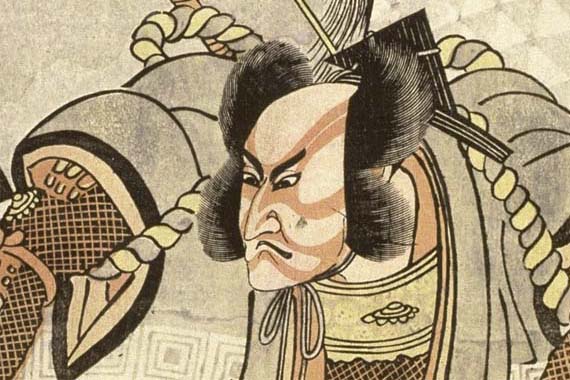
Ichikawa Danzô IV in a print made by Utagawa Toyokuni I (1798~1800) Print made by Utagawa Toyokuni Print made by Utagawa Toyokuni in 1798 Print made by Utagawa Toyokuni in 1801 The Ichikawa Tomozô line of actors The Ichikawa Danzaburô line of actors The Ichikawa Danzô line of actors |
|
|
| Contact | Main | Top | Updates | Actors | Plays | Playwrights | Programs | Links | FAQ | Glossary | Chronology | Illustrations | Prints | Characters | Derivatives | Theaters | Coming soon | News |