| SEKI SANJÛRÔ II |
|
Stage names:
Nicknames: Meijin Seki [3], Sekisan Guilds: Owariya [1], Harimaya [2] Line number: NIDAIME (II) Poetry name: Kazan Existence: 1786 ~ 28th day of the 9th lunar month of 1839 [4] Connections: Masters: Nakamura Utaemon III, Arashi Kichisaburô II (Arashi Kitsusaburô I) Adoptive father: Seki San'emon Son: Seki Sôtarô [8] Career: 1786 ~ 1802: born in Ôsaka. He started his career as a disciple of Arashi Kichisaburô II, who gave him the name of Arashi Sôtarô. He spent most of his early years performing in hama shibai. 11th lunar month of 1802: he became disciple of Nakamura Utaemon III and received the name of Nakamura Utasuke in Ôsaka. A few month later, he was adopted by Seki Sanjûrô I and became Seki Utasuke I. 11th lunar month of 1807: Seki Sanjûrô I and Seki Utasuke I respectively took the names of Seki San'emon and Seki Sanjûrô II at the Naka no Shibai. 3rd lunar month of 1808: Nakamura Utaemon III, Seki San'emon and Sanjûrô went together to Edo; Sanjûrô performed at the Nakamuraza in the drama "Koromo Yayoi Hanago no Keizu". 10th day of the 6th lunar month of 1808 [7]: his adoptive father Seki San'emon died. 7th lunar month of 1808: premiere at the Nakamuraza of Segawa Jokô II's drama "Zôho Izari no Adauchi"; Sanjûrô played the role of Iinuma Sanpei [casting]. 11th lunar month of 1808: Sanjûrô performed at the Nakamuraza in the kaomise drama "Gohiiki Onga no Shimadai". 1st lunar month of 1809: Sanjûrô's rank in the Edo hyôbanki, tachiyaku section, was jô-jô (superior - superior) [visual]. 11th lunar month of 1809: Sanjûrô performed at the Nakamuraza in the kaomise drama "Ôshû Dachiyuki no Kurogoma", whose plot and characters belonged to the "Ôshû Adachi-ga-Hara" world. 1st lunar month of 1810: Sanjûrô's rank in the Edo hyôbanki, tachiyaku section, was jô-jô-(shiro)kichi (superior - superior - (white) excellent) [visual]. 9th lunar month of 1810: Chikamatsu Monzaemon's drama "Komochi Yamanba" was staged for the first time in Edo, at the Nakamuraza; Sanjûrô played the roles of Tabakoya Genshichi (in reality Sakata Kurando Tokiyuki) and Kaidômaru [casting]. 11th lunar month of 1810: Sanjûrô performed at the Moritaza in the kaomise drama "Monomi Guruma Yuki no Takadono". 1st lunar month of 1811: Sanjûrô's rank in the Edo hyôbanki, tachiyaku section, was one black stroke above jô-jô-(shiro)kichi (superior - superior - (white) excellent) [visual]. 4th lunar month of 1811: Sanjûrô played in the same theater the roles of Momonoi Wakasanosuke and Teraoka Heiemon in the drama "Kanadehon Chûshingura". 6th lunar month of 1811: Sanjûrô played in the same theater the roles of Kawagoe Tarô Shigeyori, Tokaiya Ginpei (in reality Taira no Tomomori), Irie Tanzô, Igami no Gonta, Yokawa no Zenji Kakuhan, Satô Tadanobu and the fox Genkurô in the natsu kyôgen "Yoshitsune Senbon Zakura". 8th lunar month of 1811: Sanjûrô played in the same theater the role of Tsuzuki Denshichi in the drama "Kanjin Kanmon Tekuda no Hajimari". He also played the role of the yakko Yokanpei in the drama "Ashiya Dôman Ôuchi Kagami". 11th lunar month of 1811: Sanjûrô performed at the Nakamuraza in the kaomise drama "Azuma no Hana Iwai no Dairi". 1st lunar month of 1812: Sanjûrô's rank in the Edo hyôbanki, tachiyaku section, was jô-jô-(hanshiro)kichi (superior - superior - (half-white) excellent) [visual]. 7th lunar month of 1812: Sanjûrô played in the same theater the roles of En'ya Hangan and Senzaki Yagorô in the drama "Taiheiki Chûshin Kôshaku". 11th lunar month of 1812: Sanjûrô performed at Ichimuraza in the kaomise drama "Gohiiki Megumi no Amagoi". 1st lunar month of 1813: Sanjûrô's rank in the Edo hyôbanki, tachiyaku section, was two black strokes above jô-jô-(hanshiro)kichi (superior - superior - (half-white) excellent) [visual]. 4th lunar month of 1813: Sanjûrô played in the same theater the roles of Teraoka Heiemon, Ôboshi Yuranosuke, Amakawaya Gihei and Hayano Kanpei in the drama "Kanadehon Chûshingura". 11th lunar month of 1813: premiere at the Ichimuraza of Tsuruya Nanboku IV's kaomise drama "Modoribashi Sena-ni Gohiiki"; Sanjûrô played the roles of the ryôshi Fukayama no Gorozô (in reality Urabe Suetake) and Ôya Tarô Mitsutô [more details]. 29th day of the 11th lunar month of 1813 [9]: a fire broke out in Edo in the district of Takasago-chô and destroyed both the Ichimuraza and the Nakamuraza. The troupe at the Ichimuraza went to the Moritaza and both troupes performed in a new kaomise drama entitled "Modoribashi Mata no Kaomise", which mixed acts from "Gohiiki Tsunagi Uma" and from "Modoribashi Sena-ni Gohiiki". 3rd lunar month of 1814: premiere at the Ichimuraza of Tsuruya Nanboku IV's drama "Sumidagawa Hana no Goshozome", commonly called "Onna Seigen"; Sanjûrô played the roles of Hôjô Yoshitoki and the yakko Midahei [more details]. 7th lunar month of 1814: premiere at the Ichimuraza of Tsuruya Nanboku IV's natsu kyôgen "Imaori Hakata no Irifune"; Sanjûrô played the roles of Komachiya Sôshichi, Sekinoto-mura Kyûjibê and Funakoshi Jûemon [casting]. 11th lunar month of 1814: Sanjûrô performed at the Moritaza in the kaomise drama "Fuyu Botan Yuki no Jinmaku". 5th lunar month of 1815: premiere at the Kawarasakiza of Tsuruya Nanboku IV's drama "Kakitsubata Iro mo Edozome" (commonly called "Oroku to Gantetsu" or "Dote no Oroku"); Sanjûrô played the role of Kanaya Kingorô [casting]. Summer 1815: tour in Sendai; Sanjûrô performed in the precinct of the Shakadô Temple. 9th lunar month of 1815: Sanjûrô went back to Edo and played at the Kawarasakiza the roles of En'ya Hangan, Igo, Senzaki Yagorô and Teraoka Heiemon in the drama "Kanadehon Chûshingura". 11th lunar month of 1815: Sanjûrô performed at the Kawarasakiza in the kaomise drama "Yamato Meisho Senbon Zakura", which celebrated the shûmei of Segawa Kikunojô V. 1st lunar month of 1816: Sanjûrô's rank in the Edo hyôbanki, tachiyaku section, was three black strokes above jô-jô-(hanshiro)kichi (superior - superior - (half-white) excellent) [visual] Premiere at the Kawarasakiza of Tsuruya Nanboku IV's new year sogamono drama "Nazoraete Fujigane Soga"; Sanjûrô played the roles of Soga no Danzaburô and Yawata Saburô Yukiuji [casting]. 11th lunar month of 1816: Sanjûrô performed at the Nakamuraza in the kaomise drama "Fuwa Nagoya Yuki no Dategasa". 1st lunar month of 1817: Sanjûrô's rank in the Edo hyôbanki, tachiyaku section, was jô-jô-kichi (superior - superior - excellent) [visual]. 4th lunar month of 1817: Sanjûrô played in the same theater the role of Utô Bunji in the drama "Ôshû Adachi-ga-Hara". 11th lunar month of 1817: Sanjûrô performed at the Nakamuraza in the kaomise drama "Hana to Yuki Wagô Taiheiki", which celebrated the shûmei of Bandô Mitsuemon I, Matsumoto Goroichi and Bandô Hidesuke. 1st lunar month of 1818: Sanjûrô played in the same theater the role of Akazawa Jûnai in the new year sogamono drama "Nennen Soga Kuruwa Nikki". 5th lunar month of 1818: Sanjûrô played in the same theater the roles of Shibaroku and Netarô in the drama "Imoseyama Onna Teikin". 7th lunar month of 1818: Sanjûrô played in the same theater the role of Soma Onoemon in the drama "Hikosan Gongen Chikai no Sukedachi". 9th lunar month of 1818: Sanjûrô played in the same theater the role of En'ya Hangan in the drama "Taiheiki Chûshin Kôshaku". 11th lunar month of 1818: Sanjûrô performed at the Nakamuraza in the kaomise drama "Ise Heiji Hiiki no Kaomise". 4th lunar month of 1819: Sanjûrô played in the same theater the roles of Umeômaru and the hangandai Terukuni in the drama "Sugawara Denju Tenarai Kagami". 7th lunar month of 1819: Sanjûrô played in the same theater the roles of the yakko Tsumahei and Katsuragi Minbunosuke in the drama "Shin Usuyuki Monogatari". 11th lunar month of 1819: Sanjûrô performed at the Nakamuraza in the kaomise drama "Hana no Iro Yatsushi Kuronushi", which celebrated the shûmei of Nakamura Jûzô V and Seki Utasuke II. 3rd lunar month of 1820: Sanjûrô played in the same theater the roles of Mashiba Hisatsugu and Mashiba Hisayoshi in the drama "Sanmon Gosan no Kiri"; the role of Ishikawa Goemon was played by Bandô Mitsugorô III. 11th lunar month of 1820: Sanjûrô performed at the Kawarasakiza in the kaomise drama "Ise Heiji Ume no Mitegura", which celebrated the shûmei of Onoe Tamizô II, Ôtani Monzô II and Iwai Kiyotarô IV. 7th lunar month of 1821: premiere at the Kawarasakiza of Tsuruya Nanboku IV's drama "Tamamo-no-Mae Kumoi no Hareginu", which mixed the sekai of Gion no Nyôgo, the Two Shinbê ("Ninin Shinbê") and Tamamo-no-Mae; Sanjûrô played the roles of Nasu Hachirô, Ukai Kujûrô and Demura Shinbê [more details]. 9th lunar month of 1821: premiere at the Kawarasakiza of Tsuruya Nanboku IV's drama "Kiku no En Tsuki no Shiranami"; Sanjûrô played the roles of the ishikiri Hotoke Gonbê, Kakisaka Sanpei and Amakawaya Igo [more details]. 26th day of the 9th lunar month of 1821 [6]: his first master Arashi Kitsusaburô I died. 11th lunar month of 1821 (end of the month): premiere at the Kawarasakiza of Tsuruya Nanboku IV's kaomise drama "Imoseyama Hitome Senbon", which mixed the "Yoshitsune Senbon Zakura" and "Imoseyama Onna Teikin" worlds; Sanjûrô played the roles of Minamoto no Yoshitsune, Yazaemon and Irie Tanzô [casting]. 7th lunar month of 1822: premiere at the Kawarasakiza of Tsuruya Nanboku IV's drama "Reigen Kameyama Hoko"; Sanjûrô played the roles of Ôgishi Tanomo and Takei Bunzô [more details]. 9th lunar month of 1822: Sanjûrô played in the same theater the roles of Shiozawa Tanji and Watanabe Minbu in the drama "Gozonji Azuma no Kara", which celebrated the shûmei of Nakayama Tomisaburô II. 11th lunar month of 1822: Sanjûrô performed at the Ichimuraza in the kaomise drama "Gohiiki Tsuwamono no Majiwari", which welcomed back Iwai Hanshirô V in Edo and celebrated the shûmei of Nakayama Kinsha. 1st lunar month of 1823: premiere at the Ichimuraza of Tsuruya Nanboku IV's new year sogamono drama "Yaegasumi Soga no Kumiito"; Sanjûrô played the roles of Kobayashi no Asahina, the furugane-kai Kurishima Gonbê and Funakoshi Jûemon [casting]. 3rd lunar month of 1823: premiere at the Ichimuraza of Tsuruya Nanboku IV's drama "Ukiyogara Hiyoku no Inazuma"; Sanjûrô played the roles of Hachinai and Shirai Magoichirô [casting]. 5th lunar month of 1823: Sanjûrô played in the same theater the roles of Sukune Tarô, Umeômaru and Takebe Genzô in the drama "Sugawara Denju Tenarai Kagami". 7th lunar month of 1823: premiere at the Ichimuraza of Tsuruya Nanboku IV's natsu kyôgen "Torimazete Sekison Miyage"; Sanjûrô played the roles of Nikki Harutarô (later Konda Dainaiki) and the wakatô Ishidome Busuke [casting]. 11th lunar month of 1823: Sanjûrô performed at the Nakamuraza in the kaomise drama "Kaeri Giso Kiku no Hitomure". 5th lunar month of 1824: Sanjûrô played in the same theater the roles of Takahashi Sezaemon and Fukuya Sashichi in Tsuruya Nanboku IV's drama "Ehon Gappô-ga-Tsuji". 7th lunar month of 1824: Sanjûrô played in the same theater the role of Saitô Tarôzaemon Toshiyuki in the drama "Ôtô-no-Miya Asahi no Yoroi". 9th lunar month of 1824: Sanjûrô played in the same theater the roles of Rokusuke and the yakko Tomohei in the drama "Hikosan Gongen Chikai no Sukedachi". 11th lunar month of 1824: Sanjûrô performed at the Ichimuraza in the kaomise drama "Yamatogana Heike Monogatari". 5th lunar month of 1825: Sanjûrô played in the same theater the roles of Tokaiya Ginpei (in reality Taira no Tomomori) and Igami no Gonta in the drama "Yoshitsune Senbon Zakura". 7th lunar month of 1825: Sanjûrô played in the same theater the roles of Okabe Rokuyata Tadasumi and Taira no Tsunemori in the drama "Ichi-no-Tani Futaba Gunki". 11th lunar month of 1825: premiere at the Nakamuraza of Tsuruya Nanboku IV's kaomise drama "Oniwaka Kongen Butai"; Sanjûrô played the roles of Aku no Genta Yoshihira, Ecchû no Zenji Moritsugu, Tada Kurando and Naokiya Yasuroku. 3rd lunar month of 1826: Sanjûrô played in the same theater the roles of Konomura Ôinosuke (in reality Sô Sokei) and Mashiba Hisayoshi in the drama "Sanmon Gosan no Kiri"; the role of Ishikawa Goemon was played by Matsumoto Kôshirô V. 8th lunar month of 1826: premiere at the Nakamuraza of Tsuruya Nanboku IV's drama "Soga Nakamura Aki no Torikomi"; Sanjûrô played the roles of Ômi no Kotôta, Inanoya Hanbê (in reality Soga Gorô's retainer Oniô Dôzaburô) and Akazawa Jûsaku [casting]. 9th lunar month of 1826: Sanjûrô played in the same theater the roles of Kajiwara Genta Kagesue, the boatman Gonshirô and Nenoi Tarô in the drama "Hirakana Seisuiki". He also achieved a great success by playing the role of Matahei in the drama "Keisei Hangonkô". Sanjûrô, who was about to travel back to his native Kamigata after 19 seasons spent in Edo, performed his onagori kyôgen at the Nakamuraza in a 5-role hengemono entitled "Kaesu Gaesu Onagori no Ôtsue". The 5 roles were the Wisteria Maiden, a blind masseur, the God Tenjin, a footman (yakko) and a boatman. These roles were created based on ôtsue, popular paintings made in the city of Ôtsu (close to Kyôto). Three of these roles are still part of the current Kabuki repertoire: the Wisteria Maiden (the first version of the famous dance "Fuji Musume"), the blind masseur (performed under the title "Zatô") and the footman, which is nowadays the independent dance "Sekisan Yakko" ("Sekisan's footman" - Sekisan was Sanjûrô's nickname). 12th lunar month of 1826: Sanjûrô played at the Kado no Shibai the roles of Yoshikata and Sanemori in the drama "Genpei Nunobiki no Taki". He also played the role of the fox Tadanobu in the classic "Yoshitsune Senbon Zakura"; his stage partners were Nakamura Utaemon III, Nakamura Shikan II, Sawamura Kunitarô II and Nakamura Matsue III. 1st lunar month of 1827: Sanjûrô's rank in the Kamigata hyôbanki, tachiyaku section, was jô-jô-kichi (superior - superior - excellent) [visual]. 4th lunar month of 1827: Sanjûrô played at the Kita-Horie Ichi-no-Gawa Shibai the roles of En'ya Hangan, Hayano Kanpei, Yazama Jûtarô, Kakogawa Honzô, Teraoka Heiemon and the farmer Yasaku in the drama "Kanadehon Chûshingura". He also played the roles of Yomosaku and Jinzaburô in "Yamatogana Ariwara Keizu" and "Hôkaibô". 5th lunar month of 1827: Sanjûrô played in the same theater the role of Rokusuke in the drama "Hikosan Gongen Chikai no Sukedachi"; the role of Osono was played by Nakamura Matsue III. 6th lunar month of 1827: Sanjûrô played in Ôsaka at the Kita no Shinchi Shibai the role of Rokusuke in the drama "Hikosan Gongen Chikai no Sukedachi"; the role of Osono was played by Nakamura Matsue III. He also played the roles of Izumi no Saburô and Jinzaburô in "Goto Sanba" and "Hôkaibô". 7th lunar month of 1827: Sanjûrô played at the Kado no Shibai the roles of Hanaregoma Chôkichi and Nan Yohê (later Nanpô Jûjibê) in the drama "Futatsu Chôchô Kuruwa Nikki". He also played the role of Sanjûri Seishichi (in reality Yaegaki Sazen) in Kanazawa Ryûgoku I's drama "Omoto Kamematsu Hiyoku no Kanzashi". 9th lunar month of 1827: Sanjûrô played in the same theater the roles of Sasaki Tan'emon and Karaki Masaemon in the drama "Igagoe Norikake Gappa". 11th lunar month of 1827: Sanjûrô played in Kyôto at the Kitagawa no Shibai the roles of Kô no Moronô, Teraoka Heiemon, the farmer Yasaku, Yazama Jûtarô and Mokuemon in the kaomise drama "Iroha Uta Hana no Shûitsu". 1st lunar month of 1828: Sanjûrô's rank in the Kamigata hyôbanki, tachiyaku section, was (shiro)itaru-jô-jô-kichi ((white) unique - superior - superior - excellent) [Visual]. Sanjûrô went to Edo; he played at the Kawarasakiza 3 roles in the drama "Iriyamagata Soga no Saiken". 5th lunar month of 1828: Sanjûrô played in the same theater the roles of Osono, Hamamachi Gozen, Otani, Sasaki Tan'emon and Karaki Masaemon in the drama "Igagoe Norikake Gappa". 6th lunar month of 1828: Sanjûrô played in the same theater the roles of Jihizô and Kôsaka Danjô in the drama "Honchô Nijûshikô". He also played the role of Owariya no Sabu in the drama "Senryô Nobori". 11th lunar month of 1828: Sanjûrô performed at the Kawarasakiza in Mimasuya Nisôji's kaomise drama "Sakigake Genji no Kibamusha", which welcomed in Edo the actors Sawamura Gennosuke II, Arashi Danpachi and Yoshizawa Enjirô; Sanjûrô's yearly salary was 600 ryô. 1st lunar month of 1829: Sanjûrô's rank in the Edo hyôbanki, tachiyaku section, was (shiro)itaru-jô-jô-kichi ((white) unique - superior - superior - excellent) [Visual]. He was the kanjiku for tachiyaku actors. 3rd lunar month of 1829: Sanjûrô played in the same theater the roles of Watanabe Minbunosuke, the tôfuya Saburobê and the farmer Hanyû-mura no Kingorô in the drama "Date Kurabe Okuni Kabuki". 11th lunar month of 1829: Sanjûrô performed at the Ichimuraza in the kaomise drama "Chijinyû Koko-ni Yorimitsu", which welcomed in Edo the Kamigata actor Kataoka Ichizô I. 4th lunar month of 1830: Sanjûrô played in the same theater the roles of En'ya Hangan, Kakogawa Honzô, Teraoka Heiemon and Fuwa Kazuemon in the drama "Kanadehon Chûshingura". 11th lunar month of 1830: Sanjûrô performed at the Ichimuraza in the kaomise drama "Genpei Kabuki Nendaiki". 1st lunar month of 1831: Sanjûrô's rank in the Edo hyôbanki, tachiyaku section, was itaru-jô-jô-kichi (unique - superior - superior - excellent) [Visual]. 3rd lunar month of 1831: Sanjûrô played in the same theater the roles of Konomura Ôinosuke (in reality Sô Sokei) and Mashiba Hisayoshi in the drama "Sanmon Gosan no Kiri"; the role of Ishikawa Goemon was played by Bandô Minosuke II. 4th lunar month of 1831: Sanjûrô played in the same theater the role of Demura Shinbê in the drama "Tomioka Koi no Yamabiraki"; the roles of Tamaya Shinbê and Mikuniya Kojorô were played by Bandô Minosuke II and Iwai Shijaku I. 8th lunar month of 1831: Sanjûrô played in the same theater the role of Tamiya Iemon in the drama "Tôkaidô Yotsuya Kaidan", which welcomed back in Edo the star Onoe Kikugorô III (who played the roles of Ôboshi Yuranosuke, Iemon's wife Tamiya Oiwa, Kobotoke Kohei and Satô Yomoshichi). He also played the roles of Satô Tadanobu, the fox Genkurô and Yazaemon in the drama "Yoshitsune Senbon Zakura". 11th lunar month of 1831: Sanjûrô performed at the Nakamuraza in the kaomise drama "Sôma Dairi Sechie no Ôyose". 1st lunar month of 1832: Sanjûrô played in the same theater the roles of the otokodate Ariake Sabu (in reality Awazu Rokurô), Kajiwara Genta Kagesue, Hamaji Genzaemon and Oniô Shinzaemon in the new year sogamono drama "Hana-ni Tori Sakigake Soga". 11th lunar month of 1832: Sanjûrô performed at the Ichimuraza in the kaomise drama "Bandô Musha Tsunagate Hajime". 1st lunar month of 1833: Sanjûrô's rank in the Edo hyôbanki, tachiyaku section, was kô-jô-jô-kichi (meritorious - superior - superior - excellent) [Visual]. He played at the Nakamuraza the roles of Soga Jûrô Sukenari, Yawata no Saburô, Kurofune Chûemon, Azuma no Yoshirô and Umezawa Kogorobê in the new year sogamono drama "Hatsushibai Mutsumaji Soga". 3rd lunar month of 1833: Sanjûrô played in the same theater the role of Yazama Kinai in the drama "Taiheiki Chûshin Kôshaku". 5th lunar month of 1833: Sanjûrô played at the Ichimuraza the role of Tokaiya Ginpei (in reality Taira no Tomomori) in the drama "Yoshitsune Senbon Zakura". He also played the role of Issun Tokubê in the drama "Natsu Matsuri Naniwa Kagami"; the roles of Danshichi Kurobê and Tsuribune Sabu were played by Bandô Mitsugorô III and Ichikawa Danzô V. 7th lunar month of 1833: Sanjûrô played in the same theater the role of Yojirô in the drama "Sarumawashi Kadode no Hitofushi", which was staged to commemorate the 26th anniversary (27th memorial service) of the passing away of his adoptive father Seki San'emon; the roles of Denbê and Oshun were played by Ichimura Uzaemon XII and Bandô Tamasaburô I. 9th lunar month of 1834: Sanjûrô played at the Ichimuraza the roles of Kan Shôjô, Shiratayû and Takebe Genzô in the drama "Sugawara Denju Tenarai Kagami". 1st lunar month of 1835: Sanjûrô's rank in the Edo hyôbanki, tachiyaku section, was itaru-jô-jô-kichi (unique - superior - superior - excellent) [Visual]. 5th lunar month of 1835: tour with Ichikawa Yaozô V in Ise; they performed at the Furuichi Shibai. This tour was an excellent opportunity for Ichikawa Yaozô V to learn the art and techniques of Sanjûrô. 9th lunar month of 1835: Sanjûrô performed at the Naka no Shibai in the drama "Konoshita Kage Hazama Gassen". 11th lunar month of 1835: Sanjûrô achieved a great success in Kyôto at the Kitagawa no Shibai by performing in the drama "Futatsu Chôchô Kuruwa Nikki". 1st lunar month of 1836: Sanjûrô's rank in the Kamigata hyôbanki, tachiyaku section, was shin-jô-jô-kichi (truly - superior - superior - excellent) [Visual]. Premiere at the Naka no Shibai of Nishizawa Ippô's drama "Hana no Ani Tsubomi no Yatsufusa"; Sanjûrô played the roles of Ôtsuka Bansaku Kazunari, Horiuchi Kurando Sadayuki and Inugawa Gakuzô [casting]. He suddenly fell ill and had to be replaced by Ichikawa Ebijûrô III. 2nd lunar month of 1837: Sanjûrô went back to Edo; he performed at the Moritaza in the drama "Momo Chidori Naruto no Shiranami". He also played the role of Kumagai Jirô Naozane in the drama "Ichi-no-Tani Futaba Gunki". 8th lunar month of 1837: Sanjûrô played at the Nakamuraza the roles of En'ya Hangan, Teraoka Heiemon and Kakogawa Honzô in the drama "Kanadehon Chûshingura". 1837 ~ 1839: Sanjûrô was often ill and had to leave his residence in Edo in the district of Izumi-chô to settle in the village of Kameido to recover. 3rd lunar month of 1838: Sanjûrô played at the Kawarasakiza the roles of Shiratayû and Takebe Genzô in the drama "Sugawara Denju Tenarai Kagami". 1st lunar month of 1839: Sanjûrô's rank in the Edo hyôbanki, tachiyaku section, was kô-jô-jô-kichi (meritorious - superior - superior - excellent) [Visual]. 2nd lunar month of 1839: Sanjûrô appeared on stage for the last time, in Edo at the Nakamuraza. He retired and definitively left the Kabuki world. 28th day of the 9th lunar month of 1839 [4]: Sanjûrô died [5]. Comments: Seki Sanjûrô II was an amazing tachiyaku actor, who achieved fame for himself in both Edo and Kamigata during the Bunka, Bunsei and Tenpô eras. He was short-sized but he had great presence on stage. His field of excellence was wajitsu. [1] His yagô when he was named Seki. [2] His yagô when he was named Nakamura Utasuke. [3] Literally Seki the Expert. [4] The 28th day of the 9th lunar month of the 10th year of the Tenpô era was the 3rd of November 1839 in the western calendar. [5] Seki Sanjûrô II's tombstone was located in the Honganji Temple in the district of Tsukiji. [6] The 26th day of the 9th lunar month of the 4th year of the Bunsei era was the 21st of October 1821 in the western calendar. [7] The 10th day of the 6th lunar month of the 5th year of the Bunka era was the 3rd of July 1808 in the western calendar. [8] Seki Sanjûrô II's son Seki Sôtarô died in 1824. No performance record available. [9] The 29th day of the 11th lunar lunar month of the 10th year of the Bunka era was the 21st of December 1813 in the western calendar. |

 |
|
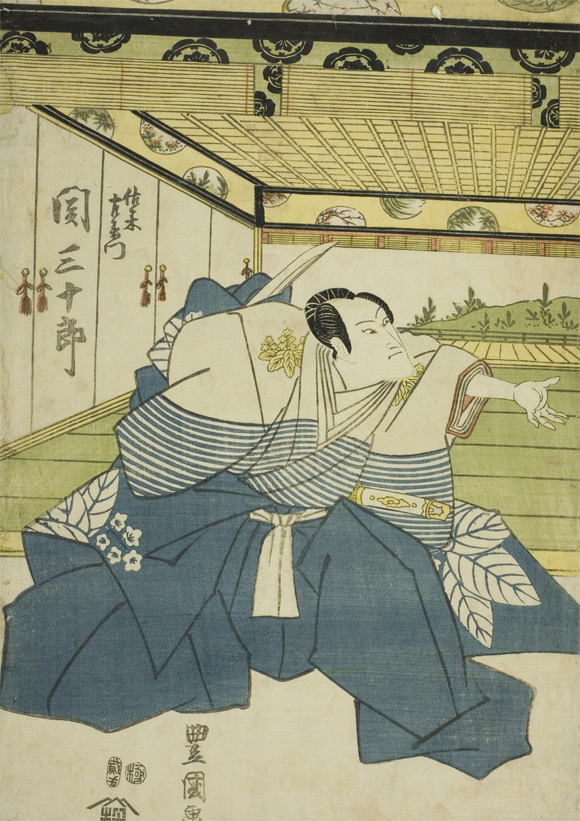
The actor Seki Sanjûrô II as Sasaki Saemon in the play "Higashiyama-dono Kabuki no Danmaku," performed at the Nakamura Theater in the third month, 1818 Print made by Utagawa Kunisada in 1819 Print made by Utagawa Toyokuni in 1820 Print made by Utagawa Kuniyasu in 1825 Print made by Utagawa Kunisada in 1826 Print made by Shunbaisai Hokuei in 1835 The Seki Sanjûrô line of actors |
|
|
| Contact | Main | Top | Updates | Actors | Plays | Playwrights | Programs | Links | FAQ | Glossary | Chronology | Illustrations | Prints | Characters | Derivatives | Theaters | Coming soon | News |