| KIRIZA |
| City | Edo | ||||||||||||||||||||||||||||||||||||||||||||||||||||||||||||||||||||||||||||||||||||||||||||||||||||||||||||||||||||||||||||||||||||
| History |
11th lunar month of 1784: premiere at the Kiriza (Edo) of the Nagauta-based dance-drama "Kyôran Kumoi no Sode", commonly called "Nakazô Kyôran", which was staged within the kaomise drama "Jûni Hitoe Komachi Zakura" and which starred Nakamura Nakazô I in the leading role of Ono no Yoshizane. It was also the premiere of the Tokiwazu-based dance-drama "Tsumoru Koi Yuki no seki no To", staged within the same kaomise program with the following casting:
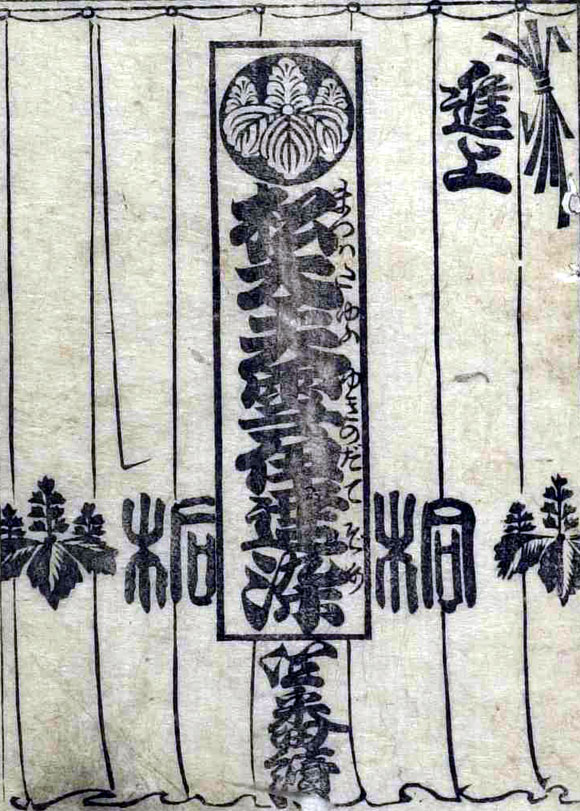
2nd lunar month of 1785: Segawa Kikunojô III performed at the Kiriza all the roles of a Nagauta-based 5-role hengemono, which was entitled "Haru-ha Mukashi Yukari no Hanabusa". 2 of these roles became independent dances, which are still part of the current repertoire: "Hane no Kamuro" (a kamuro with a Japanese battledore and shuttlecock racket) and "Shirozake Uri" (the sweet white sake seller). 8th ~ 9th lunar months of 1788: "Takao no Miya Honji Kaichô" was the last program at the Kiriza, which had to give back its license to the Ichimuraza and close its business. 11th lunar month of 1793: reopening of the Kiriza after the closing of the Ichimuraza; the kaomise drama "Matsu no Tayû Yuki no Datezome", whose plot and characters belonged to the "Meiboku Sendai Hagi" world and which celebrated the shûmei of Bandô Minosuke I, was staged with the actors Matsumoto Kôshirô IV, Morita Kan'ya VIII, Nakamura Kumetarô II, Nakamura Sukegorô II, Ichikawa Komazô III and Matsumoto Yonesaburô I. 6th lunar month of 1795: the drama "Miura no Ôsuke Kôbai Tazuna" was staged for the first time in Edo, at the Kiriza, with the following casting:
5th lunar month of 1794: premiere at the Kiriza of Sakurada Jisuke I's drama "Katakiuchi Noriai Banashi", which was staged with the following casting:
1st lunar month of 1796: premiere at the Kiriza of Namiki Gohei I's drama "Suda no Haru Geisha Katagi", which was staged with the following casting:
9th lunar month of 1796: the play "Hikosan Gongen Chikai no Sukedachi" was staged for the first time in Edo, at the Kiriza with the following casting:
"Hikosan Gongen Chikai no Sukedachi" was also staged at the Miyakoza [casting]. 6th lunar month of 1797: the dance-drama "Tsumoru Koi Yuki no seki no To" was revived for the first time, at the Kiriza, with the following casting:
1st lunar month of 1798: premiere at the Kiriza (Edo) of Namiki Gohei I's play "Tomioka Koi no Yamabiraki", commonly called "Ninin Shinbê", which is staged with the following casting: 9th lunar month of 1798: last performances at the Kiriza. The license was given back to the Ichimuraza, which reopened in the 11th lunar month of 1798. 9th lunar month of 1815: the Ichimuraza went bankrupt and gave its license to the Kiriza. 3rd lunar month of 1816: the Kiriza reopened; it was managed by Kiri Chôkiri and the actor Ichikawa Dannosuke III, who coproduced the drama "Tasuketamae Kami no Manimani". 6th lunar month of 1817: premiere in ôshibai of the puppet drama "Hana no Ueno Homare no Ishibumi", which was staged with the following casting:
12th day of the 1st lunar month of 1817 [1]: a fire broke out in the district of Norimono-chô and destroyed both the Nakamuraza and the Kiriza. 3rd lunar month of 1817: the Kiriza reopened and welcomed for its reopening a group of 13 Kamigata actors, which was led by the star Kataoka Nizaemon VII and Bandô Jûtarô. 10th lunar month of 1817: the Kiriza went bankrupt and had to hand over its license for Kabuki performances to the Miyakoza. Ichikawa Dannosuke III fell ill and, because of both illness and the heavy burden of the Kiriza debts, committed suicide the 2nd of the 11th lunar month of 1817. December 1883: the Kiriza was back in business in Tôkyô in the district of Yotsuya; the dramas "Kanadehon Chûshingura" and "Kuruwa Bunshô" were staged with a troupe led by Nakamura Nakazô III. March 1890: premiere at the Kiriza of Takeshiba Kisui's drama "Kami no Megumi Wagô no Torikumi", which was staged with the following casting:
|
||||||||||||||||||||||||||||||||||||||||||||||||||||||||||||||||||||||||||||||||||||||||||||||||||||||||||||||||||||||||||||||||||||
| Notes |
[1] The 12th day of the 1st lunar month of the 14th year of the Bunka era was the 27th of February 1817 in the western calendar. |
||||||||||||||||||||||||||||||||||||||||||||||||||||||||||||||||||||||||||||||||||||||||||||||||||||||||||||||||||||||||||||||||||||
 |
|||||||||||||||||||||||||||||||||||||||||||||||||||||||||||||||||||||||||||||||||||||||||||||||||||||||||||||||||||||||||||||||||||||
| The cover of the ehon banzuke of the 1793 kaomise program at the Kiriza | |||||||||||||||||||||||||||||||||||||||||||||||||||||||||||||||||||||||||||||||||||||||||||||||||||||||||||||||||||||||||||||||||||||
|
|
| Contact | Main | Top | Updates | Actors | Plays | Playwrights | Programs | Links | FAQ | Glossary | Chronology | Illustrations | Prints | Characters | Derivatives | Theaters | Coming soon | News |