| NAKAMURA UTAEMON IV |
|
Stage names:
Others names:
Nicknames:
Guild: Narikomaya Poetry names: Kanjaku (1), Shishô Line number: YODAIME (IV) Existence: 1796 ~ 17th day of the 2nd lunar month of 1852 [1] Connections: Adoptive father: Nakamura Utaemon III Father-in-law: Ichikawa Yaozô IV Adopted sons: Nakamura Shikan IV, Nakamura Kanjaku III, Nakamura Kanjaku II, Nakamura Fukusuke II Disciples: Nakamura Jakuemon I, Nakamura Shibajaku I, Nakamura Tsurusuke III, Nakamura Komasaburô 0.2, Nakamura Utatarô, Nakamura Shikaku 0.1, Nakamura Shikaku 0.2 Career: 1796: born in Edo in the family of the owner of a tea house located in the district of Shitaya. His real name was Hirano Kichitarô. 1807: he was adopted by the dance master Fujima Kanjûrô I, who was none other than his uncle (the husband of his mother's sister). He received the name of Fujima Kamesaburô. 1811: he became disciple of Nakamura Utaemon III, who gave him the name of Nakamura Tôtarô. 1812: Tôtarô and his master went together to Kamigata. 3rd lunar month of 1813: Nakamura Tôtarô took the name of Nakamura Tsurusuke I in Ôsaka. 11th lunar month of 1825: Nakamura Tsurusuke I took the name of Nakamura Shikan II in Kyôto at the Kitagawa no Shibai, where he performed in a sanbasômono and played the roles of Honda Dainaiki and Ishidome Busuke in the kaomise drama "Igagoe Norikake Gappa". 11th lunar month of 1826: Shikan played at the Kitagawa no Shibai the roles of Masakiyo and the yakko Yatahei (in reality Junkikan) in the drama "Kinmon Gosan no Kiri". He also played the role of Karigane Bunshichi in the drama "Otokodate Itsutsu Karigane". 1st lunar month of 1827: Shikan's rank in the Kamigata hyôbanki, tachiyaku section, was jô-jô-(hanshiro)kichi (superior - superior - (half-white) excellent) [visual]. 9th lunar month of 1827: Shikan played at the Kado no Shibai the roles of Honda Dainaiki, Sawai Matagorô, Narumi and Ishidome Busuke in the drama "Igagoe Norikake Gappa". 10th lunar month of 1827: Shikan performed his onagori kyôgen in Ôsaka at the Kado no Shibai, playing the roles of Kuzu-no-Ha and the yakko Yokanpei in the drama "Yomeiri Shinoda-zuma". He also performed all the roles of a 5-role hengemono entitled "Rangiku Tsuyu no Adamakura". Winter 1827: Shikan went to Edo. 1st lunar month of 1828: Shikan performed at the Nakamuraza in the new year sogamono drama "Suikoden Soga no Fûryû". Revival at the Nakamuraza of the dance-drama "Oshidori" by Segawa Jokô II; Shikan played the roles of Kawazu Saburô Sukeyasu Sukenari and the spirit of the male mandarin duck [more details]. 3rd lunar month of 1828: Shikan played in the same theater the role of the warrior Kumagai Jirô Naozane in the drama "Ichi-no-Tani Futaba Gunki". He also performed all the roles of a 7-role hengemono called "Nijirigaki Nanatsu Iroha". Two of the roles, "Keisei" and "Tomo Yakko", are still part of the current Kabuki repertoire. 5th lunar month of 1828: Shikan played in the same theater the roles of Ôboshi Yuranosuke, Kô no Moronô, Yazama Jûtarô, Ichimonjiya Saibê, the taiko mochi Ichihachi, Yasaku and Horibe Yajibê in the drama "Kanadehon Chûshingura". 9th lunar month of 1828: premiere at the Nakamuraza of the drama "Nochi no Tsuki Shuen no Shimadai" (commonly called "Kakuemon"); the main roles were played by Shikan and Segawa Kikunojô V. 10th lunar month of 1828: the Kabuki world was targeted by the authorities, which implemented some sumptuary laws. Shikan and others actors were punished because of their ostentatious luxurious way of life. Shikan was placed for a little while under house arrest in a shop located in the district of Sakai-chô. 11th lunar month of 1828: Shikan became zagashira and played at the Nakamuraza 8 roles, including Aku Genta, in Tsuruya Nanboku IV's drama "Motomishi Hana Otogi Heike"; his yearly salary was 700 ryô. 1st lunar month of 1829: Shikan's rank in the Edo hyôbanki, tachiyaku section, was 3 black strokes above jô-jô-(hanshiro)kichi (superior - superior - (half-white) excellent) [visual]. 3rd lunar month of 1829: Shikan played in the same theater the roles of Taira Tomomori, Kajiwara Heizô Kagetoki and Tadanobu in the drama "Yoshitsune Senbon Zakura". 11th lunar month of 1829: premiere at the Nakamuraza of Tsuruya Nanboku IV's drama "Kin no Zai Sarushima Dairi"; Shikan played the roles of Tawara no Tôta, Fujiwara Iyo-no-Jô Sumitomo, Bandô Tarô, Kazusanosuke, the shirabyôshi Hanako (in reality the ghost of Princess Kiyo) and the kyôgenshi Masuroku (in reality the ghost of Fujiwara Tadabumi) [more details]. 1st lunar month of 1830: Shikan's rank in the Edo hyôbanki, tachiyaku section, was jô-jô-kichi (superior - superior - excellent) [visual]. 3rd lunar month of 1830: premiere at the Nakamuraza of the 9-role hengemono "Minokoshite Haru no Kokonoe"; Shikan played all the roles, including the Yashima Court Lady, which is still part of the current Kabuki repertoire under the title "Kanjo". 8th lunar month of 1830: Shikan played in the same theater the roles of Daihanji no Kiyosumi, the fisherman Fukashichi (in reality Kanawa Gorô Imakuni) and Motome (in reality Fujiwara no Tankai) in the drama "Imoseyama Onna Teikin". He also played the role of Hanaregoma Chôkichi in the drama "Futatsu Chôchô Kuruwa Nikki"; the role of Chôkichi's rival Nuregami Chôgorô was played by Segawa Kikunojô V (unusual role for an onnagata). 11th lunar month of 1830: Shikan performed at the Nakamuraza in the kaomise drama "Oyobanu Ude Tsuna-ga-Kaomise" [4]. 1st lunar month of 1831: Shikan's rank in the Edo hyôbanki, tachiyaku section, was (shiro)ô-jô-jô-kichi ((white) grand - superior - superior - excellent) [Visual]. 3rd lunar month of 1831: premiere at the Nakamuraza of the 5-role hengemono "Rokkasen Sugata no Irodori"; Shikan played the five roles of Sôjô Henjô, Ariwara no Narihira, Bun'ya no Yasuhide, Kisen and Ôtomo no Kuronushi [more details]. 3rd lunar month of 1832: premiere at the Nakamuraza of the 3-part Kiyomoto/Tokiwazu/Nagauta-based dance "Yayoi no Hana Asakusa Matsuri" [3], starring Bandô Mitsugorô IV and Nakamura Shikan II in the leading roles. 7th lunar month of 1832: premiere at the Nakamuraza of the 4-role Kiyomoto/Nagauta hengemono "Odoke Niwaka Shabon no Tamatori"; Shikan played all the roles, including a tamaya, which is still part of the current Kabuki repertoire under the title "Tamaya". 9th lunar month of 1833: Shikan performed his onagori kyôgen at the Nakamuraza, which was entitled "Tamukeyama Momiji no Mitegura". He also danced in duo with Ichikawa Komazô V in the Kiyomoto-based dance "Mata Kuru Haru Suzuna no Tanemaki". He also played in the dôjôjimono "Ranbyôshi Oni-mo Furisode". Fall 1833: Shikan went back to Ôsaka. 12th lunar month of 1833: Shikan played at the Kado no Shibai the role of Kumagai Jirô Naozane in the drama "Ichi-no-Tani Futaba Gunki". 1st lunar month of 1834: Shikan's rank in the Kamigata hyôbanki, tachiyaku section, was (shiro)ô-jô-jô-kichi ((white) grand - superior - superior - excellent) [Visual]. Interesting to note that Shikan's rank in the Edo hyôbanki, tachiyaku section, was ô-jô-jô-kichi (grand - superior - superior - excellent) [Visual] although he was no more performing in Edo. 11th lunar month of 1834: Shikan played at the Kitagawa no Shibai the role of Kumagai Jirô Naozane in the drama "Ichi-no-Tani Futaba Gunki". 1st lunar month of 1835: premiere at the Kado no Shibai of the dance "Wake Futatsu Ninin Dôjôji", which starred Shikan and Nakamura Tomijûrô II. 11th lunar month of 1835: Shikan played at the Kitagawa no Shibai the role of Nuregami Chôgorô in the drama "Futatsu Chôchô Kuruwa Nikki"; the role of Chôgorô's rival Hanaregoma Chôkichi was played by Seki Sanjûrô II. He also played the role of the evil priest Seigen in the drama "Kiyomizu Seigen Iori no Akebono". Winter 1835~1836: Nakamura Utaemon III decided to confer his name upon Shikan but many disciples of the star, led by Nakamura Tomijûrô II, were righteously indignant because they did believe that this name should be given to Nakamura Utaemon III's grandson (and adopted son) Nakamura Tsurusuke II. The dispute got hotter and hotter and Nakamura Utaemon III had to invite all his followers to his home in order to definitively settle the matter. The star ended his explanation by a famous sentence: "I will not give my name to Fujima Kichi, but I will give it to Kichi's art" (Kichi was a diminutive of Kichitarô, the real first name of Shikan). As a consequence of the dispute, Shikan was also adopted by his master. 1st lunar month of 1836: Nakamura Utaemon III and Nakamura Shikan II respectively took the names of Nakamura Tamasuke I and Nakamura Utaemon IV at the Kado no Shibai. The two actors performed together in the drama "Keisei Haru no Tori", which was produced by the zamoto Nakamura Umezô. Utaemon's rank in the Kamigata hyôbanki, tachiyaku section, was ô-jô-jô-kichi (grand - superior - superior - excellent) [Visual]. 5th lunar month of 1836: Utaemon played in the same theater the roles of Tamashima Ittô and Nippon Daemon in the drama "Akiba Gongen Kaisen Banashi". 8th lunar month of 1836: Utaemon played at the Kita-Shinchi no Shibai (Ósaka) the roles of the warrior Kumagai Jirô Naozane, Gotobê and Tokubê in the dramas "Ichi-no-Tani Futaba Gunki", "Yoshitsune Koshigoejô" and "Shinjû Kasane Izutsu". He also performed with Nakamura Shikan III and Arashi Kanô in the dance "Chikusa no Midarezaki". 10th lunar month of 1836: Utaemon played at the Kado no Shibai the roles of the yakko Yokanpei, Kuzu-no-Ha and Ashiya Dôman in the drama "Ashiya Dôman Ôuchi Kagami". He also played the roles of Kurofune Chûemon and Yagi Magosaburô in the drama "Sugata Kurabe Deiri Minato". 11th lunar month of 1836: Utaemon played at the Kitagawa no Shibai the roles of Ishida-no-Tsubone [8], Sutewakamaru and Ishikawa Goemon in the drama "Keisei Chigo-ga-Fuchi". He also played the roles of Gokumon Shôbê and Yakko no Koman in the drama "Sugata Kurabe Deiri Minato"; the role of Kurofune Chûemon was played by Bandô Jutarô I. 1st lunar month of 1837: Utaemon's rank in the Kamigata hyôbanki, tachiyaku section, was back to (shiro)ô-jô-jô-kichi ((white) grand - superior - superior - excellent) [Visual]. 2nd lunar month of 1837: Utaemon played at the Naka no Shibai the roles of the yakko Ippei (later Kutsukake no Hachizô), Kikuchi Tamon-no-Kami and Irimaya Kijûrô in the drama "Keisei Tamate Zuna", which was produced by Nakamura Umetarô. 11th lunar month of 1837: Utaemon performed at the Kado no Shibai in the drama "Katakiuchi Sôzenji Baba". He also played the role of Tabakoya Genshichi (in reality Sakata Kurando Tokiyuki) in the drama "Komochi Yamanba"; the role of Oginoya Yaegiri was played by Nakamura Tamasuke. 1st lunar month of 1838: Utaemon's rank in the Kamigata hyôbanki, tachiyaku section, was 2 black strokes above (shiro)ô-jô-jô-kichi [Visual]. Winter 1838: Utaemon and the actors Arashi San'emon IX, Nakamura Tsuruzô I, Nakamura Kan'emon, Nakamura Tsurugorô, Nakamura Komasuke, Nakamura Kaei and Asao Okuyama went together to Edo. 3rd lunar month of 1838: Utaemon performed at the Nakamuraza in the drama "Sanmon Hitome Senbon". Premiere in the same theater of Sakurada Jisuke III's 3-role hengemono "Sanbukutsui Uta no Sugatae" with Utaemon in the 3 roles [2]. 25th day of the 7th lunar month of 1838 [5]: his adoptive father Nakamura Tamasuke died. 11th lunar month of 1838: premiere at the Ichimuraza of Nakamura Jûsuke IV's Tokiwazu-based dance "Hanabutai Kasumi no Saruhiki", commonly called "Utsubo Zaru"; Utaemon played the role of the monkey-showman [casting]. 1st lunar month of 1839: Utaemon's rank in the Edo hyôbanki, tachiyaku section, was ô-jô-jô-kichi (grand - superior - superior - excellent) [Visual]. 3rd lunar month of 1839: premiere at the Nakamuraza of the 8-role hengemono "Hana Goyomi Iro no Showake", which was performed by Utaemon. One of the role, "Toshima", is still part of the current Kabuki repertoire. 4th lunar month of 1839: Utaemon played in the same theater the role of Gotobê in the drama "Yoshitsune Koshigoejô". 11th lunar month of 1839: Utaemon performed at the Ichimuraza in the drama "Taiheiki Irifune Shinozuka", which celebrated the shûmei of Bandô Shûka I. 4th lunar month of 1840: Utaemon played in the same theater the role of the boatman Matsuemon (in reality the warrior Higuchi Jirô Kanemitsu) in the drama "Hirakana Seisuiki", which was staged to celebrate the shûmei of Seki Sanjûrô III; the kôjô for this shûmei was led by Utaemon. He also played the role of Keimasa in the drama "Koi Nyôbô Somewake Tazuna". 5th lunar month of 1840: Utaemon played in the same theater the role of Yoshidaya Kizaemon in the drama "Kuruwa Bunshô"; the roles of Fujiya Izaemon, Ôgiya Yûgiri and Kizaemon's nyôbô were played by Ichimura Uzaemon XII, Iwai Shijaku I and Bandô Shûka I. 9th lunar month of 1840: premiere at the Ichimuraza of the Tokiwazu-based dance-drama "Yoshinoyama Yuki no Furugoto", a revival of the 1786 Tomimoto-based dance-drama "Sode Furu Yuki Yoshino Shûi" (nowadays entitled "Meoto Gitsune"); Utaemon played the role of Matagorô, in reality the Tsukamoto male fox [more details]. 11th lunar month of 1840: Utaemon performed at the Ichimuraza in the drama "Chinzei Hachirô Gôma no Kaburaya". He also performed in the Nagauta-based dance-drama "Meoto Dôjôji". 1st lunar month of 1841: Utaemon's rank in the Edo hyôbanki, tachiyaku section, was (shiro)goku-jô-jô-kichi ((white) extreme - superior - superior - excellent) [Visual]. 8th lunar month of 1841: Utaemon played in the same theater the roles of Nuregami Chôgorô and Nan Yohê (later Nanpô Jûjibê) in the drama "Futatsu Chôchô Kuruwa Nikki"; the role of Chôgorô's rival Hanaregoma Chôkichi was played by Ichimura Uzaemon XII. 20th day of the 10th lunar month of 1841 [6]: the Edo authorities forbad the building of Kabuki theaters in Sakai-chô. 11th lunar month of 1841: Utaemon played at the Kawarasakiza the roles of Matsuômaru and Sukune Tarô in the drama "Sugawara Denju Tenarai Kagami". 19th day of the 12th lunar month of 1841 [7]: the Nakamuraza, Ichimuraza and Kawarasakiza were ordered to move to the remote district of Asakusa Saruwaka-chô. 9th lunar month of 1842: the Ichimuraza reopened; Ichimura Uzaemon XII produced the drama "Chobanzai Araki no Shimadai" (whose plot and characters belonged to the "Igagoe" world), starring Utaemon, Seki Sanjûrô III, Ichikawa Kuzô II, Nakamura Fukusuke I, Bandô Shûka I and Onoe Kikujirô II. Utaemon played in this igagoemono drama the roles of Karaki Masaemon, Ishidome Busuke and Sawai Jôgorô. He also performed in a spectacular shosagoto entitled "Kotonoha-gusa Mata to Yûbae" and made up of several dances: "Myôjû no Tsuki no Monaka", "Tamagawa no Tsuki no Sarashino", "Fushimi no Yuki no Kure", "Sumida Zutsumi no Hana no Ashita" and "Kochô no Hana no Yume". 11th lunar month of 1842: Utaemon played in the same theater the roles of Iwanaga Saemon and Saitô Bettô Sanemori in the dramas "Dan no Ura Kabuto Gunki" and "Genpei Nunobiki no Taki"; the roles of Akoya and Chichibu Shôji Shigetada in the former drama were played by Ichimura Uzaemon XII and Seki Sanjûrô III. 1st lunar month of 1843: premiere at the Ichimuraza of the dance "Kashiragaki Ise Monogatari" (commonly called "Noriaibune"), which was staged within the new year sogamono drama "Kioi Uta Soga no Hanadashi"; Utaemon was one of the seven dancers [more details]. 5th lunar month of 1843: Utaemon played in the same theater the roles of Soga no Iruka and Omiwa in the drama "Imoseyama Onna Teikin". 10th lunar month of 1843: Utaemon played in the same theater the roles of the boatman Matsuemon (in reality the warrior Higuchi Jirô Kanemitsu) and Fujiya Izaemon in the dramas "Hirakana Seisuiki" and "Kuruwa Bunshô"; the role of Ôgiya Yûgiri in the latter drama was played by Ichimura Uzaemon XII. 11th lunar month of 1843: Utaemon performed at the Kawarasakiza in the kaomise drama "Osana Gunpô Jûroku Musashi", which celebrated the shûmei of Arashi Koroku V. 7th lunar month of 1844: Utaemon performed in the same theater in the drama "Tsuizen Iroha Jikki". He also played the role of Hanbê in the ochiyo-hanbêmono "Yoi Gôshin Godan no Kondate", which was staged to commemorate the 6th anniversary (7th memorial service) of the passing away of Nakamura Tamasuke. 9th lunar month of 1844: Utaemon played in the same theater the role of the painter Matahei in the drama "Keisei Hangonkô". 11th lunar month of 1844: Utaemon performed at the Nakamuraza in the kaomise drama "Heisôkoku Eiga no Funauta". He also played the role of Fukuoka Mitsugi in the drama "Ise Ondo Koi no Netaba"; the role of Okon was played by Onoe Kikujirô II. 1st lunar month of 1845: premiere at the Nakamuraza of Sakurada Jisuke III's dance-drama "Awa Mochi"; Utaemon played the role of an awa mochi maker [more details]. 5th lunar month of 1845: Utaemon played in the same theater the role of Daihanji no Kiyosumi in the drama "Imoseyama Onna Teikin". 11th lunar month of 1845: Utaemon performed at the Ichimuraza in the kaomise drama "Kaikei Shinoda Mitsuki no Funauta". 1st lunar month of 1846: premiere at the Nakamuraza of Sakurada Jisuke III's Tokiwazu-based dance-drama "Kagura Uta Kumoi no Kyokumari", which was commonly called "Dontsuku"; Utaemon played the leading role [more details]. 6th lunar month of 1846: Utaemon played in the same theater the roles of Kô no Moronô, Ôboshi Yuranosuke and Hayano Kanpei in the drama "Kanadehon Chûshingura". He also played the role of Sasano Sangobê in the drama "Godairiki Koi no Fûjime"; the roles of Sakuraya Koman and Satsuma Gengobê were played by Bandô Shûka I and Ichimura Uzaemon XII. 10th lunar month of 1846: Utaemon played in the same theater the role of Senoo Jûrô Kaneuji in the drama "Genpei Nunobiki no Taki". 11th lunar month of 1846: Utaemon performed at the Kawarasakiza in the kaomise drama "Ichi-no-Tani Yukimi no Takadono", which celebrated the shûmei of Matsumoto Kinshô I. He also played the role of Fujiya Izaemon in the yûgiri-izaemonmono dance-drama "Shintaku Kuruwa Bunshô"; the roles of Ôgiya Yûgiri and Yoshidaya Kizaemon were played by Onoe Baikô IV and Matsumoto Kinshô I. Utaemon also played the roles of the roles of Soga no Iruka and Omiwa in the drama "Imoseyama Onna Teikin". 4th lunar month of 1847: premiere at the Kawarasakiza of the dance-drama "Shiki no Hina Asakusa Hakkei" (commonly called "Kyô Ningyô"); Utaemon played the role of the carver Hidari Jingorô [casting]. 9th lunar month of 1847: Utaemon played in the same theater the roles of the boatman Ginpei (in reality Taira no Tomomori), Kajiwara Heizô Kagetoki, Satô Tadanobu and the fox Genkurô in the drama "Yoshitsune Senbon Zakura". 11th lunar month of 1847: Utaemon performed at the Nakamuraza in the kaomise drama "Yashima no Ura Ume no Kaomise", which celebrated the shûmei of Onoe Shinshichi III. 1st lunar month of 1848: Utaemon's rank in the Edo hyôbanki, tachiyaku section, was goku-jô-jô-kichi (extreme - superior - superior - excellent) [Visual]. 3rd lunar month of 1848: Utaemon played in the same theater the roles of Hayano Kanpei, Teraoka Heiemon, the farmer Yasaku, Amakawaya Gihei and Ôboshi Yuranosuke in the drama "Chûkô Homare no Takanawa" (a drama similar to "Kanadehon Chûshingura"). 5th lunar month of 1848: Utaemon played in the same theater the role of Tonbê in the drama "Shinrei Yaguchi no Watashi"; the role of Ofune was played by Onoe Kikujirô II. Utaemon also played the role of Furuteya Hachirobê in the otsuma-hachirobêmono drama "Adanaen Ukina no Koiguchi"; the role of Tanbaya Otsuma was played by Onoe Kikujirô II. 11th lunar month of 1848: Utaemon performed at the Ichimuraza in the drama "Goban Tadanobu Yuki no Kuroshiro", an extended version of a drama which was originally staged in the 11th lunar month of 1832 at the Nakamuraza. 1st lunar month of 1849: Utaemon's rank in the Edo hyôbanki, tachiyaku section, was ô-goku-jô-jô-kichi (grand - extreme - superior - superior - excellent) [Visual]. He played in the same theater the role of Aoto Saemon Fujitsuna in the new year drama "Aoto Banashi". 5th lunar month of 1849: Utaemon played in the same theater the role of the boatman Matsuemon (in reality the warrior Higuchi Jirô Kanemitsu) in the drama "Hirakana Seisuiki". 8th lunar month of 1849: beginning of the onagori kyôgen performances for Utaemon, who decided to go back to Ôsaka. He played in the same theater the role of Honchômaru Tsunagorô [illustration] in the drama "Kotoba no Hana Momiji no Yozakari". 9th lunar month of 1849: Utaemon played in the same theater the role of Gotobê, Sasaki Moritsuna and Yoshioka Kiichi Hôgen in the dramas "Yoshitsune Koshigoejô", "Moritsuna Jin'ya" and "Kiichi Hôgen Sanryaku no Maki". 12th lunar month of 1849: Utaemon and his adopted son Nakamura Fukusuke I settled in Ôsaka. 1st lunar month of 1850: Utaemon played at the Naka no Shibai the roles of Ishidome Busuke and Karaki Masaemon in the new year ni-no-kawari drama "Keisei Homare no Sukedachi" (a drama similar to "Igagoe"). He also performed in the ôgiri keigoto "Mitsu no Haru Suzume no Tawamure". 3rd lunar month of 1850: Utaemon played in the same theater the roles of Daihanji no Kiyosumi and the fisherman Fukashichi (in reality Kanawa Gorô Imakuni) in the drama "Imoseyama Onna Teikin". 5th lunar month of 1850: Utaemon played in the same theater the role of Danshichi Kurobê in the drama "Natsu Matsuri Naniwa Kagami"; his stage partners were Jitsukawa Enzaburô I (Tsuribune Sabu) and Mimasu Daigorô IV (Issun Tokubê). 8th lunar month of 1850: Utaemon played in the same theater the roles of Ishikawa Goemon and Ishida-no-Tsubone in the ishikawa-goemonmono drama "Chigo-ga-Fuchi Koi no Shiranami". He also played the role of Gotobê in the drama "Yoshitsune Koshigoejô". 9th lunar month of 1850: Utaemon played in the same theater the role of Fujiya Izaemon in the drama "Kuruwa Bunshô"; the roles of Ôgiya Yûgiri and Yoshidaya Kizaemon were played by Nakayama Nanshi II and Mimasu Daigorô IV. 11th lunar month of 1850: Utaemon performed at the Kitagawa no Shibai in the kaomise drama "Sato Moyô Kabuki no Inazuma". He also played the roles of Yoshioka Kiichi Hôgen and Fujiya Izaemon in the dramas "Kiichi Hôgen Sanryaku no Maki" and "Kuruwa Bunshô"; the role of Ôgiya Yûgiri in the latter drama was played by Nakamura Tomijûrô II. 1st lunar month of 1851: Utaemon's rank in the Kamigata hyôbanki, tachiyaku section, was ô-goku-jô-jô-kichi (grand - extreme - superior - superior - excellent) [Visual]. 9th lunar month of 1851: Utaemon played in the same theater the roles of Matsuômaru and Terukuni in the drama "Sugawara Denju Tenarai Kagami"; the roles of Umeômaru and Sakuramaru were played by Mimasu Daigorô IV and Jitsukawa Enzaburô I. Utaemon also played the role of Oginoya Yaegiri in the drama "Yaegiri Kuruwa Banashi"; the role of Tabakoya Genshichi (in reality Sakata Kurando Tokiyuki) was played by Mimasu Daigorô IV. 11th lunar month of 1851: Utaemon played at the Naka no Shibai the role of Yoshioka Kiichi Hôgen in the drama "Kiichi Hôgen Sanryaku no Maki". This performance was part of a kaomise program celebrating the shûmei of his disciple Nakamura Jakuemon I. 1st lunar month of 1852: Utaemon appeared on stage for the last time, in Ôsaka at the Naka no Shibai, performing in the drama "Yotsu no Umi Taira no Yozakari" and the dance "Yosooi Rokkasen". He suddenly fell ill and stopped acting. 17th day of the 2nd lunar month of 1852 [1]: Utaemon died in Ôsaka. Comments: "The fourth Utaemon was large of stature, had fine eyes and good features, and excelled his master, the third, in many respects. His rivals were the fourth Bandô Mitsugorô and the fifth Sawamura Sôjûrô, but he won for himself a higher place on the stage than either of these Edo actors." (Zoë Kincaid in "Kabuki, the Popular Stage of Japan") Nakamura Utaemon IV's best roles: Kumagai Jirô Naozane ("Ichi-no-Tani Futaba Gunki"), Matsuômaru ("Sugawara Denju Tenarai Kagami") and Ishikawa Goemon ("Sanmon Gosan no Kiri"). He was not at ease in sewamono but he excelled in jidaimono. Nakamura Utaemon IV was just like his adoptive father Nakamura Utaemon III a kaneru yakusha, able to perform a broad range of male or female roles. He was also an outstanding dancer. He was the first actor to use the yagô Narikomaya instead of the usual Kagaya. This new yagô was related to a present made by Ichikawa Danjûrô IV to Nakamura Utaemon I when he was on tour in Edo: the Edo star gave to the Kamigata actor a beautiful costum decorated with a Chinese chess piece pattern (koma in Japanese). The yagô of Ichikawa Danjûrô IV was Naritaya. Narikomaya was therefore created using the ideograms koma and nari, the first ideogram of Naritaya. This new yagô was a way for Nakamura Utaemon IV to express the fact that he felt more like an Edo actor than a Kamigata actor. During the Tenpô era, when he lived in Edo in Tokiwa-chô in the district of Fukagawa, the north bank of the Onagi River from Taka Bridge to Mannen Bridge was called at the time Shikan-gashi, literally 'Shikan Riverside'. [1] The 17th day of the 2nd lunar month of the 5th year of the Kaei era was the 7th of March 1852 in the western calendar. [2] Two dances were still in the Kabuki repertoire, "Shirabyôshi no Hana no En" & "Haikaishi". [3] This dance is still sometimes performed in its entirety but the second part, "Sanja Matsuri", is frequently staged independently. [4] It included the Tokiwazu/Gidayû-based shosagoto "Yama Mata Yama Shizu-ga-Kusemai", the Tokiwazu-based shosagoto "Yoi Naka no Futari-o Koko-ni Mitsu Ôgi" and the Tokiwazu-based shosagoto "Kumo no Obi Senjô-ga-Taki". [5] The 25th day of the 7th lunar month of the 9th year of the Tenpô era was the 13th of September 1838 in the western calendar. [6] The 20th day of the 10th lunar month of the 12th year of the Tenpô era was the 2nd of December 1841 in the western calendar. [7] The 19th day of the 12th lunar month of the 12th year of the Tenpô era was the 30th of January 1842 in the western calendar. [8] The tsubone Ishida. |

 |
|
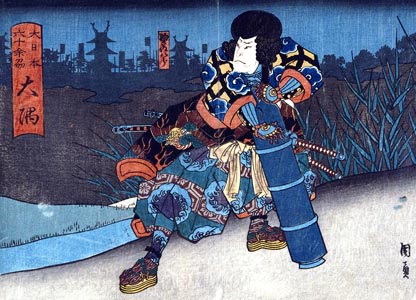
The actor Nakamura Utaemon IV as the fisherman Fukashichi, actually Kanawa Gorô Imakuni The Nakamura Tsurusuke line of actors The Nakamura Shikan line of actors The Nakamura Utaemon line of actors |
|
|
| Contact | Main | Top | Updates | Actors | Plays | Playwrights | Programs | Links | FAQ | Glossary | Chronology | Illustrations | Prints | Characters | Derivatives | Theaters | Coming soon | News |