| ASAO TAMEJÛRÔ I |
|
Stage names:
Others names:
Guild: Zeniya Poetry name: Okuyama (1) Line number: SHODAI (I) Existence: 1735 ~ 7th day of the 4th lunar month of 1804 [2] Connection: Master: Asao Motogorô I Son: Asao Tamejûrô II Disciples : Kataoka Nizaemon VII, Asao Tamejûrô III, Asao Kuzaemon I, Asao Yoroku I, Asao Tamesaburô, Asao Monzô, Asao Manzô, Asao Otogorô, Asao Shôzô, Asao Torakichi, Asao Kunigorô I, Asao Tamenosuke, Asao Tameemon, Asao Nakazô I, Asao Okujirô II (?) Career: 1735 ~ 1756: born in Kyôto. His father Sugimoto Tamesaburô, who was a renowned shamisen musician, gave him the name of Tamejûrô. Sugimoto Tamejûrô became disciple of the wakaonnagata actor Asao Motogorô I, who gave him the name of Asao Mankichi [1] and taught him the art of acting. The Sugimoto family settled in Ôsaka and he took the names of Asao Tôkichi and Asao Tamezô at unknown dates, performing with travelling troupes (tabi shibai). 11th lunar month of 1756: Asao Tamezô took the name of Asao Tamejûrô I in Ôsaka, playing the role of Sôma Tarô in the drama "Sakiwake Shôhon Kagami", which was produced by the zamoto Todoki Kikumatsu. 1st lunar month of 1757: Tamejûrô played in Ôsaka the role of Yokogumo Daizen in the drama "Yamato no Kuni Ide no Shitahimo", which was produced by the same zamoto. 2nd lunar month of 1758: Tamejûrô played at the Kado no Shibai the roles of Hotei Ichiemon and Kajikawa Heizô the drama "Okina Gusa Goshiki no Hanabusa", which was produced by the zamoto Arashi Kumematsu. 11th lunar month of 1760: Tamejûrô became katakiyaku and played at the Naka no Shibai the role of Ôba Saburô in the drama "Miura no Ôsuke Toshitoku Môde", which was produced by Anegawa Shinshirô II. 11th lunar month of 1761: Tamejûrô achieved a great success at the Kado no Shibai by playing the role of Kajiwara Heiji Kagetaka in the drama "Sôtsui Hoshi Kamakura Kagami", which was produced by Nakayama Bunshichi I. 5th lunar month of 1762: premiere in Ôsaka at the Kado no Shibai of Namiki Shôzô I's drama "Koi Hakke Hashira Goyomi", which was a revision of Chikamatsu Monzaemon's drama "Daikyôji Mukashi Goyomi"; Tamejûrô played the role of the inkyo Okuen [more details]. 7th lunar month of 1763: Tamejûrô played at the Kado no Shibai the roles of Haji no Hyôe and Shundô Genba in the drama "Sugawara Denju Tenarai Kagami" , which was produced by Nakayama Bunshichi I; his stage partners were Nakayama Bunshichi I (Matsuômaru, Terukuni), Nakayama Shinkurô I (Kakuju, Shihei), Arashi Hinasuke I (Haru), Anegawa Daikichi I (Tonami, Yae), Nakayama Raisuke I (Umeômaru), Bandô Toyosaburô I (Shiratayû), Fujikawa Hachizô I (Genzô, Sukune Tarô), Ichinokawa Hikoshirô II (Sakuramaru), Yoshizawa Sakinosuke II (Chiyo, Tatsuta) and Nakamura Kichiemon I (Kan Shôjô). 11th lunar month of 1763: Tamejûrô played at the Kado no Shibai the role of Nagasaki Shirôzaemon, in reality Suruga no Kami Norisada, in the kaomise drama "Kachidoki Aun no Ishizue". 9th lunar month of 1764: première in Ôsaka at the Kado no Shibai of "Oriawase Tsuzure no Nishiki", based on the puppet drama "Katakiuchi Tsuzure no Nishiki", which was produced by Nakayama Bunshichi I and celebrated the 16th anniversary (17th memorial service) of the passing away of the star Anegawa Shinshirô I. A similar play was staged one day later under a different title, "Hare Kosode Tsuzure no Nishiki", at the Naka no Shibai [casting]. The competition for the best performance and the best line-up was open between the 2 theaters. The performance at the Kado no Shibai was more successful than the one at the Naka no Shibai; Tamejûrô played at the Kado no Shibai the roles of Hikosaka Jinroku and Sudô Genpachi [casting]. 11th lunar month of 1765: Tamejûrô performed in Ôsaka in the kaomise drama "Hanayagura Kikigaki Taiheiki", which was produced by Anegawa Kikuhachi. 11th lunar month of 1766: Tamejûrô performed in Kyôto at the Minamigawa no Shibai in the drama "Yuki no Asa Daimonjitsu Miyako no Fuku", which was produced by Yamashita Kyônosuke and Ichiyama Sukegorô III and celebrated the return of Onoe Kikugorô I in Kyôto. 11th lunar month of 1767: Tamejûrô played in Kyôto at Hayagumo Chôdayû's theater the role of Kiba no Gonpei [illustration] in the kaomise drama "Shinchoku Fukki no Kanatoko", which was produced by Ichiyama Sukegorô III and celebrated the shûmei of Sakakiyama Koshirô IV and Sakakiyama Shirotarô IV. 11th lunar month of 1768: Tamejûrô played in Ôsaka at the Kado no Shibai in the kaomise drama "Shin-yakata Banzei no Kotobuki", which was produced by Yamashita Yaozô I. 6th lunar month of 1770: Namiki Shôzô I's drama "Yadonashi Danshichi Shigure no Karakasa" was staged for the first time in Ôsaka ôshibai, at the Kado no Shibai; Tamejûrô played the role of Iwai-buro Jisuke [casting]. 11th lunar month of 1770: Tamejûrô moved to Kyôto and played the role of Ôe Saburô in the drama "Sakae Genji Gojin no Kachidoki", which was produced by Mimasu Tokujirô I at the Kitagawa no Shibai, the theater of the nadai Hoteiya Umenojô and Hayagumo Chôdayû. 3rd ~ 5th lunar months of 1771: first Kabuki adaptation of the puppet theater drama "Imoseyama Onna Teikin", produced by Mimasu Tokujirô I at the Kitagawa no Shibai; Tamejûrô played the roles of Soga no Emiji, Fukashichi and Kanawa Gorô Imakuni [casting]. 11th lunar month of 1771: Tamejûrô played at the Minamigawa no Shibai the role of Kasukai (literally "lees buyer") Kisuke, in reality Jôzô Kishô, in the kaomise drama "Bandai Isaoshi Genji", which was produced by Arashi Sanjûrô II. 1st lunar month of 1772: Tamejûrô played in the same theater the roles of Ôtomo Sôrin and Iwami Tarozaemon in the ni-no-kawari "Keisei Sakura Goten". 11th lunar month of 1773: Tamejûrô performed in Ôsaka at the Kado no Shibai in the drama "Medetai Uchimashô", which was produced by Ogawa Kichitarô I. 1st lunar month of 1775: Tamejûrô's rank in the Ôsaka hyôbanki, katakiyaku section, was jô-jô-kichi (superior - superior - excellent) [visual]. 7th lunar month of 1776: premiere of Iso Isosuke's drama "Yamato Kotoba Suikoden", which was produced at the Kado no Shibai by Ogawa Kichitarô I; Tamejûrô played the role of the smuggler Kezori Kuemon [casting]. 11th lunar month of 1776: Tamejûrô performed in Ôsaka in the kaomise drama "Genji Saikô Uchide no Kozuchi", which was produced by Arashi Shichisaburô II. 12th lunar month of 1776: premiere at the Naka no Shibai of Nagawa Kamesuke I's drama "Igagoe Norikake Gappa"; Tamejûrô played the roles of Sawai Matagorô, Matagorô's mother Narumi and the doctor Sanai [casting]. The play was a successful long run. Tamejûrô used on stage a new hayagawari technique. 4th lunar month of 1777: premiere in Ôsaka at the Naka no Shibai of Nagawa Kamesuke I's drama "Meiboku Sendai Hagi"; Tamejûrô played the roles of Gantsubô, Hitachinosuke Kaizon and Suganuma Kosuke [casting]. 1st lunar month of 1778: premiere of Namiki Gohê's drama "Keisei Hakata Ori", which was produced at the Minamigawa no Shibai by Mimasu Jirokichi; Tamejûrô played the role of the smuggler Kezori Kuemon [casting | picture and details]. 11th lunar month of 1778: Tamejûrô settled in Kyôto and played at the Minamigawa no Shibai 2 roles in the drama "Etari Kashikoshi Hangan Biiki", which was produced by Mimasu Jirokichi. 1st lunar month of 1779: Tamejûrô's rank in the Kyôto hyôbanki, jitsuaku section, was jô-jô-kichi (superior - superior - excellent) [visual]. Summer 1780: Tamejûrô played in the same theater the role of Gambei in the drama "Gokusaishiki Musume Ôgi". The role of the blind man Hyôsuke was played by Arashi Sangorô II. 11th lunar month of 1780: Tamejûrô played in the kaomise drama "Hoshi Matsuri Fukki no Kurairi", which was produced in Kyôto by Nakayama Ihachi I. 1781: Tamejûrô played the role of the warrior Kumagai Jirô Naozane in the epic drama "Ichi-no-Tani Futaba Gunki", which was produced in Kyôto by Nakayama Ihachi I. Spring ~ Summer 1781: tour in Nagoya, Matsuzaka and Ise. 11th lunar month of 1781: Tamejûrô went back to Ôsaka and achieved a great success at the Kado no Shibai by playing the role of Hayasaki Horanosuke, in reality Suzuki no Saburô, in Namiki Gohei I's drama "Tensha Yorozu Yoshitsune Biiki", which was produced by Fujikawa Sango. 12th lunar month of 1781: premiere in Ôsaka at the Kado no Shibai of Nagawa Kamesuke I's drama "Tengajaya-mura"; Tamejûrô played the roles of Tôma Saburôemon and Adachi Yasuke [casting]. A similar play was staged a few days later under a different title, "Renga Chaya Homare no Bundai", at the Naka no Shibai [casting]. The competition for the best performance and the best line-up was open between the 2 theaters. 4th ~ 6th lunar months of 1782: Tamejûrô played at the Kado no Shibai the role of the king of thieves Ishikawa Goemon in the drama "Niômon Hauta no Rakugaki", which was produced by Fujikawa Sango. This play was similar to Namiki Gohei I's "Kinmon Gosan no Kiri". 12th lunar month of 1782: premiere in Ôsaka at the Kado no Shibai of Namiki Gohê's drama "Keisei Kogane no Shachihoko"; Tamejûrô played the roles of the tôzoku Kakinoki Kinsuke (later Kasai Tarô) and the tsubone Chishima [more details]. 1st lunar month of 1784: premiere at the Naka no Shibai of Namiki Gohê's drama "Keisei Yamato Zôshi"; Tamejûrô played the roles of Kondô Gunjibê and Wada Raihachi [casting]. 6th lunar month of 1784: tour in Nagoya. 3rd lunar month of 1785: Tamejûrô went to Kyôto and performed at Hoteiya Umenojô's theater. Summer 1785: tour in Miyajima. Fall 1785: tour in the province of Wakayama. 11th lunar month of 1785: Tamejûrô went back to Ôsaka and played the role of Yoshitsune in the drama "Yoshitsune Senbon Zakura", which was produced for the shûmei of Onoe Kikugorô II. 3rd lunar month of 1787: premiere at the Naka no Shibai of Namiki Gohê's drama "Taikô Shinkenki", a play similar to "Hikosan Gongen Chikai no Sukedachi"; Tamejûrô played the role of Kyôgoku no Takumi [casting]. 11th lunar month of 1787: Tamejûrô achieved a great success at the Naka no Shibai by performing in the kaomise drama "Masaru Medetaki Toshi no Kaomise", which was produced by Nakayama Fukuzô. 10th lunar month of 1788: Tamejûrô ccelebrates his coming departure to Edo, achieving a great success at the Kado no Shibai by playing the spectacular role of the yakko Ranpei in the drama "Saiwai Ariwara Keizu", which was produced by the zamoto Nakayama Hisayoshi. 11th lunar month of 1788: Tamejûrô settled in Edo and performed at the Ichimuraza as a jitsuaku in the kaomise drama "Genji Saikô Kogane no Tachibana". 1st lunar month of 1789: Tamejûrô's rank in the Edo hyôbanki, jitsuaku section, was ô-jô-jô-kichi (grand - superior - superior - excellent). 9th lunar month of 1790: the play "Yoshitsune Koshigoejô" was staged for the first time in Edo, at the Ichimuraza; it celebrated Tamejûrô's onagori kyôgen, who played the role of Gotobê [more details]. Fall 1790: Tamejûrô went back to Ôsaka. 11th lunar month of 1790: Tamejûrô achieved a great success at the Kado no Shibai by performing in Namiki Gohei I's kaomise drama "Ittai Bunshin Nishiki no Okuyama", which was produced by Asao Yatarô. 1st lunar month of 1791: Tamejûrô's rank in the Ôsaka hyôbanki was ô-jô-jô-kichi (grand - superior - superior - excellent). 9th lunar month of 1791: premiere of Nagawa Shimesuke I's chûshinguramono "Iroha Gana Shijûshichi Moji" in Ôsaka at the Kado no Shibai; Tamejûrô played the roles of Kô no Moronô, Yajibê and Sagisaka Bannai [more details]. 11th lunar month of 1792: Tamejûrô shared the stage with the Edo star Ichikawa Danzô IV in the kaomise drama "Hito no Kokoro ni Kanau Kaomise", which was produced by Asao Yatarô at the Kado no Shibai. Winter 1792: Tamejûrô went to Kyôto and played the role of the yakko Ranpei in the drama "Ranpei Monogurui". 1st lunar month ~ 3rd lunar month of 1794: premiere of Tatsuoka Mansaku's drama "Keisei Haru no Tori", which was famous for its "Umagiri" scene and was produced by the zamoto Asao Okujirô I in Ôsaka at the Kado no Shibai; Tamejûrô played the roles of Kanai Sankurô, Awaza Tarosuke and Miwa Gorozaemon Takahide [more details]. 9th lunar month of 1794: first Kabuki adaptation of Chikamatsu Hanji's puppet theater drama "Kamakura Sandaiki"; Tamejûrô played the roles of Wada no Hyôe Hidemori and Surihari Tarozaemon [casting]. 11th lunar month of 1794: Tamejûrô played 4 roles in Nagawa Shimesuke I's kaomise drama "Kana Utsushi Azuchi Mondô" [3], which was produced by Nakayama Yosaburô II at the Naka no Shibai. 1st lunar month of 1796: Tamejûrô's rank in the Ôsaka hyôbanki, jitsuaku section, was (shiro)goku-jô-jô-kichi ((white) extreme - superior - superior - excellent). 11th lunar month of 1797: Tamejûrô went to Kyôto and played at the Minamigawa no Shibai 5 roles in the drama "Nanboku Yuki no Miyako", which was produced by Arashi Kumanosuke. 3rd lunar month of 1798: Tamejûrô played in the same theater the role of Gotobê in the drama "Yoshitsune Koshigoejô". Summer 1798: tour in Ise. 11th lunar month of 1798: Tamejûrô played at the Minamigawa no Shibai the role of Midaroku in the epic drama "Ichi-no-Tani Futaba Gunki"; then he went to Ôsaka and played the role of Suzuki no Saburô in Namiki Gohei I's drama "Kogane Bana Genji no Sakigake", which was produced by Yamashita Kamematsu at the Naka no Shibai. 1st lunar month of 1800: Tamejûrô's rank in the Ôsaka hyôbanki was goku-jô-jô-kichi (extreme - superior - superior - excellent). 11th lunar month of 1800: first Kabuki adaptation of Chikamatsu Yanagi's puppet theater drama "Ehon Taikôki", which was written in the 7th lunar month of 1799. The play was produced by Nakayama Tokujirô in Ôsaka at the Kado no Shibai and Tamejûrô played the role of Takechi Mitsuhide [casting]. 1st lunar month of 1801: Tamejûrô's rank in the Ôsaka hyôbanki was itaru-jô-jô-kichi (unique - superior - superior - excellent) [Visual]. 8th lunar month of 1801: Tamejûrô plays for the last time the role of the smuggler Kezori in the drama "Yamato Kotoba Suikoden", which was produced by Yamashita Tokujirô at the Naka no Shibai. 11th lunar month of 1801: Tamejûrô plays for the last time the role of Sawai Matagorô in the drama "Igagoe Norikake Gappa", which was produced by Arashi Kumanosuke at the Minamigawa no Shibai. 11th lunar month of 1802: Tamejûrô played at the Minamigawa no Shibai 2 roles in the drama "Futatsu Chôchô Kuruwa Nikki". Summer 1803: Tamejûrô was supposed to do his isse ichidai performance at the Naka no Shibai but he suddenly fell ill. 9th lunar month of 1803: Tamejûrô delivered his final speech during a kôjô at the Naka no Shibai. 11th lunar month of 1803: his son Asao Okujirô I took the name of Asao Tamejûrô II at the Naka no Shibai. 7th day of the 4th lunar month of 1804 [2]: he died in Ôsaka. Comments: Asao Tamejûrô I was an outstanding katakiyaku actor, excelling also in handôgataki and jitsugotoshi roles, who won fame for himself in the Kamigata theaters. He made a short but very successful stay in Edo (2 seasons from the 11th lunar month of 1788 to the 9th lunar month of 1790). He was also a talented dancer. "He was a small man, possessed a light, bright style, and appeared best in plays depicting everyday life rather than those dealing with the unreal." (Zoë Kincaid in "Kabuki, the Popular Stage of Japan") Asao Tamejûrô I's best roles: the smuggler Kezori ("Yamato Kotoba Suikoden"), Gotobê ("Yoshitsune Koshigoejô"), Sawai Matagorô ("Igagoe Norikake Gappa") and Ranpei ("Ranpei Monogurui"). [1] Three actors held the name of Asao Mankichi, Asao Tamejûrô I, Jitsukawa Gakujûrô II and Jitsukawa Yûjirô I, but it did not constitute an official line of actors. [2] The 7th day of the 4th lunar month of the 1st year of the Bunka era was the 17th of May 1804 in the western calendar. [3] This kaomise program was divided into two dramas, an afternoon drama entitled like the program and an evening program which was entitled "Atarimasu Yuki-mo Hikikata". |

 |
|
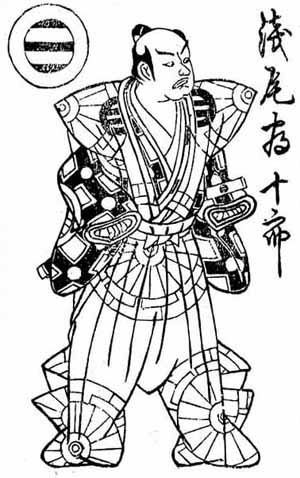
Asao Tamejûrô I as depicted in the book "Santo Yakusha Omokage Zukushi" published in Ôsaka in 1784 by Yamatoya Kaemon Print made by Shôkôsai in 1799 The Asao Okuyama line of actors The Asao Tamejûrô line of actors |
|
|
| Contact | Main | Top | Updates | Actors | Plays | Playwrights | Programs | Links | FAQ | Glossary | Chronology | Illustrations | Prints | Characters | Derivatives | Theaters | Coming soon | News |