| HONGÔZA |
| Names | Hongôza Harukiza Okudaza |
||||||||||||||||||||||||||||||||||||||||||||||||||||||||||||||||||||||||||||||||||||||||||||||||||||||||||||||||||||||||||||||||||||||||||||||||||
| City | Tôkyô | ||||||||||||||||||||||||||||||||||||||||||||||||||||||||||||||||||||||||||||||||||||||||||||||||||||||||||||||||||||||||||||||||||||||||||||||||||
| History |
July 1873: the zamoto Okuda Toichirô opened his own theater, the Okudaza, in the district of Hongô Haruki-chô. The zagashira was Yamazaki Kawazô and the leading actor was Okuda Tomisaburô. October 1875: the Okudaza went bankrupt and the management was taken over by Fukae Tôbê, who renamed the theater Harukiza. October 1881: premiere at the Harukiza of Kawatake Shinshichi II's drama "Kiwametsuki Banzui Chôbê", commonly called "Yudono no Chôbê", which was staged with the following casting:
March 1884: premiere at the Harukiza of Takeshiba Kinsaku I's drama "Chûjô Hime Taima Engi", which was staged with the following casting:
May 1885: first performance at the Harukiza of the Torikuma Shibai troupe. 23 June 1890: a fire destroyed the Harukiza. December 1891: the Harukiza reopened with the shûmei of Nakamura Tomijûrô III, Azuma Tôzô VI and Nakamura Baiju. The others actors were Ichikawa Ennosuke I, Ichikawa Yaozô VII, Nakamura Shikaku I, Nakamura Komanosuke VI, Nakamura Kangorô XII and Ichikawa Utasaku. January 1896: revival at the Harukiza of the dance "Kashiragaki Ise Monogatari", staged under the title "Noriaibune Ehô Manzai", with Ichikawa Ennosuke I and Nakamura Kangorô XII performing the two comic dancers. 1896: a stock-company was created to manage the Harukiza. Its name was Harukiza KK. 23 March 1898: a fire destroyed the Harukiza. March 1902: The Harukiza was renamed Hongôza. 1910: the Hongôza was purchased by the Shôchiku. January 1914: revival at the Hongôza of the drama "Gedatsu", a long-forgotten play belonging to the Kabuki Jûhachiban, which was staged with the following casting:
September 1914: premiere at the Hongôza of the drama "Waki Noboru Mizu-ni Koi Taki", which was staged with the following casting:
September 1915: premiere at the Hongôza of Okamoto Kidô's drama "Toribeyama Shinjû", which was staged with the following casting:
February 1916: premiere at the Hongôza of Okamoto Kidô's drama "Banchô Sarayashiki", which was staged with the following casting:
March 1923: premiere at the Hongôza of Matsui Shôyô's drama "Satsuma no Yodogimi". The leading role of Lady Yodo (Yodogimi) was played by Nakamura Utaemon V. 1 September 1923 (11:58 AM): Tôkyô was destroyed by a powerful earthquake called Kantô Daijishin, which killed more than 200,000 people; the Hongôza was burnt to ashes. 1924: the Hongôza reopened. February 1925: Katsu Hyôzô I's drama "Kachi Zumô Ukina no Hanabure", commonly called "Shirafuji Genta", was revived at the Hongôza, under the supervision of the writer Nagai Kafû. It was staged at the Hongôza with the following casting:
May 1927: premiere at the Hongôza of Okamoto Kidô's drama "Shinjuku Yawa", which was staged with the following casting:
October 1927: revival at the Hongôza of Tsuruya Nanboku IV's masterpiece "Sakura Hime Azuma Bunshô", which had not been staged since 3rd lunar month of 1817. The new script was written by Kawajiri Seitan and the play was produced under the title "Kiyomizudera Azuma Bunshô" with the following casting:
November 1927: premiere at the Hongôza of Kimura Tomiko's dance-dance "Kôya Monogurui" (a Nô drama adapted for Kabuki), which mixed Nagauta and Gidayû musical accompaniments. It was staged with the following casting:
March 1928: premiere at the Hongôza of Oka Onitarô's drama "Nemuru-ga-Rakuda Monogatari", which was staged with the following casting:
April 1930: the Hongôza became a movie theater. 10 March 1945 (00:08 AM): 344 US Army B29 bombers dropped 2,000 tons of bombs on Tôkyô, killing more than 120,000 people and destroying almost everything; the Hongôza was burnt to ashes. This theater was no more rebuilt in the post-war years. |
||||||||||||||||||||||||||||||||||||||||||||||||||||||||||||||||||||||||||||||||||||||||||||||||||||||||||||||||||||||||||||||||||||||||||||||||||
 |
|||||||||||||||||||||||||||||||||||||||||||||||||||||||||||||||||||||||||||||||||||||||||||||||||||||||||||||||||||||||||||||||||||||||||||||||||||
|
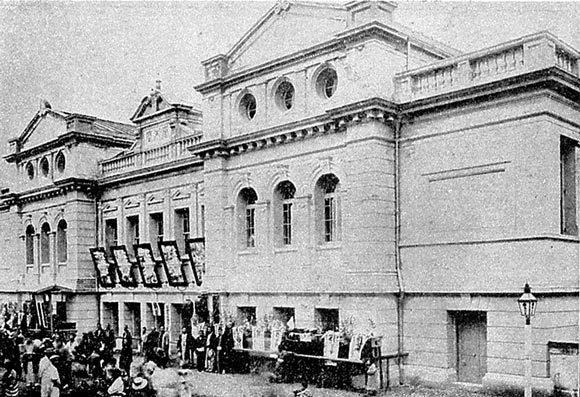
The Hongôza |
|||||||||||||||||||||||||||||||||||||||||||||||||||||||||||||||||||||||||||||||||||||||||||||||||||||||||||||||||||||||||||||||||||||||||||||||||||
|
|
| Contact | Main | Top | Updates | Actors | Plays | Playwrights | Programs | Links | FAQ | Glossary | Chronology | Illustrations | Prints | Characters | Derivatives | Theaters | Coming soon | News |