MAY 2008

4 shows in Tôkyô (Kabukiza, Shimbashi Embujô), 2 in in Ôsaka (Shôchikuza, Wahha Kamigata Engei Hall) and 1 in Kyôto (Minamiza)!

Kabukiza (Tôkyô)
Dates 2 ~ 26 May 2008 (Gogatsu Ôkabuki)
Matinée

Yoshitsune Sembon Zakura

  • Tokaiya
  • Daimotsu no Ura
  • Rokkasen Sugata no Irodori (Kisen)

    Kiwametsuki Banzui Chôbei

    Evening

    Aoto Zôshi Hana no Nishikie

  • Hatsusedera Hanami
  • Mikoshi-ga-Take
  • Inasegawa Tanima
  • Hamamatsuya
  • Kuramae
  • Inasegawa Seizoroi
  • Gokurakuji Yane Rippuku
  • Sanmon
  • Namerigawa Dobashi
  • Shikakubashira Saru no Kusemai

    Casting

    Ichikawa Danjûrô, Onoe Kikugorô, Sakata Tôjûrô, Nakamura Tomijûrô, Bandô Mitsugorô, Nakamura Tokizô, Nakamura Baigyoku, Ichikawa Ebizô, Ichikawa Sadanji, Nakamura Kaishun, Onoe Shôroku, Ichikawa Danzô, Nakamura Tôzô, Ôtani Tomoemon, Kawarazaki Gonjûrô, Bandô Hikosaburô

    Comments

  • Tokaiya/Daimotsu no Ura: these are two scenes from one of the greatest classics of the puppet theatre, which has also become a classic of Kabuki featuring the popular young star Ichikawa Ebizô in his first appearance as Tomomori. After the wars between the Genji and Heike clans, the Genji are victorious and their leader Yoritomo is now Shôgun. But there is a falling out between Yoritomo and his brother Yoshitsune, the brilliant general responsible for the victory. Now Yoshitsune is fleeing through the country and this play fancifully has him encounter several famous warriors from the Heike clan, who are not dead, as history has it. Yoshitsune (Ôtani Tomoemon) books passage on a boat to Kyûshû, but the captain is actually Taira no Tomomori (Ichikawa Ebizô), a general of the Heike clan that Yoshitsune helped to defeat. Tomomori was supposedly killed by Yoshitsune in the final battle of the war, but in this play, Tomomori is shown as surviving, living in disguise with the child emperor Antoku and his nursemaid (Nakamura Kaishun). At one moment the captain is a gallant commoner, but in the next, he is Tomomori, a high ranking general close to the emperor. His wife as well is a cheerful commoner who shows her true identity as a high-ranking lady-in-waiting in the magnificent robes of the imperial court. Tomomori uses the opportunity to try to get his revenge on Yoshitsune but is defeated again. Finally Tomomori holds a giant anchor and plunges into the sea.
  • Kisen: "Kisen" is part of a series of dances showing the six poetic geniuses of ancient Japan. The five male poets are all shown as being in love with the sixth, Ono no Komachi, one of the most famous beauties of Japan. The other dances are set in ancient Japan, but this dance suddenly jumps to the Edo period where the poet-priest Kisen wanders intoxicated by the beauties of the cherry blossoms and of Okaji, a tea stand waitress. Starring Bandô Mitsugorô as Kisen and Nakamura Tokizô as Okaji.
  • Banzui Chôbei: in the early Edo period, gallant men like Banzuiin Chôbei led the commoners. But this incurred the wrath of members of the samurai class, who were theoretically in control. This play begins with a recreation of Kabuki in its earliest days, then a fight breaks out which is settled by Chôbei (Ichikawa Danjûrô). But this frustrates the ambitions of the samurai Mizuno (Onoe Kikugorô) who invites Chôbei to visit. All of Chôbei's men tell him not to go because it is a trap, but Chôbei decides to meet his end and bids farewell to his wife (Sakata Tôjûrô) and son. Finally, Chôbei is killed when he is defenseless in the bath.
  • Aoto Zôshi Hana no Nishikie:
    (A Brocade Print of the Age of Magistrate Aoto)
    Written by Kawatake Mokuami in 1862, this play focuses on the thief Benten Kozô and was inspired by a woodblock print of a sexy young man with tattoos covering his body with a woman's hairstyle and kimono. Benten Kozô is a swindler and thief who makes use of his beauty, both as a handsome young man and disguised as a beautiful woman. The sections about Benten Kozô are played frequently, but this marks a rare full-length performance that shows the stories of all five thieves in the gang who are tied together by bonds of fate and obligation. In the opening at a magnificent temple surrounded by cherry blossoms, Benten Kozô poses as a samurai youth and seduces a princess setting off events that will eventually destroy Benten and all around him. A beautiful young woman comes to a clothing store with her servant, but is discovered shoplifting and beaten. When she proves that she was not stealing, her servant demands compensation. However, a samurai who happens to be in the store reveals that the young woman is actually a man, and he proudly announces his name as Benten, the thief. The servant is his fellow gang member Nangô Rikimaru (Ichikawa Sadanji) and the samurai is actually the head of the gang Nippon Daemon. However, they learn that the man they have defrauded is actually Benten Kozô’s father and the five thieves realize they cannot escape and decide to wear magnificent matching kimonos as they meet their fate. The act ends with a kind of spectacle showing the five members of the gang in their finest kimonos under the cherry blossoms in full bloom. In elaborate speeches, they each announce their name in the poetic diction for which the playwright Mokuami is famous. Finally Benten Kozô fights off his pursuers in a spectacular fight on the roof of a temple. Starring Onoe Kikugorô as Benten Kozô, Ichikawa Danjûrô as Nippon Daemon, Ichikawa Sadanji as Nangô Rikimaru, Nakamura Tokizô as Akaboshi Jûzaburô and Bandô Mitsugorô as Tadanobu Rihei. Also featuring Living National Treasure Nakamura Tomijûrô as the magistrate Aoto Saemon.
  • Shikakubashira Saru no Kusemai: a new dance featuring young Onoe Shôroku who is also the head of the Fujima school of classical Japanese dance.
  • Source: Earphone Guide website

    Shimbashi Embujô (Tôkyô)
    Dates 2 ~ 26 May 2008 (Gogatsu Ôkabuki)
    Matinée

    Hikosan Gongen Chikai no Sukedachi (Keya-Mura)

    Fuji Musume

    Sanja Matsuri

    Kioi Jishi

    Ippon Gatana Dohyô Iri

    Evening

    Tôkaidô Yotsuya Kaidan

    Casting

    Nakamura Kichiemon, Nakamura Shibajaku, Ichikawa Danshirô, Ichikawa Kamejirô, Nakamura Fukusuke, Ichikawa Somegorô, Nakamura Kinnosuke, Nakamura Kashô, Nakamura Karoku

    Comments

    Nakamura Kichiemon is for the third time the zagashira of a troupe of young actors performing at the Shimbashi Embujô. He plays the roles of Komagata Môhei and Tamiya Iemon in the dramas "Ippon Gatana Dohyô Iri" and "Tôkaidô Yotsuya Kaidan".

  • Keya-Mura: Rokusuke (Ichikawa Somegorô), a sword master who lives a simple country life, is taking care of a small foundling child. He hangs the boy's kimono outside his house in the hope that the boy's relatives will see it and know where he is. One day he finds himself attacked by a woman named Osono (Ichikawa Kamejirô) who turns out to be the aunt of the child. As they talk, they find that they are in fact linked by promises of marriage although they have never met directly. Osono is searching for the killer of her father, Rokusuke's master, and Rokusuke promises to help in her vendetta.
  • Fuji Musume: the spirit of wisteria blossoms dances of love in the form of a beautiful young maiden. One of Kabuki's most famous and colorful dances, it will feature the dancing skills of Nakamura Fukusuke.
  • Sanja Matsuri: ???
  • Kioi Jishi: this dance shows an Edo festival with its lively lion dance and other entertainments. The festival is full of handsome firemen and attractive geisha who do a series of graceful dances. One of the highlights of this dance is the story of the Soga brothers avenging the death of their father by attacking their enemy during a hunting party for the Shôgun at the foot of Mt. Fuji. Featuring Nakamura Kashô and Nakamura Kinnosuke.
  • Ippon Gatana Dohyô Iri: ???
  • Yotsuya Kaidan: ???
  • Source: Earphone Guide website

    Shôchikuza (Ôsaka)
    Dates 4 ~ 27 May 2008 (Super Kabuki)
    Program Yamato Takeru
    Casting

    Ichikawa Ukon, Ichikawa Danjirô, Ichikawa Emiya, Ichikawa Monnosuke, Ichikawa Emisaburô, Ichikawa Shun'en, Ichikawa En'ya, Ichikawa Juen, Kaneda Ryûnosuke

    Comments

    Ichikawa Ennosuke's troupe of young and talented actors perform a modern style of theater, which they created a few years ago and called "Super Kabuki" (Sûpâ Kabuki in Chikamatsu Monzaemon's lingo): it's spectacular (lots of chûnori), the costums are gorgeous and ultra-sophisticated, the music is modern, the texts are easy to understand and the plots are as twisted as a good Kabuki classic. Usually a big commercial success! "Yamato Takeru" was the first Sûpâ Kabuki drama of the Omodakaya guild and the most successful one. For this revival, the leading role of Yamato Takeru is played by both Ichikawa Danjirô and Ichikawa Ukon.

    Ichikawa Ennosuke is on sick leave and does not perform in this production.

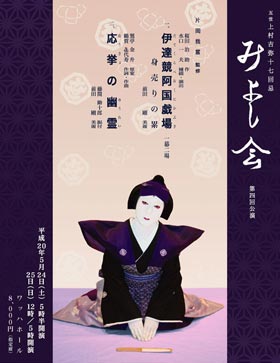
    Wahha Kamigata Engei Hall (Ôsaka)
    Dates 24 ~ 25 May 2008 (Miyoshi no Kai)
    Program

    Date Kurabe Okuni Kabuki (Miuri no Kasane)

    Ôkyo no Yûrei

    Casting

    Kamimura Kichiya

    Comments

    Fourth edition of the program of the association Miyoshi no Kai, which stars the young and talented actor Kamimura Kichiya.

    Minamiza (Kyôto)
    Dates 27 ~ 28 May 2008 (Sankyôkai)
    Matinée

    Chikubushima

    Tsukimi Zatô

    Funa Benkei

    Adachi-ga-Hara

    Evening

    Gonin Sambasô

    Funa Benkei

    Adachi-ga-Hara

    Casting

    Ichikawa Kamejirô, Kataoka Takatarô, Ichikawa Somegorô, Nakamura Baishi, Nakamura Kazutarô

    Comments

    Special program of the Sankyôkai, an experimental group led by three musicians: Kamei Hirotada, Tanaka Denzaemon XIII and Tanaka Denjirô VII. The programs of the Sankyôkai mixes actors and musicians from the Kabuki, Nô and Kyôgen world.

     
    Search this site powered by FreeFind
      Site map
    Contact | Main | Top | Updates | Actors | Plays | Programs | Links | FAQ | Glossary
    Chronology | Illustrations | Prints | Characters | Derivatives | Theaters | Coming soon | News